California Drivers Cut Gasoline Use. Tax Revenues Hurt

AutoInformed.com

Going green means fewer ‘greenbacks’ in tax revenue for politicians to spend.

California gasoline prices rose 23% in 2011 to an average of $3.86 per gallon as consumer consumption dropped 1.8%, according to a report released today. Diesel fuel prices in California went up 25% in the fourth quarter of 2011 to $4.13 as consumption – virtually all of it from commercial vehicles – increased 2.3%.

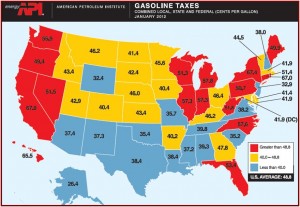
California taxes gasoline at more than 50 cents a gallon, among the highest total gasoline tax rate in the United States. Combined with the federal gasoline tax, this means California drivers pay the second highest overall gas tax rate in the U.S.

Because of the recession, increases in California’s sales taxes and more fuel efficient vehicles, among other variables, taxable gallons of gasoline used in California – at 14.7 billion gallons in 2011 – was at the lowest level in more than a decade, a declining trend that has been going on since 2005. Politicians with their insatiable need for more taxes are concerned, which means hang on to your wallet as they figure out how to make you pay more for using less gasoline.

Global factors largely determine the price of oil, along with speculation in the global commodities market. Demand in India, China and other developing nations is increasing. So decreasing gasoline use in California had no measurable impact on worldwide demand. U.S. oil production was up 13% in 2011 compared to 2008, but at less than one-tenth of the world oil market, any politician promising drivers relief at the pump via “drill baby drill” is lying. Even the Keystone pipeline, if it gets approval, won’t help since none to the oil it will transport will stay in the U.S. as it is exported to the far east. Worse for the U.S. economy, Keystone oil will be refined in tax free zones in Texas.

About Ken Zino

Ken Zino, editor and publisher of AutoInformed, is a versatile auto industry participant with global experience spanning decades in print and broadcast journalism, as well as social media. He has automobile testing, marketing, public relations and communications experience. He is past president of The International Motor Press Assn, the Detroit Press Club, founding member and first President of the Automotive Press Assn. He is a member of APA, IMPA and the Midwest Automotive Press Assn. He also brings an historical perspective while citing their contemporary relevance of the work of legendary auto writers such as Ken Purdy, Jim Dunne or Jerry Flint, or writers such as Red Smith, Mark Twain, Thomas Jefferson – all to bring perspective to a chaotic automotive universe. Above all, decades after he first drove a car, Zino still revels in the sound of the exhaust as the throttle is blipped during a downshift and the driver’s rush that occurs when the entry, apex and exit points of a turn are smoothly and swiftly crossed. It’s the beginning of a perfect lap. AutoInformed has an editorial philosophy that loves transportation machines of all kinds while promoting critical thinking about the future use of cars and trucks. Zino builds AutoInformed from his background in automotive journalism starting at Hearst Publishing in New York City on Motor and MotorTech Magazines and car testing where he reviewed hundreds of vehicles in his decade-long stint as the Detroit Bureau Chief of Road & Track magazine. Zino has also worked in Europe, and Asia – now the largest automotive market in the world with China at its center.
This entry was posted in auto news, economy, fuel economy or emissions, results, transportation and tagged , , , , , , , . Bookmark the permalink.

Leave a Reply

Your email address will not be published. Required fields are marked *