
Click for more information.
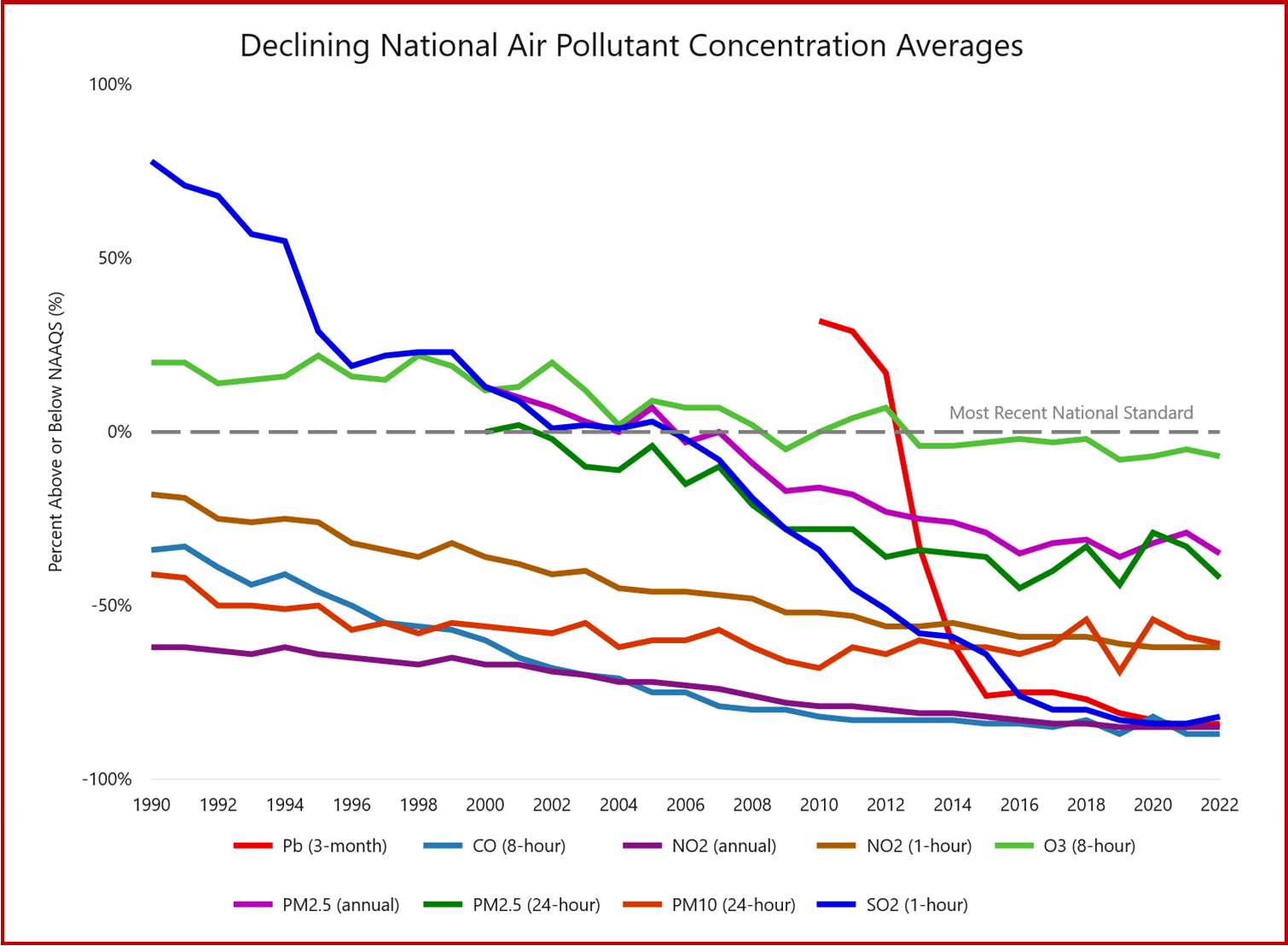
The national average concentrations of harmful air pollutants decreased considerably across our nation between 1990 and 2022:
• Carbon Monoxide (CO) 8-Hour, 81%
• Lead (Pb) 3-Month Average, 88% (from 2010)
• Nitrogen Dioxide (NO2) Annual,60%
• Nitrogen Dioxide (NO2) 1-Hour,54%
• Ozone (O3) 8-Hour,22%
• Particulate Matter 10 microns (PM10) 24-Hour, 34%
• Particulate Matter 2.5 microns (PM2.5) Annual, 42% (from 2000)
• Particulate Matter 2.5 microns (PM2.5) 24-Hour, 42% (from 2000)
• Sulfur Dioxide (SO2) 1-Hour, 90%
However, EPA said: “It is important to note that air quality concentrations can vary year to year, even as human-caused emissions continue to decline. In 2022, national average concentrations of lead and nitrogen dioxide increased slightly over 2021 levels. Variations in weather, and events such as dust storms and wildfires can have an impact on air quality in affected areas. Many environmental impacts associated with climate change can impact air quality particularly affecting the severity and timing of the wildfire season, including changes in temperature, precipitation, and drought.”