Click for more.
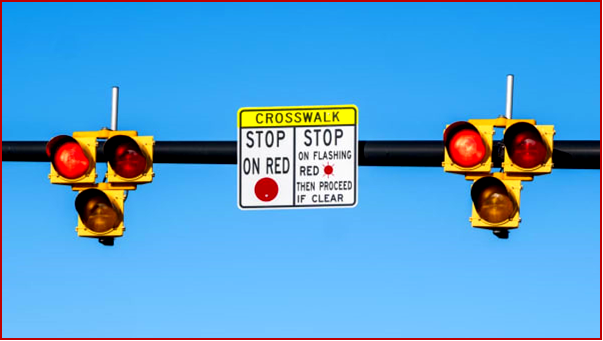
Traffic signals known as pedestrian hybrid beacons (PHBs) allow walkers who need to cross a busy road to evoke a stoplight by pressing a button. However, while the devices are great at getting drivers to yield, many pedestrians don’t bother to activate them before crossing, a new study from the Insurance Institute for Highway Safety shows. Pedestrians are more likely to activate rectangular rapid flashing beacons (RRFBs), even though they’re less effective at getting drivers to stop.
“It’s well-documented that both of these common pedestrian warning signals make drivers more likely to yield and allow walkers to cross the street safely,” said IIHS President David Harkey. “But they can only do that if pedestrians push the button to activate them. This study offers valuable lessons for how we can make that more likely.”
A significant difference between the devices is that an RRFB instructs drivers to yield as soon as a pedestrian presses the button, while a PHB cycles through two yellow warning phases before it signals drivers to stop. Pedestrians appear more willing to activate slower-acting PHBs when the road is wide, traffic is heavy, or the vehicles are zooming past at higher speeds, IIHS researchers found.