EPA concluded with DOE that it’s necessary to waive federal regulations to sell summer gasoline to minimize or prevent the disruption of an adequate supply to consumers.
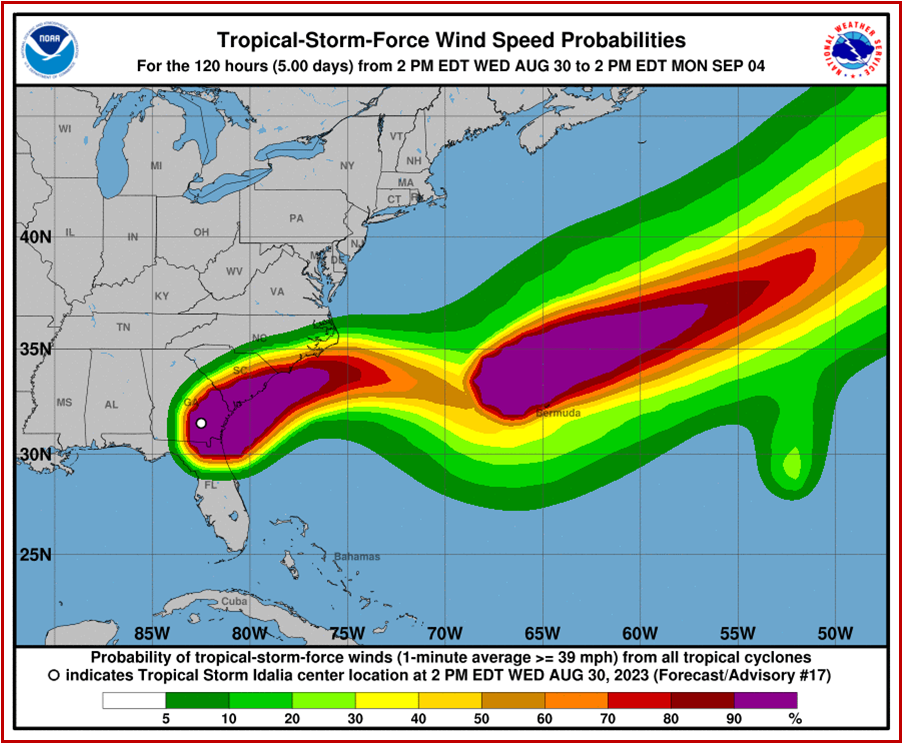
Environmental Protection Agency Administrator Michael Regan issued an emergency fuel waiver to address a fuel supply emergency in Florida caused by Hurricane Idalia, today. Yesterday a state of emergency was declared in 49 counties to prepare for potentially harmful impacts to multiple population centers throughout the state from Hurricane Idalia.
Storm preparations have resulted in the closure of multiple ports in the state that receive fuel and have restricted and interrupted fuel terminal operations, preventing an adequate supply of gasoline. In addition, evacuations – including mandatory evacuations – are straining available supplies. Waiving federal requirements to sell summer gasoline can help address these supply shortages.
The EPA has concluded, with DOE’s concurrence, that it is necessary to waive federal requirements to sell summer gasoline to minimize or prevent the disruption of an adequate supply of gasoline to consumers throughout Florida. This waiver only applies to the federal fuel standards. Regulated parties must continue to comply with any applicable state or local requirements, or restrictions related to this matter, unless waived by the appropriate authorities. The waiver is effective 30 August continuing through 15 September 2023.
The Federal Clean Air Act require fuel refiners, importers, distributors, resellers, terminal owners and operators, and carriers to switch from selling higher volatility winter gasoline to lower volatility summer gasoline during the summer months to limit the formation of ozone pollution. To mitigate any impacts on air quality, the Clean Air Act provides criteria for when fuel waivers may be granted to help ensure minimal, if any, short term impacts on air quality, including limiting waivers as much as possible in terms of their geographic scope and duration, EPA said.
As required by law, EPA and DOE evaluated the situation and determined that granting a short-term waiver was consistent with the public interest. EPA and DOE are continuing to actively monitor the fuel supply situation in Florida.

About Ken Zino
Ken Zino, editor and publisher of AutoInformed, is a versatile auto industry participant with global experience spanning decades in print and broadcast journalism, as well as social media. He has automobile testing, marketing, public relations and communications experience. He is past president of The International Motor Press Assn, the Detroit Press Club, founding member and first President of the Automotive Press Assn. He is a member of APA, IMPA and the Midwest Automotive Press Assn.
He also brings an historical perspective while citing their contemporary relevance of the work of legendary auto writers such as Ken Purdy, Jim Dunne or Jerry Flint, or writers such as Red Smith, Mark Twain, Thomas Jefferson – all to bring perspective to a chaotic automotive universe.
Above all, decades after he first drove a car, Zino still revels in the sound of the exhaust as the throttle is blipped during a downshift and the driver’s rush that occurs when the entry, apex and exit points of a turn are smoothly and swiftly crossed. It’s the beginning of a perfect lap.
AutoInformed has an editorial philosophy that loves transportation machines of all kinds while promoting critical thinking about the future use of cars and trucks.
Zino builds AutoInformed from his background in automotive journalism starting at Hearst Publishing in New York City on Motor and MotorTech Magazines and car testing where he reviewed hundreds of vehicles in his decade-long stint as the Detroit Bureau Chief of Road & Track magazine. Zino has also worked in Europe, and Asia – now the largest automotive market in the world with China at its center.








Hurricane Idalia – EPA Issues Florida Summer Fuel Waiver
EPA concluded with DOE that it’s necessary to waive federal regulations to sell summer gasoline to minimize or prevent the disruption of an adequate supply to consumers.
Environmental Protection Agency Administrator Michael Regan issued an emergency fuel waiver to address a fuel supply emergency in Florida caused by Hurricane Idalia, today. Yesterday a state of emergency was declared in 49 counties to prepare for potentially harmful impacts to multiple population centers throughout the state from Hurricane Idalia.
Storm preparations have resulted in the closure of multiple ports in the state that receive fuel and have restricted and interrupted fuel terminal operations, preventing an adequate supply of gasoline. In addition, evacuations – including mandatory evacuations – are straining available supplies. Waiving federal requirements to sell summer gasoline can help address these supply shortages.
The EPA has concluded, with DOE’s concurrence, that it is necessary to waive federal requirements to sell summer gasoline to minimize or prevent the disruption of an adequate supply of gasoline to consumers throughout Florida. This waiver only applies to the federal fuel standards. Regulated parties must continue to comply with any applicable state or local requirements, or restrictions related to this matter, unless waived by the appropriate authorities. The waiver is effective 30 August continuing through 15 September 2023.
The Federal Clean Air Act require fuel refiners, importers, distributors, resellers, terminal owners and operators, and carriers to switch from selling higher volatility winter gasoline to lower volatility summer gasoline during the summer months to limit the formation of ozone pollution. To mitigate any impacts on air quality, the Clean Air Act provides criteria for when fuel waivers may be granted to help ensure minimal, if any, short term impacts on air quality, including limiting waivers as much as possible in terms of their geographic scope and duration, EPA said.
As required by law, EPA and DOE evaluated the situation and determined that granting a short-term waiver was consistent with the public interest. EPA and DOE are continuing to actively monitor the fuel supply situation in Florida.
About Ken Zino
Ken Zino, editor and publisher of AutoInformed, is a versatile auto industry participant with global experience spanning decades in print and broadcast journalism, as well as social media. He has automobile testing, marketing, public relations and communications experience. He is past president of The International Motor Press Assn, the Detroit Press Club, founding member and first President of the Automotive Press Assn. He is a member of APA, IMPA and the Midwest Automotive Press Assn. He also brings an historical perspective while citing their contemporary relevance of the work of legendary auto writers such as Ken Purdy, Jim Dunne or Jerry Flint, or writers such as Red Smith, Mark Twain, Thomas Jefferson – all to bring perspective to a chaotic automotive universe. Above all, decades after he first drove a car, Zino still revels in the sound of the exhaust as the throttle is blipped during a downshift and the driver’s rush that occurs when the entry, apex and exit points of a turn are smoothly and swiftly crossed. It’s the beginning of a perfect lap. AutoInformed has an editorial philosophy that loves transportation machines of all kinds while promoting critical thinking about the future use of cars and trucks. Zino builds AutoInformed from his background in automotive journalism starting at Hearst Publishing in New York City on Motor and MotorTech Magazines and car testing where he reviewed hundreds of vehicles in his decade-long stint as the Detroit Bureau Chief of Road & Track magazine. Zino has also worked in Europe, and Asia – now the largest automotive market in the world with China at its center.