
Click for more.
Tariffs and the U.S. Constitution
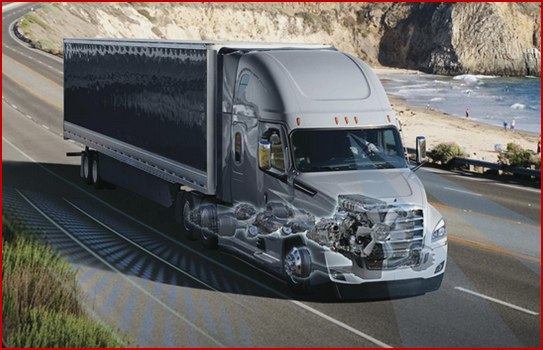
In October, after months of UAW lobbying, the federal government imposed a 25% tariff on heavy truck imports. The UAW said it would “prevent further offshoring and drive investment in the US heavy truck industry.”
Among the tariffs imposed by the Trump mis-administration were so-called Section 301 tariffs on imports from China and Nicaragua and the global Section 232 tariffs on imports of steel and steel derivatives; aluminum and aluminum derivatives; passenger vehicles, light trucks, and parts; copper and copper derivative products; timber, lumber, and wood products; trucks, buses, and truck parts; and some advanced semiconductors. Diesel trucks were part of Section 302. These were and remain legal.
However, the Mis-administration of 47th President of the United States also used the International Emergency Economic Powers Act (IEEPA). This where the Trump reign fell afoul of the U.S. Supreme Court. Looking at the US Constitution and the statutory text of IEEPA, the majority of the Supreme Court justices held that IEEPA does not authorize the President to impose tariffs in any instance whatsoever. The Supreme Court reiterated that the U.S. Constitution grants Congress alone the power to impose taxes or tariffs; that the President has no fundamental authority to impose tariffs during peacetime. The Court determined that the President’s imposition of IEEPA-based tariffs must rely exclusively on a delegation of tariff power from Congress.
Then the Court analyzed the text of IEEPA and determined that Congress did not delegate its tariff authority to the President through IEEPA. The Court held that while IEEPA does authorize the President to “regulate … importation,” the word “regulate” does not encompass the power to impose tariffs or taxes, as “the ‘power to regulate commerce’ is ‘entirely distinct from the right to levy taxes.’”