
Click for more.
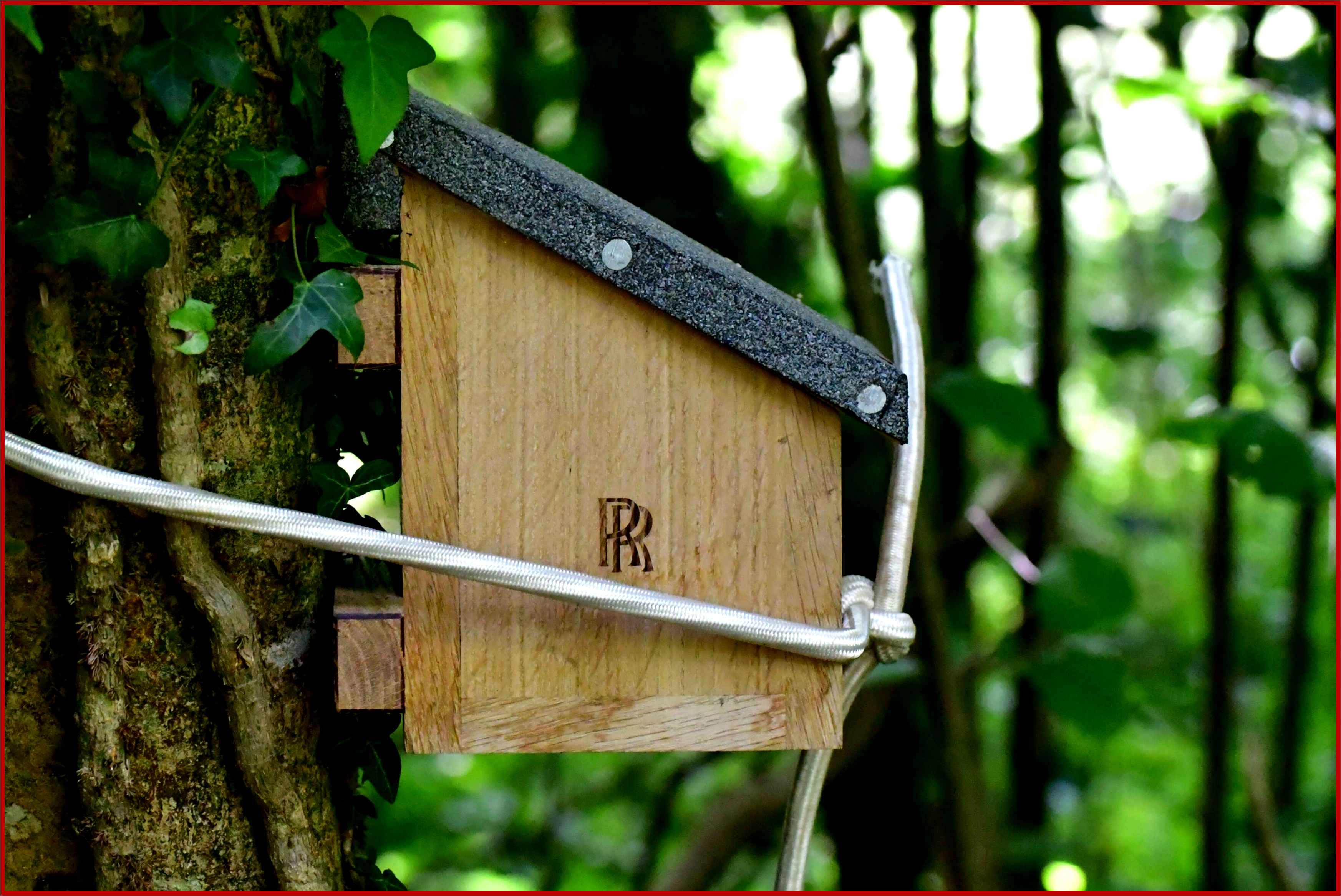
The nest boxes are made of oak, quarter-sawn perpendicular to the growth rings to show off its grain patterns, notably the medullary or pith rays created by thin, ribbon-like structures that radiate from the center of the trunk. The pith rays are particularly pronounced, creating a shimmering, iridescent surface effect called “ray fleck.” The nest boxes are finished with roofing felt to further protect them from the weather and increase their durability.
During an on-site visit, the Apprentices met the Goodwood Estate’s head of forestry and learned about the types of habitat favored by dormice, and how to install the nest boxes into a new area of woodland. The nest boxes have been placed in an area of hazel and other broadleaf species, with a dense understory including honeysuckle and ivy, which dormice use to climb into safe hiding spaces.
“Despite these promising conditions, to date, there has been no definitive evidence of dormice living in this area; the Goodwood Estate team hopes that by installing the nest boxes, their presence can be confirmed,” Rolls-Royce said.
“The hazel dormouse is the only species of dormice native to Britain, commonly found in the south of England and Wales. Its population numbers are thought to have fallen by 52% between 2009 and 2018, mainly through the loss and fragmentation of the ancient woodland and hedgerows that make up its habitat. This, combined with dormice being nocturnal and arboreal creatures, makes seeing them extremely difficult and unusual,” Rolls-Royce said.
Hazel dormice are protected in the UK under the Wildlife and Countryside Act 1981, meaning it is illegal to intentionally kill, injure or handle them. This safeguard also extends to any location or structure, including the new Rolls-Royce nest boxes, that hazel dormice use for shelter or protection.