
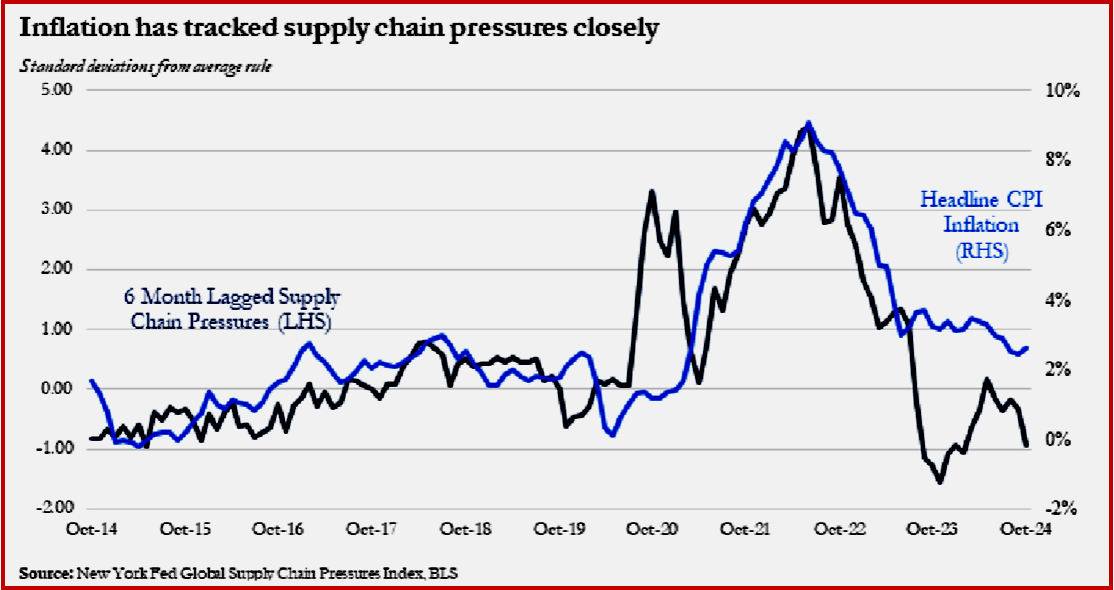
Click for explanation.
“Supply chain shocks are also correlated with other potential macroeconomic impacts of supply chain disruptions. For example, in addition to price spikes, the pandemic-induced supply chain disruptions resulted in sharp declines in U.S. industrial production in manufacturing, sales of goods, and real consumption.
Although the pandemic-era supply chain disruptions were unique in breadth and scale, historical evidence demonstrates that some level of supply chain shocks are inevitable, with corresponding economic risks when supply chains are insufficiently resilient.
For example,the 2011 Tohoku earthquake and tsunami in Japan resulted in broad economic disruptions that extended beyond Japan’s borders. Japanese automotive suppliers shut down temporarily after the earthquake, which affected automotive production around the world, including in the United States.11 U.S. manufacturing output declined by one percentage point due to linkages to Japanese suppliers, and bank analysts revised Q2 2011 U.S. GDP growth estimates down by 50 basis points annualized. The earthquake’s cost to Japanese GDP growth in 2011 was about 50 basis points; although the actual GDP growth impact was larger in Japan, the relative magnitude of these effects reflects the economic importance of these tightly-linked supply chains,” said the White House Council on Supply Chain Resilience.







