Click for more.
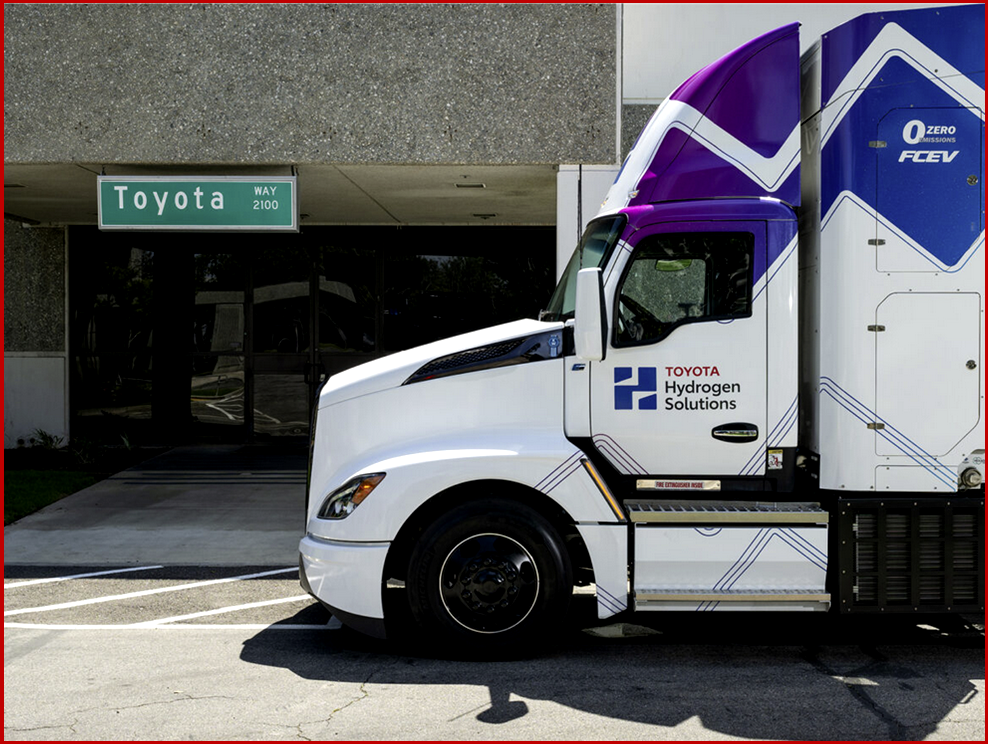
With Class 8 heavy-duty trucks powered by fuel cells moving out of their pilot phase, Toyota will begin introducing production-level FCEV trucks to its logistics fleet, running routes from the Port of Long Beach to the NAPCC in Ontario, California, and as far south as San Diego. The shift is part of Toyota’s 2050 Challenge goal of reducing carbon dioxide emissions from its supply chain.
“Our goals, capabilities to accomplish those goals and long-term mindset have put Toyota in a position to be a leader moving the global transportation industry forward,” said Choby.
Toyota and Air Liquide will work together on sourcing and delivering hydrogen molecules from Air Liquide’s dedicated hydrogen mobility plant in North Las Vegas, Nevada, with a focus on supplying the NAPCC station with reliable, affordable liquid hydrogen. Toyota will also look to build relationships with other companies and organizations in the U.S. as well as those abroad.
In Japan, Toyota Motor Corporation is collaborating with Chiyoda on electrolysis technology, where they are combining their respective expertise in industrial products and plant engineering. Electrolyzers are devices capable of splitting water molecules into hydrogen and oxygen – the process to generate hydrogen fuel. Toyota is also looking to extract hydrogen from the methane byproducts derived from animal waste, wastewater treatment plants and landfills.