 In the late 1930s, General Motors Styling Section and Buick engineers built an experimental car to showcase coming advances in automotive design – the Y-Job. The 1940 Buick Y-Job is now the 14th vehicle recognized on the National Historic Vehicle Register in partnership with the U.S. Department of the Interior, Historic American Engineering Record and archives of the Library of Congress.
The Buick Y-Job was created under GM’s legendary design chief, Harley J. Earl. The car was described at the time as a “convertible coupe” hand-built on a custom Buick chassis and powered by a Buick Series 50 engine.
The Y-Job foreshadowed many design features that were adopted over the next several decades. It’s low and wider design eliminated the need for running boards and improved stability. The car had 13-inch wheels and brakes with features used on airplanes at the time. The body was streamlined and extended the front fenders into doors. The rear of the car had a concealed convertible top, boat tail design, and the hint of the tailfins that became major design elements of cars in the 1950s.
The grill was far lower and wider than what was typical of the period, and included novel retractable headlamps. The hood was described as “alligator-type” with one piece that was a departure from the two-piece hoods from the time.
“Harley Earl and the Buick Y-Job expanded the boundaries of car design and drew the blueprint for concept vehicle design and execution,” said GM Global Design Vice President Michael Simcoe. “We thank the HVA for ensuring the world’s first concept car is documented and preserved for future generations.”
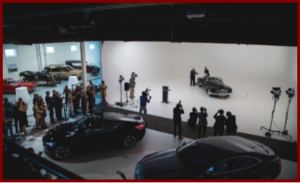
The Buick Y-Job was documented during the grand opening of the Historic Vehicle Association National Laboratory in Allentown, Pennsylvania. The laboratory is a purpose-built facility for automotive photography, photogrammetry, 3D scanning, videography, and the HVA’s growing physical and digital archives. The laboratory was built to standardize and streamline the expansion of the National Historic Vehicle Register program.
The laboratory environment includes a large 40 ft. x 40 ft. white room with infinity walls on all sides and turntable integrated into the floor to rotate historic automobiles during photography. The facility is believed to be the only facility of its kind in the world. It says the work done here will provide current and future generations a highly detailed, accurate and consistent record of some of the nation’s most significant automotive treasures.