Click for more.
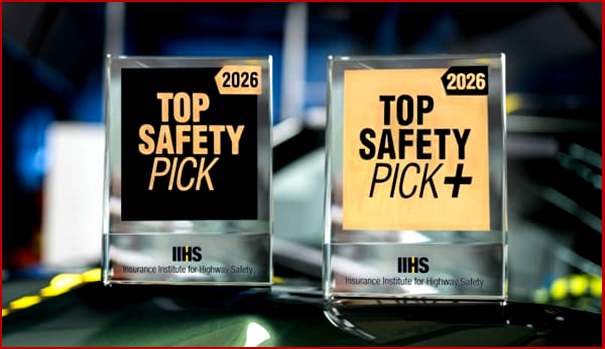
“This year, we’re asking automakers to make excellent protection for back seat passengers the norm,” IIHS President David Harkey said. “For Top Safety Pick+, we’re requiring crash avoidance systems that are better at preventing pedestrian crashes as well as higher speed crashes with other vehicles.”
“This year’s winners include a variety of models, ranging from small cars to large pickups and from economy cars to luxury vehicles. The manufacturer suggested retail prices for more than a dozen Top Safety Pick+ winners start under $30,000, with the Kia K4 starting at just $22,290,” IIHS said in a release.
SUVs of different sizes make up 35 of the 45 total Top Safety Pick+ winners and 12 of the 18 Top Safety Picks. The least expensive small SUV is the Hyundai Kona, which starts at $25,500. While all three large SUVs cost more than $55,000, several mid-size SUVs have base prices under $40,000.
“No minicars, minivans or small pickups earn awards this year. Only two large pickups qualify: the Tesla Cybertruck and Toyota Tundra crew cab. For many other models in these categories, back seat performance in the moderate overlap test remains a challenge,” Harkey said. “It’s disappointing that minivans continue to struggle to provide the best-available protection for passengers in the back, considering that these are supposed to be family vehicles. Based on these results, parents may want to consider some of the more affordable sedans and SUVs that earn awards.”
The biggest change in the award criteria is the addition of the new vehicle-to-vehicle front crash prevention test. The original evaluation, which was discontinued in 2022, focused on rear-end crashes at lower speeds using only a passenger car target. The new evaluation includes test runs at 31, 37 and 43 mph (50, 60 and 70 kilometers per hour). In addition to a passenger car target, it examines performance with a motorcycle target and a semitrailer.*
Though the test was not required for an award last year, more than 70% of the 85 model year 2025 vehicles evaluated earned acceptable or good ratings. So far, more than 77% of 2026 models tested meet that standard.
“Improving crash avoidance is key to achieving our 30×30 vision of reducing U.S. crash deaths by 30% by 2030,” Harkey said. “Stronger structures and better seat belts save lives, but the safest crash is the one that never happens.”