
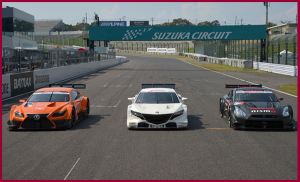
The three major Japanese manufacturers are developing 2-liter 4-cylinder turbocharged engines based on a Japanese rules. Chassis and aerodynamic specifications are common with DTM.
Lexus Racing is preparing a new racecar based on the Lexus LF-CC that will compete in the Super GT500 class starting next season. The vehicle will replace the Lexus SC 430 currently used in Super GT races. The Lexus LF-CC is a two-door coupe concept, which debuted at the 2012 Paris Motor Show and is headed for street production as the next gen rear-drive IS. (First Drive – 2014 Lexus IS Sedan) Development of the latest Lexus racer is already under way at the Suzuka Circuit, ironically one that Honda, the parent company of Acura, originally built.
The new cars are built based on the same chassis and aerodynamics specifications as Europe’s popular racing series, Deutsche Tourenwagen Meisterschaft, aka the popular DTM. With the Grand-Am in the United States planning to start a racing series in 2017 aligned with the same specifications in the future, globalization of this motorsports series is about to occur by allowing inter-series racing with cars from different countries.
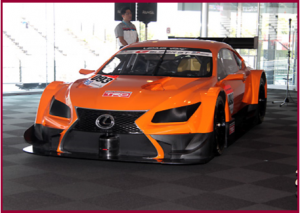
The everlasting pursuit of a performance image via racing, even if the production cars bear scant technical resemblance.
Acura recently announced that it would field a version of the upcoming U.S. built production NSX sports car at the series. (Honda Shows another Racing Version of Acura NSX Sports Car) The strongest competitor to both is the Nissan GT-R, already in production and racing, as are other versions of Lexus and Honda racers. (The NSX will be sold as a Honda in other markets.) A revised GT-R Nismo GT500 is also being developed to compete in the 2014 GT500 class. Therefore, the 2014 field will be comprised of all the major players in the successful Japanese racing series.
The engines of all the new 2014 cars are redesigned for the next season. The three major Japanese manufacturers are developing 2-liter inline 4-cylinder turbocharged engines based on a Japanese specification. The engines will produce the same output as the existing 3.4-liter V8 engines used in 2013.