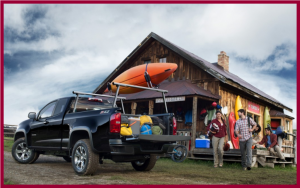
Three versions of the 2015 Chevrolet Colorado are offered – an extended cab model with a 6-foot bed, a crew cab with a 5-foot bed and one with a 6-foot bed. With the tailgate down, the 6-foot bed allows 8-foot-long items to be hauled within the vehicle.
In a NHTSA filing just made public, General Motors is recalling 15,000 Chevrolet Colorado and GMC Canyon pickup trucks because of leaking front brake calipers that supplier Akebono shipped even though they failed Akebono’s internal quality control testing. The porous calipers leak, causing longer brake-pedal travel and stopping distances, increasing the risk of a crash.
The long delayed recall is problematic since GM knew of the safety defect when its Wentzville assembly plant found brake fluid under a completed vehicle on October 9. On October 17, 2014, the plant discovered a second leaking vehicle during an air-pressure brake test that Wentzville performs on all vehicles during post-assembly quality control testing.
On the same day, the plant order valium reported the problem to the front-brake calipers’ supplier, Akebono. The Wentzville plant shipped the front-brake calipers from both vehicles to Akebono for additional testing and analysis.
On November 5, 2014, GM received Akebono’s analysis that said porosity in the two
Wentzville calipers caused the fluid leak and the test failure.
“Akebono also informed GM that, before beings shipped to GM, the two Wentzville calipers had failed Akebono’s internal quality control testing, and that Akebono accidentally shipped the defective calipers to GM.”
GM opened an investigation into the safety defect on December 3, 2014. In the NHTSA filing GM claimed that after analyzing warranty, legal claims, and TREAD data, GM’s investigator identified eight field reports of front-brake calipers in Colorado and Canyon vehicles leaking brake fluid.
GM sent five calipers from these vehicles to Akebono for additional testing and analysis. Akebono confirmed that porosity caused brake-fluid leaks in all five calipers. On May 4, 2015, GM’s Safety Field Action Decision Authority (SFADA) decided to conduct a safety recall.