Another step n energy efficiency.
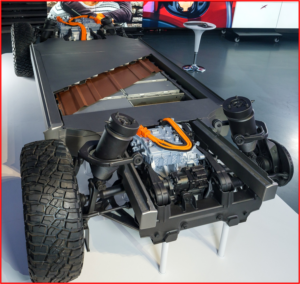
General Motors (NYSE:GM) today announced that its Ultium-based EVs can now capture and re-use waste energy from the battery. Through the new Ultium Platform’s energy recovery system, this waste energy can increase a vehicle’s range, reduce battery energy needed for heating, increase charging speed and enable more aggressive driving.
Since EV batteries, power electronics and other propulsion components produce heat, this is another step toward the more efficient use of energy. The Ultium Platform can recover and store this waste heat from the Ultium propulsion system. It can also capture and use humidity from both inside and outside the vehicle, including body heat from passengers. The Ultium Platform can then deploy energy stored through the recovery process to heat the cabin more quickly in cold weather than comparable systems found in vehicles with an internal combustion engine.
GM Claims and Estimates
- Ultium’s energy recovery capabilities reduce the need to power heating and other functions from energy stored in the battery, which provides GM’s EVs with as much as 10% more range*1, potentially allowing more power and range than vehicles with similarly sized batteries without energy recovery capabilities.
- With its active heating capabilities, Ultium vehicles can also potentially charge more efficiently by warming up the batteries before charging.*2
- Ultium’s energy recovery even enables GMC HUMMER EV’s optional “Watts to Freedom” system. Energy recovery precools the propulsion system to help the all-electric truck accelerate from 0-60 mph in approximately 3 seconds.*3
- “Having a ground-up EV architecture gives us the freedom to build in standard features like Ultium’s energy recovery capabilities,” said Doug Parks, GM executive vice president, Global Product Development, Purchasing and Supply Chain. “This helps us squeeze more efficiency, performance and overall customer benefit out of our EVs.”
Covered by 11 patents and four publications, the development of Ultium energy recovery traces its inception back to GM’s first EV, the EV1, in the late 1990s, when GM engineers first developed an EV heat pump. Ultium energy recovery is available on all current Ultium vehicles and planned for future Ultium vehicles.
Inevitable Footnotes
- Actual range will vary based on several factors, including temperature, terrain, battery age, loading, use and maintenance.
- Actual charge times will vary based on battery starting state of charge, battery condition, output of charger, vehicle settings and outdoor temperature. See the vehicle’s Owner’s Manual for additional limitations.
- GM estimate.

About Ken Zino
Ken Zino, editor and publisher of AutoInformed, is a versatile auto industry participant with global experience spanning decades in print and broadcast journalism, as well as social media. He has automobile testing, marketing, public relations and communications experience. He is past president of The International Motor Press Assn, the Detroit Press Club, founding member and first President of the Automotive Press Assn. He is a member of APA, IMPA and the Midwest Automotive Press Assn.
He also brings an historical perspective while citing their contemporary relevance of the work of legendary auto writers such as Ken Purdy, Jim Dunne or Jerry Flint, or writers such as Red Smith, Mark Twain, Thomas Jefferson – all to bring perspective to a chaotic automotive universe.
Above all, decades after he first drove a car, Zino still revels in the sound of the exhaust as the throttle is blipped during a downshift and the driver’s rush that occurs when the entry, apex and exit points of a turn are smoothly and swiftly crossed. It’s the beginning of a perfect lap.
AutoInformed has an editorial philosophy that loves transportation machines of all kinds while promoting critical thinking about the future use of cars and trucks.
Zino builds AutoInformed from his background in automotive journalism starting at Hearst Publishing in New York City on Motor and MotorTech Magazines and car testing where he reviewed hundreds of vehicles in his decade-long stint as the Detroit Bureau Chief of Road & Track magazine. Zino has also worked in Europe, and Asia – now the largest automotive market in the world with China at its center.








GM Ultium-based EVs Now Have a Heat Pump
Another step n energy efficiency.
General Motors (NYSE:GM) today announced that its Ultium-based EVs can now capture and re-use waste energy from the battery. Through the new Ultium Platform’s energy recovery system, this waste energy can increase a vehicle’s range, reduce battery energy needed for heating, increase charging speed and enable more aggressive driving.
Since EV batteries, power electronics and other propulsion components produce heat, this is another step toward the more efficient use of energy. The Ultium Platform can recover and store this waste heat from the Ultium propulsion system. It can also capture and use humidity from both inside and outside the vehicle, including body heat from passengers. The Ultium Platform can then deploy energy stored through the recovery process to heat the cabin more quickly in cold weather than comparable systems found in vehicles with an internal combustion engine.
GM Claims and Estimates
Covered by 11 patents and four publications, the development of Ultium energy recovery traces its inception back to GM’s first EV, the EV1, in the late 1990s, when GM engineers first developed an EV heat pump. Ultium energy recovery is available on all current Ultium vehicles and planned for future Ultium vehicles.
Inevitable Footnotes
About Ken Zino
Ken Zino, editor and publisher of AutoInformed, is a versatile auto industry participant with global experience spanning decades in print and broadcast journalism, as well as social media. He has automobile testing, marketing, public relations and communications experience. He is past president of The International Motor Press Assn, the Detroit Press Club, founding member and first President of the Automotive Press Assn. He is a member of APA, IMPA and the Midwest Automotive Press Assn. He also brings an historical perspective while citing their contemporary relevance of the work of legendary auto writers such as Ken Purdy, Jim Dunne or Jerry Flint, or writers such as Red Smith, Mark Twain, Thomas Jefferson – all to bring perspective to a chaotic automotive universe. Above all, decades after he first drove a car, Zino still revels in the sound of the exhaust as the throttle is blipped during a downshift and the driver’s rush that occurs when the entry, apex and exit points of a turn are smoothly and swiftly crossed. It’s the beginning of a perfect lap. AutoInformed has an editorial philosophy that loves transportation machines of all kinds while promoting critical thinking about the future use of cars and trucks. Zino builds AutoInformed from his background in automotive journalism starting at Hearst Publishing in New York City on Motor and MotorTech Magazines and car testing where he reviewed hundreds of vehicles in his decade-long stint as the Detroit Bureau Chief of Road & Track magazine. Zino has also worked in Europe, and Asia – now the largest automotive market in the world with China at its center.