Click for more information.
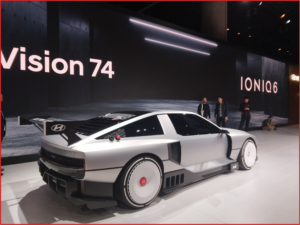
There are prototype concepts and there are phantom or vaporware concepts or an amalgamation of the two. Hyundai’s hydrogen fuel-cell hybrid concept made its US debut at Automobility LA, which closes this Sunday. The recycling of a recycled concept is pertinent in an age where sustainability is necessary for ecological survival. Consider the N vision 2025 that first appeared in an earlier life as we recall at the 2015 Frankfurt Motor Show. Then it was a prototype-build as the Vision Gran Turismo project to commemorate Hyundai’s 50th anniversary coming in 2017.
This time around the N 2025 Vision concept promotes the Hyundai N sub-brand* electrification business centered on zero-emissions technologies. This one first appeared in 2015. The so-called ‘Rolling Lab,’ like so many others before and to come – is a “testbed of future technologies seeking the highest level of emotional involvement for the driver.” … “This strategic approach allows the N brand to experiment with the most advanced technologies from both motorsport and production car development,” Hyundai said.
Well, in its time and place the original ’74 Pony Coupe Concept, which conceptually started, so to speak, this latest US debut of N 2025 Vision Gran Turismo is derived from what was an attempt at that time to capture the emotional attachment and above all the sales of pony cars – aka Mustang, Camaro, Firebird, Barracuda running American roads and boulevards in great numbers.
Hyundai Pony Coupe concept from 1974 was developed by car designer Giorgetto Giugiaro. N Vision 74, which debuted in 2015, inherited the flat surfaces, the proportioned profile, and the unique B-pillar from the 1974 Pony Coupe concept from Albert Bierman as we recall.
Hyundai is now promoting what it says is a unique hydrogen hybrid architecture, with the hybrid structure of a battery-electric machine in combination with an FCEV system, placed in an all-new layout. This is said to be unique to the N 2025 Vision Gran Turismo. The fuel cell stack, with an output of 85 kW (Max 95 kW), is mounted in the front, and a 62.4 kWh T-type battery is mounted in the bottom to lower overall height and center of gravity. The battery retains an 800V high-speed charging architecture.
Click for more information.
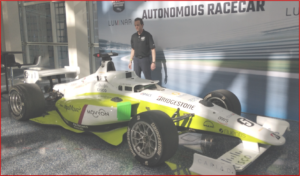
Independent, rear-mounted motors, one per wheel, generate a total power output of 500kW, ~680 horsepower. This allows computer programmers to tune power distribution between left and right wheels. The ability to adjust power distribution with multiple differential settings mean N 2025 Vision Gran Turismo can be optimally tuned for a race track. Ultimately, this leads to driverless race cars, which already exist.
N 2025 Vision Gran Turismo has dual-charging capability. The rear-mounted 9.3-pound capacity hydrogen fuel tanks can be refueled within five minutes, if you can find a hydrogen fueling station. The 85kW fuel cell converts hydrogen to electricity to charge the 62kWh battery. The battery also shares the 800V battery technology from Hyundai’s e-GMP platform with fast-charge capability. Fuel and charging ports for both hydrogen and electricity are said to allow flexibility for various scenarios, highway or racetracks.
One of the key development objectives stated is the old marketing concept variously described as driving emotion by various makers. The N 2025 Vision Gran Turismo hydrogen hybrid architecture presents challenges for heat management. Three independent cooling channels for battery, fuel cell, and motor enable optimized energy efficiency and resistance to performance degradation. “This consistent performance is key to deliver the promise of driving engagement,” said Hyundai.
* N brand was launched in 2015 with a vision and commitment for sustainable performance. Now comes the hydrogen-powered N 2025 Vision Gran Turismo. Although hydrogen fuel cell power was initially regarded by some as a reach, the N Vision 74 represents seven years of technological development and the N brand’s stated goal to deliver an optimistic future for car enthusiasts, regardless of propulsion type. “By using the pinnacle of Hyundai’s state-of-the-art technology, design, and high performance, N Brand is spurring innovation for the entire company,” Hyundai – like others before – claims.

About Ken Zino
Ken Zino, editor and publisher of AutoInformed, is a versatile auto industry participant with global experience spanning decades in print and broadcast journalism, as well as social media. He has automobile testing, marketing, public relations and communications experience. He is past president of The International Motor Press Assn, the Detroit Press Club, founding member and first President of the Automotive Press Assn. He is a member of APA, IMPA and the Midwest Automotive Press Assn.
He also brings an historical perspective while citing their contemporary relevance of the work of legendary auto writers such as Ken Purdy, Jim Dunne or Jerry Flint, or writers such as Red Smith, Mark Twain, Thomas Jefferson – all to bring perspective to a chaotic automotive universe.
Above all, decades after he first drove a car, Zino still revels in the sound of the exhaust as the throttle is blipped during a downshift and the driver’s rush that occurs when the entry, apex and exit points of a turn are smoothly and swiftly crossed. It’s the beginning of a perfect lap.
AutoInformed has an editorial philosophy that loves transportation machines of all kinds while promoting critical thinking about the future use of cars and trucks.
Zino builds AutoInformed from his background in automotive journalism starting at Hearst Publishing in New York City on Motor and MotorTech Magazines and car testing where he reviewed hundreds of vehicles in his decade-long stint as the Detroit Bureau Chief of Road & Track magazine. Zino has also worked in Europe, and Asia – now the largest automotive market in the world with China at its center.








Recycling – Hyundai N 2025 Vision Gran Turismo at 2022 Automobility LA
Click for more information.
There are prototype concepts and there are phantom or vaporware concepts or an amalgamation of the two. Hyundai’s hydrogen fuel-cell hybrid concept made its US debut at Automobility LA, which closes this Sunday. The recycling of a recycled concept is pertinent in an age where sustainability is necessary for ecological survival. Consider the N vision 2025 that first appeared in an earlier life as we recall at the 2015 Frankfurt Motor Show. Then it was a prototype-build as the Vision Gran Turismo project to commemorate Hyundai’s 50th anniversary coming in 2017.
This time around the N 2025 Vision concept promotes the Hyundai N sub-brand* electrification business centered on zero-emissions technologies. This one first appeared in 2015. The so-called ‘Rolling Lab,’ like so many others before and to come – is a “testbed of future technologies seeking the highest level of emotional involvement for the driver.” … “This strategic approach allows the N brand to experiment with the most advanced technologies from both motorsport and production car development,” Hyundai said.
Well, in its time and place the original ’74 Pony Coupe Concept, which conceptually started, so to speak, this latest US debut of N 2025 Vision Gran Turismo is derived from what was an attempt at that time to capture the emotional attachment and above all the sales of pony cars – aka Mustang, Camaro, Firebird, Barracuda running American roads and boulevards in great numbers.
Hyundai Pony Coupe concept from 1974 was developed by car designer Giorgetto Giugiaro. N Vision 74, which debuted in 2015, inherited the flat surfaces, the proportioned profile, and the unique B-pillar from the 1974 Pony Coupe concept from Albert Bierman as we recall.
Hyundai is now promoting what it says is a unique hydrogen hybrid architecture, with the hybrid structure of a battery-electric machine in combination with an FCEV system, placed in an all-new layout. This is said to be unique to the N 2025 Vision Gran Turismo. The fuel cell stack, with an output of 85 kW (Max 95 kW), is mounted in the front, and a 62.4 kWh T-type battery is mounted in the bottom to lower overall height and center of gravity. The battery retains an 800V high-speed charging architecture.
Click for more information.
Independent, rear-mounted motors, one per wheel, generate a total power output of 500kW, ~680 horsepower. This allows computer programmers to tune power distribution between left and right wheels. The ability to adjust power distribution with multiple differential settings mean N 2025 Vision Gran Turismo can be optimally tuned for a race track. Ultimately, this leads to driverless race cars, which already exist.
N 2025 Vision Gran Turismo has dual-charging capability. The rear-mounted 9.3-pound capacity hydrogen fuel tanks can be refueled within five minutes, if you can find a hydrogen fueling station. The 85kW fuel cell converts hydrogen to electricity to charge the 62kWh battery. The battery also shares the 800V battery technology from Hyundai’s e-GMP platform with fast-charge capability. Fuel and charging ports for both hydrogen and electricity are said to allow flexibility for various scenarios, highway or racetracks.
One of the key development objectives stated is the old marketing concept variously described as driving emotion by various makers. The N 2025 Vision Gran Turismo hydrogen hybrid architecture presents challenges for heat management. Three independent cooling channels for battery, fuel cell, and motor enable optimized energy efficiency and resistance to performance degradation. “This consistent performance is key to deliver the promise of driving engagement,” said Hyundai.
* N brand was launched in 2015 with a vision and commitment for sustainable performance. Now comes the hydrogen-powered N 2025 Vision Gran Turismo. Although hydrogen fuel cell power was initially regarded by some as a reach, the N Vision 74 represents seven years of technological development and the N brand’s stated goal to deliver an optimistic future for car enthusiasts, regardless of propulsion type. “By using the pinnacle of Hyundai’s state-of-the-art technology, design, and high performance, N Brand is spurring innovation for the entire company,” Hyundai – like others before – claims.
About Ken Zino
Ken Zino, editor and publisher of AutoInformed, is a versatile auto industry participant with global experience spanning decades in print and broadcast journalism, as well as social media. He has automobile testing, marketing, public relations and communications experience. He is past president of The International Motor Press Assn, the Detroit Press Club, founding member and first President of the Automotive Press Assn. He is a member of APA, IMPA and the Midwest Automotive Press Assn. He also brings an historical perspective while citing their contemporary relevance of the work of legendary auto writers such as Ken Purdy, Jim Dunne or Jerry Flint, or writers such as Red Smith, Mark Twain, Thomas Jefferson – all to bring perspective to a chaotic automotive universe. Above all, decades after he first drove a car, Zino still revels in the sound of the exhaust as the throttle is blipped during a downshift and the driver’s rush that occurs when the entry, apex and exit points of a turn are smoothly and swiftly crossed. It’s the beginning of a perfect lap. AutoInformed has an editorial philosophy that loves transportation machines of all kinds while promoting critical thinking about the future use of cars and trucks. Zino builds AutoInformed from his background in automotive journalism starting at Hearst Publishing in New York City on Motor and MotorTech Magazines and car testing where he reviewed hundreds of vehicles in his decade-long stint as the Detroit Bureau Chief of Road & Track magazine. Zino has also worked in Europe, and Asia – now the largest automotive market in the world with China at its center.