
SAE Autonomous Vehicle Driving Levels.
What do you get when you combine autonomous vehicle hardware with vehicle-to-vehicle or vehicle-to-infrastructure via the cloud and add a super control computer? (See SAE Autonomous Driving Levels)
Well, thinking outside the existing controller and regulatory boxes, Delphi claims that by adding a super controller, improved emissions, fuel economy and possibly safety can all be improved. It’s dubbed Intelligent Driving in Michigan and will likely have lots of competition from competing suppliers or automakers.
A morning of test driving a 1.8-liter, turbocharged, mild hybrid gasoline fueled Volkswagen Passat on a new test track at Kettering University in Flint (nee GMI) shows that an intelligent cruise control system made smarter with position, road and traffic data can boost fuel economy by ~16%.
On average for the group of journalists I was with, the Intelligent Drive system improved fuel consumption by 16% compared to not using the system, while showing only about 4% longer time to complete the route. The Intelligent Driving system can be calibrated to be more or less aggressive. Comparing my personal data, both with and without Intelligent Driving active, the Intelligent Driving controls used 18% less fuel and took 16 seconds longer (144 seconds).
It also shows that a Michigan-annealed driver is much more aggressive driving than a drive by a computer optimized for efficiency. Yup, the whole state acts as if it wants to be first to the stop sign or red light. So, the driver can wait (zero fuel economy at idle) to start the whole wasteful stop light Grand Prix once again.
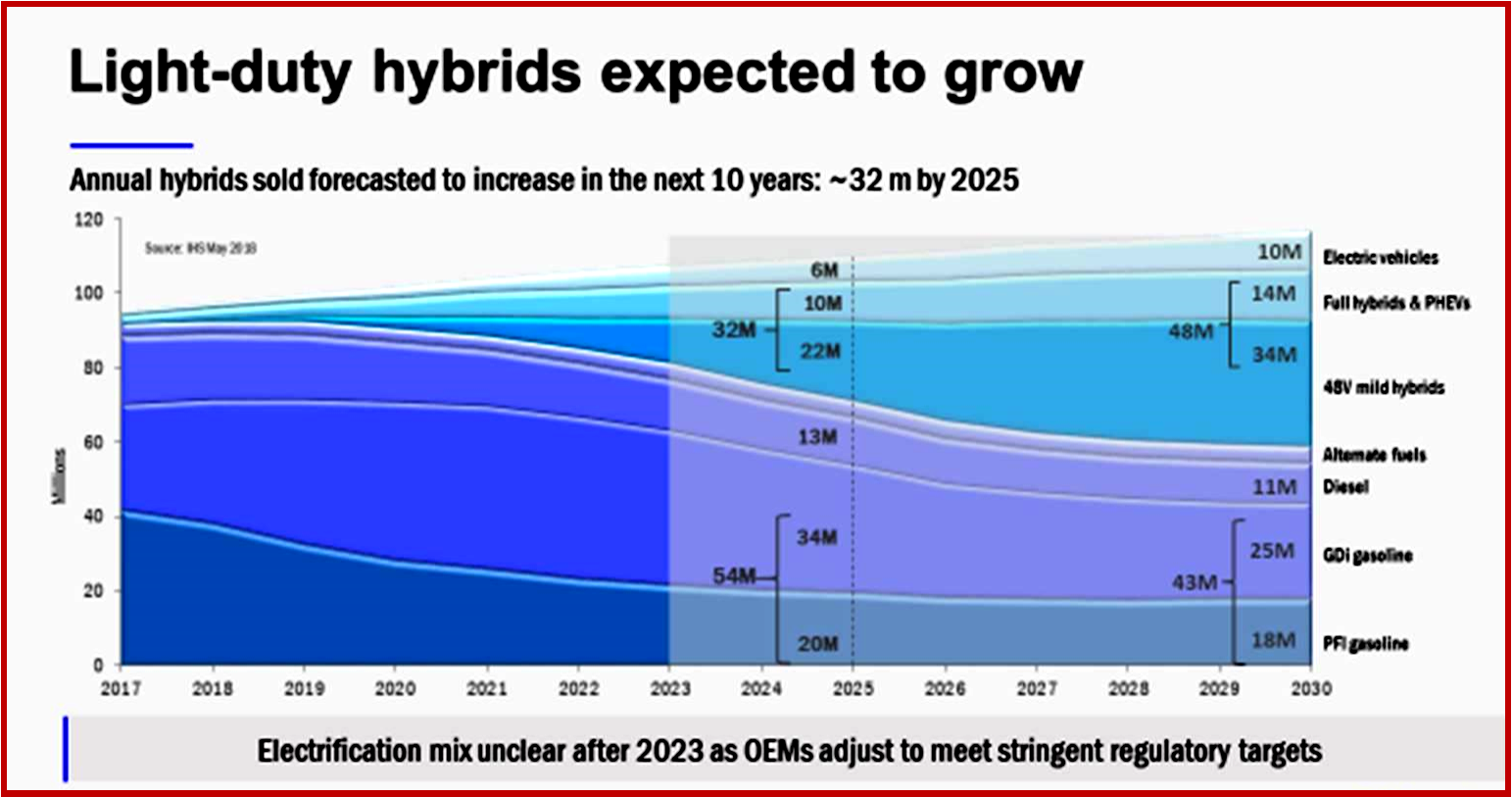
Click to Enlarge.
More intriguing is that the basic prototype Intelligent Driving setup in theory can show such gains in gasoline, diesel, hybrid or pure EV powertrains. Just bring lots of programing and development engineering to a potentially bug-ridden the party.
“There’s no question the pace of vehicle electrification is intensifying. You’re pushing the boundaries in emissions, fuel economy, content and connectivity, as well as finding the power to run it all,” says Mary Gustanski, Chief Technology Officer of Delphi Technologies “And then there’s this hurdle: The driving experience. You must ignite the possible, balanced with the practical to deliver vehicles that are both fun and functional.”
She has a point. Consider, since 2003, per vehicle:
- Processing speeds are 36-times faster.
- Memory usage is up more than 3,000 percent.
- Software apps have nearly doubled, with an average of 1,500 needed to manage both control and diagnostic functions.
Cars and Computers
Delphi notes that the mass mixing of cars and computers dates to the ~1980s when more precise control of engines and transmissions were needed to meet emission and fuel economy requirements. Entertainment, braking and air conditioning systems soon followed. Today, you’ll find software-enabled components and the mini-computers plugged into so-called Electronic Control Units (ECUs) on everything from cruise control to more recent advances such as collision avoidance and self-parking.
As vehicles take on more electrification in the propulsion arena in the form of hybrids and electric vehicles (EVs), software – along with on-board network creation and management – take on even greater importance. SAE Autonomous Driving Levels
The vehicle will not move without the right software running in the background, making propulsion work safely and seamlessly. Consider a plug-in hybrid. The inverter and its software package manage the flow of energy from the battery pack to the motor. Using more than 1 million lines of code, the inverter keeps the power from the battery perfectly in sync with what the motor needs to make the vehicle go longer and go better.
Move to full electrics, and even higher levels of information sharing between the hardware emerges. So, does the need for on-vehicle private propulsion networks to manage it all.
At the heart of these networks are propulsion controllers, which are essentially the “servers” that govern the operation of the entire propulsion system. The propulsion controller also opens the doors to more computing power found in the cloud. Via the controller, the vehicle can access and leverage real-time traffic, construction, weather information and more to improve performance and efficiency. It can also manage over-the-air (OTA) diagnostics and software updates.
Someday, it could even download new model year features and upgrades to older vehicles, creating not only better ownership experiences, but new revenue streams for automakers and the aftermarket. That someday is only three or four years over the rainbow.

About Ken Zino
Ken Zino, editor and publisher of AutoInformed, is a versatile auto industry participant with global experience spanning decades in print and broadcast journalism, as well as social media. He has automobile testing, marketing, public relations and communications experience. He is past president of The International Motor Press Assn, the Detroit Press Club, founding member and first President of the Automotive Press Assn. He is a member of APA, IMPA and the Midwest Automotive Press Assn.
He also brings an historical perspective while citing their contemporary relevance of the work of legendary auto writers such as Ken Purdy, Jim Dunne or Jerry Flint, or writers such as Red Smith, Mark Twain, Thomas Jefferson – all to bring perspective to a chaotic automotive universe.
Above all, decades after he first drove a car, Zino still revels in the sound of the exhaust as the throttle is blipped during a downshift and the driver’s rush that occurs when the entry, apex and exit points of a turn are smoothly and swiftly crossed. It’s the beginning of a perfect lap.
AutoInformed has an editorial philosophy that loves transportation machines of all kinds while promoting critical thinking about the future use of cars and trucks.
Zino builds AutoInformed from his background in automotive journalism starting at Hearst Publishing in New York City on Motor and MotorTech Magazines and car testing where he reviewed hundreds of vehicles in his decade-long stint as the Detroit Bureau Chief of Road & Track magazine. Zino has also worked in Europe, and Asia – now the largest automotive market in the world with China at its center.







Delphi: Improved Efficiency, Emissions with Autonomous Hardware, Software and a Super Computerized Controller
SAE Autonomous Vehicle Driving Levels.
What do you get when you combine autonomous vehicle hardware with vehicle-to-vehicle or vehicle-to-infrastructure via the cloud and add a super control computer? (See SAE Autonomous Driving Levels)
Well, thinking outside the existing controller and regulatory boxes, Delphi claims that by adding a super controller, improved emissions, fuel economy and possibly safety can all be improved. It’s dubbed Intelligent Driving in Michigan and will likely have lots of competition from competing suppliers or automakers.
A morning of test driving a 1.8-liter, turbocharged, mild hybrid gasoline fueled Volkswagen Passat on a new test track at Kettering University in Flint (nee GMI) shows that an intelligent cruise control system made smarter with position, road and traffic data can boost fuel economy by ~16%.
On average for the group of journalists I was with, the Intelligent Drive system improved fuel consumption by 16% compared to not using the system, while showing only about 4% longer time to complete the route. The Intelligent Driving system can be calibrated to be more or less aggressive. Comparing my personal data, both with and without Intelligent Driving active, the Intelligent Driving controls used 18% less fuel and took 16 seconds longer (144 seconds).
It also shows that a Michigan-annealed driver is much more aggressive driving than a drive by a computer optimized for efficiency. Yup, the whole state acts as if it wants to be first to the stop sign or red light. So, the driver can wait (zero fuel economy at idle) to start the whole wasteful stop light Grand Prix once again.
Click to Enlarge.
More intriguing is that the basic prototype Intelligent Driving setup in theory can show such gains in gasoline, diesel, hybrid or pure EV powertrains. Just bring lots of programing and development engineering to a potentially bug-ridden the party.
“There’s no question the pace of vehicle electrification is intensifying. You’re pushing the boundaries in emissions, fuel economy, content and connectivity, as well as finding the power to run it all,” says Mary Gustanski, Chief Technology Officer of Delphi Technologies “And then there’s this hurdle: The driving experience. You must ignite the possible, balanced with the practical to deliver vehicles that are both fun and functional.”
She has a point. Consider, since 2003, per vehicle:
Cars and Computers
Delphi notes that the mass mixing of cars and computers dates to the ~1980s when more precise control of engines and transmissions were needed to meet emission and fuel economy requirements. Entertainment, braking and air conditioning systems soon followed. Today, you’ll find software-enabled components and the mini-computers plugged into so-called Electronic Control Units (ECUs) on everything from cruise control to more recent advances such as collision avoidance and self-parking.
As vehicles take on more electrification in the propulsion arena in the form of hybrids and electric vehicles (EVs), software – along with on-board network creation and management – take on even greater importance. SAE Autonomous Driving Levels
The vehicle will not move without the right software running in the background, making propulsion work safely and seamlessly. Consider a plug-in hybrid. The inverter and its software package manage the flow of energy from the battery pack to the motor. Using more than 1 million lines of code, the inverter keeps the power from the battery perfectly in sync with what the motor needs to make the vehicle go longer and go better.
Move to full electrics, and even higher levels of information sharing between the hardware emerges. So, does the need for on-vehicle private propulsion networks to manage it all.
At the heart of these networks are propulsion controllers, which are essentially the “servers” that govern the operation of the entire propulsion system. The propulsion controller also opens the doors to more computing power found in the cloud. Via the controller, the vehicle can access and leverage real-time traffic, construction, weather information and more to improve performance and efficiency. It can also manage over-the-air (OTA) diagnostics and software updates.
Someday, it could even download new model year features and upgrades to older vehicles, creating not only better ownership experiences, but new revenue streams for automakers and the aftermarket. That someday is only three or four years over the rainbow.
About Ken Zino
Ken Zino, editor and publisher of AutoInformed, is a versatile auto industry participant with global experience spanning decades in print and broadcast journalism, as well as social media. He has automobile testing, marketing, public relations and communications experience. He is past president of The International Motor Press Assn, the Detroit Press Club, founding member and first President of the Automotive Press Assn. He is a member of APA, IMPA and the Midwest Automotive Press Assn. He also brings an historical perspective while citing their contemporary relevance of the work of legendary auto writers such as Ken Purdy, Jim Dunne or Jerry Flint, or writers such as Red Smith, Mark Twain, Thomas Jefferson – all to bring perspective to a chaotic automotive universe. Above all, decades after he first drove a car, Zino still revels in the sound of the exhaust as the throttle is blipped during a downshift and the driver’s rush that occurs when the entry, apex and exit points of a turn are smoothly and swiftly crossed. It’s the beginning of a perfect lap. AutoInformed has an editorial philosophy that loves transportation machines of all kinds while promoting critical thinking about the future use of cars and trucks. Zino builds AutoInformed from his background in automotive journalism starting at Hearst Publishing in New York City on Motor and MotorTech Magazines and car testing where he reviewed hundreds of vehicles in his decade-long stint as the Detroit Bureau Chief of Road & Track magazine. Zino has also worked in Europe, and Asia – now the largest automotive market in the world with China at its center.