Click for more information.
A new study released today from the Insurance Institute for Highway Safety posits that safety officials should concentrate on leveraging friendships and family ties to inspire change, making drivers more aware of how serious a threat distraction represents and offering solutions to the common barriers that prevent them from simply ignoring their phones.
“It may come as a surprise, but many drivers still don’t realize how dangerous it is to check a text message or glance at their Instagram feed while they’re zipping along the road,” said IIHS Research Associate Aimee Cox, the lead author of the study.
Police reports indicate that more than 3000 people died in distraction-related crashes across the United States in 2020, accounting for 8% of all traffic-related fatalities. “Because it’s difficult to determine if distraction contributed to a crash, that number is almost certainly an underestimate,” IIHS said. As a member of the National Distracted Driving Coalition, IIHS commissioned a national survey “designed to guide the coalition’s future educational campaigns as well as the efforts of other organizations.”
Eating or putting on makeup can also increase the risk of a crash, but mobile phones are a particularly tempting distraction. “Phone use is now so constant that around half of some 2000 U.S. drivers surveyed by IIHS reported performing at least one device-based task on most or all drives over the past month.” The problem of apps enabled by smartphones is especially common among parents and drivers employed by app-based rideshare and delivery companies, an earlier analysis of the survey results showed.
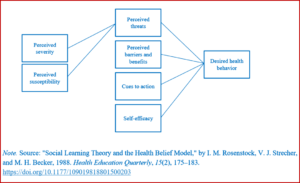
In the current investigation, Cox examined why some people are more likely than others to use their phones while driving, and what might persuade them to stop. Borrowing a behavior change theory called the Health Belief Model from the public health field, she developed ~60 questions designed to identify:
- how strong a threat the participants perceived manipulating a mobile device while driving to be,
- the benefits they believed were associated with refraining from using their device,
- the barriers that prevent them from changing their behavior,
- and the cues to action that might prompt them to do so.
“The Health Belief Model has been very useful in guiding disease-screening and immunization programs for many years,” said Cox. “It can also be an effective way to better understand distracted driving, which is a public health issue of another kind.”
Overall, most drivers agreed that distracted driving increased their risk of crashing, causing a major injury or damaging their vehicle, and most agreed that being reminded by a person they care about that they might hurt or kill someone would motivate them to take steps to avoid distraction. Not surprisingly, however, drivers who regularly interacted with their phones while driving perceived the threat to be less severe and the barriers to giving up the practice to be greater.
“Conventional, practical policy interventions that increase your chances of getting caught using your device when you shouldn’t, whether that means stronger laws, increased enforcement or camera-based ticketing, definitely have a big role to play in reducing distracted driving,” Cox said. “But these survey responses suggest that programs that leverage interpersonal relationships may also be effective.”
Programs that encourage parents and teens to form a contract agreeing to avoid distracted driving, such as the Drive Smart agreement developed by the University of Michigan’s Transportation Research Institute, for example, have already shown promise.
For the rideshare and delivery drivers the survey identified as most likely to engage in distracting device-based activities, as well as other workers, workplace policies that discourage distracted driving and technological solutions are likely more promising. Gig workers rated work requirements as one of the biggest barriers preventing them from ignoring their phones, while other drivers were neutral or disagreed slightly about the importance of work as a barrier.
Most of the surveyed drivers expressed support for Do Not Disturb features that do not require the driver to opt in and that turn on automatically whenever they’re in their vehicle. However, in an earlier IIHS study, only 1 in 5 iPhone users reported using Apple’s opt-in feature, which asks during the initial setup of the phone if the user wants it to activate automatically whenever they’re driving. One reason for that low use may be that drivers are reluctant to use blockers that restrict functions they view as essential.
Vehicle manufacturers and operating system designers are addressing that challenge with voice-activated artificial intelligence (Siri and Google Assistant), integrated controls (Apple CarPlay and Android Auto) and stronger Do Not Disturb systems. Both the Focus feature on iPhones and the Do Not Disturb feature on Android phones can be set to activate automatically when the user is driving, for example. But few users may be aware that the setting can be configured to allow notifications from specific contacts and apps while screening out others or to allow “breakthrough” notifications if senders tag messages as urgent, according to Cox.
As awareness of these innovations increases, they may persuade more drivers to utilize the Do Not Disturb feature and perform more of the tasks they consider essential through voice commands. However, even hands-free operation is not without risk. Earlier IIHS research has shown that voice interfaces also take some of the driver’s attention from the road.

About Ken Zino
Ken Zino, editor and publisher of AutoInformed, is a versatile auto industry participant with global experience spanning decades in print and broadcast journalism, as well as social media. He has automobile testing, marketing, public relations and communications experience. He is past president of The International Motor Press Assn, the Detroit Press Club, founding member and first President of the Automotive Press Assn. He is a member of APA, IMPA and the Midwest Automotive Press Assn.
He also brings an historical perspective while citing their contemporary relevance of the work of legendary auto writers such as Ken Purdy, Jim Dunne or Jerry Flint, or writers such as Red Smith, Mark Twain, Thomas Jefferson – all to bring perspective to a chaotic automotive universe.
Above all, decades after he first drove a car, Zino still revels in the sound of the exhaust as the throttle is blipped during a downshift and the driver’s rush that occurs when the entry, apex and exit points of a turn are smoothly and swiftly crossed. It’s the beginning of a perfect lap.
AutoInformed has an editorial philosophy that loves transportation machines of all kinds while promoting critical thinking about the future use of cars and trucks.
Zino builds AutoInformed from his background in automotive journalism starting at Hearst Publishing in New York City on Motor and MotorTech Magazines and car testing where he reviewed hundreds of vehicles in his decade-long stint as the Detroit Bureau Chief of Road & Track magazine. Zino has also worked in Europe, and Asia – now the largest automotive market in the world with China at its center.








Friends, Families Can Change Distracted Driving Behaviors
Click for more information.
A new study released today from the Insurance Institute for Highway Safety posits that safety officials should concentrate on leveraging friendships and family ties to inspire change, making drivers more aware of how serious a threat distraction represents and offering solutions to the common barriers that prevent them from simply ignoring their phones.
“It may come as a surprise, but many drivers still don’t realize how dangerous it is to check a text message or glance at their Instagram feed while they’re zipping along the road,” said IIHS Research Associate Aimee Cox, the lead author of the study.
Police reports indicate that more than 3000 people died in distraction-related crashes across the United States in 2020, accounting for 8% of all traffic-related fatalities. “Because it’s difficult to determine if distraction contributed to a crash, that number is almost certainly an underestimate,” IIHS said. As a member of the National Distracted Driving Coalition, IIHS commissioned a national survey “designed to guide the coalition’s future educational campaigns as well as the efforts of other organizations.”
Eating or putting on makeup can also increase the risk of a crash, but mobile phones are a particularly tempting distraction. “Phone use is now so constant that around half of some 2000 U.S. drivers surveyed by IIHS reported performing at least one device-based task on most or all drives over the past month.” The problem of apps enabled by smartphones is especially common among parents and drivers employed by app-based rideshare and delivery companies, an earlier analysis of the survey results showed.
In the current investigation, Cox examined why some people are more likely than others to use their phones while driving, and what might persuade them to stop. Borrowing a behavior change theory called the Health Belief Model from the public health field, she developed ~60 questions designed to identify:
“The Health Belief Model has been very useful in guiding disease-screening and immunization programs for many years,” said Cox. “It can also be an effective way to better understand distracted driving, which is a public health issue of another kind.”
Overall, most drivers agreed that distracted driving increased their risk of crashing, causing a major injury or damaging their vehicle, and most agreed that being reminded by a person they care about that they might hurt or kill someone would motivate them to take steps to avoid distraction. Not surprisingly, however, drivers who regularly interacted with their phones while driving perceived the threat to be less severe and the barriers to giving up the practice to be greater.
“Conventional, practical policy interventions that increase your chances of getting caught using your device when you shouldn’t, whether that means stronger laws, increased enforcement or camera-based ticketing, definitely have a big role to play in reducing distracted driving,” Cox said. “But these survey responses suggest that programs that leverage interpersonal relationships may also be effective.”
Programs that encourage parents and teens to form a contract agreeing to avoid distracted driving, such as the Drive Smart agreement developed by the University of Michigan’s Transportation Research Institute, for example, have already shown promise.
For the rideshare and delivery drivers the survey identified as most likely to engage in distracting device-based activities, as well as other workers, workplace policies that discourage distracted driving and technological solutions are likely more promising. Gig workers rated work requirements as one of the biggest barriers preventing them from ignoring their phones, while other drivers were neutral or disagreed slightly about the importance of work as a barrier.
Most of the surveyed drivers expressed support for Do Not Disturb features that do not require the driver to opt in and that turn on automatically whenever they’re in their vehicle. However, in an earlier IIHS study, only 1 in 5 iPhone users reported using Apple’s opt-in feature, which asks during the initial setup of the phone if the user wants it to activate automatically whenever they’re driving. One reason for that low use may be that drivers are reluctant to use blockers that restrict functions they view as essential.
Vehicle manufacturers and operating system designers are addressing that challenge with voice-activated artificial intelligence (Siri and Google Assistant), integrated controls (Apple CarPlay and Android Auto) and stronger Do Not Disturb systems. Both the Focus feature on iPhones and the Do Not Disturb feature on Android phones can be set to activate automatically when the user is driving, for example. But few users may be aware that the setting can be configured to allow notifications from specific contacts and apps while screening out others or to allow “breakthrough” notifications if senders tag messages as urgent, according to Cox.
As awareness of these innovations increases, they may persuade more drivers to utilize the Do Not Disturb feature and perform more of the tasks they consider essential through voice commands. However, even hands-free operation is not without risk. Earlier IIHS research has shown that voice interfaces also take some of the driver’s attention from the road.
About Ken Zino
Ken Zino, editor and publisher of AutoInformed, is a versatile auto industry participant with global experience spanning decades in print and broadcast journalism, as well as social media. He has automobile testing, marketing, public relations and communications experience. He is past president of The International Motor Press Assn, the Detroit Press Club, founding member and first President of the Automotive Press Assn. He is a member of APA, IMPA and the Midwest Automotive Press Assn. He also brings an historical perspective while citing their contemporary relevance of the work of legendary auto writers such as Ken Purdy, Jim Dunne or Jerry Flint, or writers such as Red Smith, Mark Twain, Thomas Jefferson – all to bring perspective to a chaotic automotive universe. Above all, decades after he first drove a car, Zino still revels in the sound of the exhaust as the throttle is blipped during a downshift and the driver’s rush that occurs when the entry, apex and exit points of a turn are smoothly and swiftly crossed. It’s the beginning of a perfect lap. AutoInformed has an editorial philosophy that loves transportation machines of all kinds while promoting critical thinking about the future use of cars and trucks. Zino builds AutoInformed from his background in automotive journalism starting at Hearst Publishing in New York City on Motor and MotorTech Magazines and car testing where he reviewed hundreds of vehicles in his decade-long stint as the Detroit Bureau Chief of Road & Track magazine. Zino has also worked in Europe, and Asia – now the largest automotive market in the world with China at its center.