
Click for more.
“After a year marked by policy-driven sales volatility, the new-vehicle market has settled into a slower rhythm in early 2026,” said Jeremy Robb, chief economist at Cox Automotive. “The pull-ahead demand created by last spring’s tariff announcements and, later, the loss of EV tax credits is (sic) now all firmly in the rearview mirror. While the stimulus of a good tax-return season is a positive, the new-vehicle market today is being shaped by higher vehicle prices, ongoing inflationary pressures, and still-elevated interest rates.”
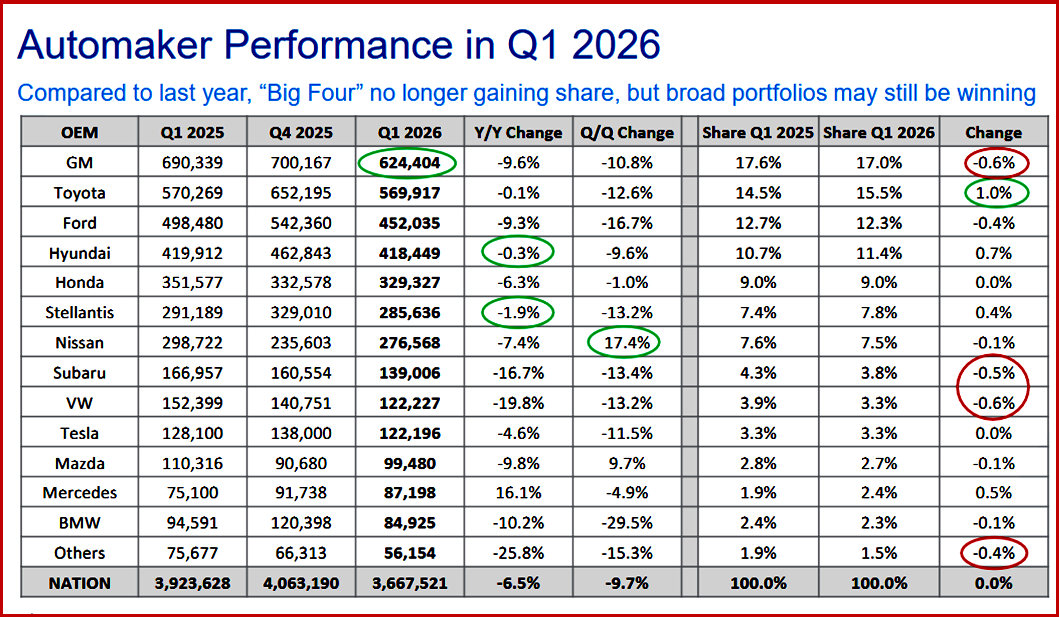
“New-vehicle sales performance in Q1 has been uneven across different brands, models, and market segments. Sales of smaller vehicles, particularly compact cars and compact SUVs, have fallen more than the overall industry, reflecting weaker demand from lower-income buyers and the ongoing affordability pressures for mainstream shoppers. Sales of more expensive full-size trucks and SUVs also declined in Q1. Mid-size segments, however, are forecast to see sales growth in Q1, driven by new product launches and, in some cases, buyers stepping down from higher price points. Toyota and Hyundai are expected to deliver solid share growth in Q1, as will Nissan, thanks to strong Rogue and Pathfinder sales. Stellantis is also forecast to deliver year over year share growth,” Cox said in a release.