
Tsk, tsk - science without data is merely opinion.
After what it called a “careful review of the science,” the U.S. Environmental Protection Agency (EPA) today said it is affirming the current national air quality standards for carbon monoxide (CO). In a statement EPA said science shows that the current standards protect public health, including those who are most susceptible, and the environment.
Since 1980, levels of CO in the air have fallen by 80%, almost all of which is the result of motor vehicle emissions controls. EPA first set air quality standards for CO in 1971. For protection of both public health and welfare, EPA set a 8-hour primary standard at 9 parts per million (ppm) and a 1-hour primary standard at 35 ppm.
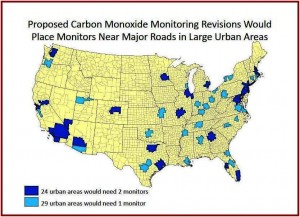
However, under pressure from critics, EPA is revising air monitoring requirements. The changes will require a more concentrated monitoring network with CO monitors placed near roads in 52 urban areas with populations of 1 million or more.
“More than 45 million people who attend school, live near, commute, or work on or near transportation routes have their health placed at risk by exposure to carbon monoxide and other traffic pollutants. Lack of adequate monitoring has meant that they cannot adequately know the threats to their health, and has limited research and cleanup,” said Charles D. Connor, President and Chief Executive Officer, American Lung Association.
CO is a colorless, odorless gas emitted from combustion processes. Nationally, and particularly in urban areas, the majority of CO emissions come from motor vehicles. CO can cause harmful health effects by reducing oxygen delivery to the body’s organs – such as the heart and brain – as well as tissues.
Monitors in areas with populations of 2.5 million or more are required to be operational by January 1, 2015 and monitors required in areas with populations of 1 million or more are required to be operational by January 1, 2017. The data EPA claims will also be used to determine compliance with the current standards and to help inform future reviews of the standard.
The current health standards are 9 parts per million (ppm) over 8 hours, and 35 ppm over 1 hour are unchanged since their inception. EPA said CO levels at monitors across the country are quite low and are well within the standards, claiming that federal, state and local efforts to reduce CO pollution have been successful and are “providing important public health protections to all Americans.” More information: http://www.epa.gov/airquality/carbonmonoxide.