
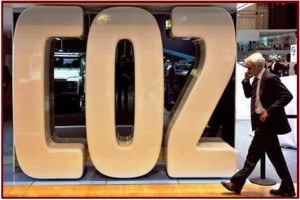
With marketplace pressures over vehicle sales and stock prices increasing, automakers must deal with their contributing role in climate change.
The European Automobile Manufacturers’ Association, known by its French acronym as ACEA, today announced the appointment of Erik Jonnaert as the new Secretary General. Jonnaert, 55, replaces Ivan Hodac, 67, who after 12 years heading ACEA retires this fall. (Read AutoInformed on EU Car Sales Weak in April. Off -7% YTD)
Last July the European Commission announced new regulations limiting CO2 emissions to a fleet-average target of 95g CO2/km for cars and 147g CO2/km for vans by 2020. At that time, ACEA said they were tough targets for an auto industry in difficult economic times and “extremely challenging.” In 2011, the average EU fleet emissions were 136.6g CO2/km compared to 186g CO2/km in 1995, which is a 26.6% decrease over the period.
A Belgian national, Jonnaert graduated from Harvard Law School and started his career with the Linklaters law firm. He subsequently joined Procter & Gamble, where he worked for more than 25 years in various public affairs, regulatory affairs, communications and stakeholder relations positions. His latest job was vice president for P&G’s external relations in Asia.
Jonnaert will not only have to lobby behind the scenes about ongoing regulations, but he also have to deal with contentious trade policy issues as the Eurozone crisis continues unabated.
Austerity measures — such as those imposed in the United Kingdom, Spain and Greece — are driving a vicious cycle of spending cuts crushing economic growth, which shrinks revenues, leading to larger deficits and more spending cuts—resulting in increased debt ratios and permanent mass unemployment, according to Richard Trumca, the head of the AFL-CIO in the U.S.
Previously European automakers lead by the gas-guzzling German sports and luxury carmakers flouted a voluntary agreement to limit CO2 emissions. It is not clear if they will continue to fight this new regulation as fiercely as they did in the past when an industry proposed voluntary reduction of CO2 emissions at the turn of the century never happened, except in press releases.
The European auto industry employs 11.6 million people or 5.3% of the EU population. The 3.2 million jobs in automotive manufacturing represent 10.2% of EU’s manufacturing employment. Motor vehicles account for more than €385 billion in tax contributions in the EU.
The automotive sector contributes positively to the EU trade balance with a €92 billion surplus, much of it at the expense of American autoworkers who pay taxes to underwrite lavishly NATO and European defense budgets giving German automakers in particular an unfair subsidy according to a growing number of critics of the U.S. defense budget and the State Department under the ‘no jobs’ Obama administration.
“We are delighted to welcome Mr. Jonnaert to the industry and to ACEA,” said ACEA President Sergio Marchionne, CEO of beleaguered Fiat and the Chrysler Group. “We are confident that he will build upon the exceptional work of Mr. Hodac who has steered ACEA smoothly for many years, shaping it into one of Brussels’ most respected associations.”
ACEA members are BMW Group, DAF Trucks, Daimler, FIAT S.p.A., Ford of Europe, General Motors Europe, Hyundai Motor Europe, IVECO S.p.A., Jaguar Land Rover, PSA Peugeot Citroën, Renault Group, Toyota Motor Europe, Volkswagen Group, Volvo Cars, and Volvo Group.
See also:
- Automakers Protest EU Korean FTA Deal is One Sided
- European Makers Squeal Over Tough CO2 Targets Just Announced
- EU Pols Say Tough New CO2 Limits Will Create Auto Jobs
- EU Car Sales Weak in April. Off -7% YTD