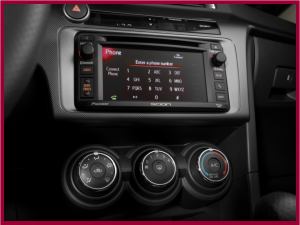
Automakers are redoubling efforts to increase the use of phones, infotainment systems, telematics and web access in their vehicles in spite of distracted driving critics.
Only a decade ago, the powertrain and performance of an automobile were the main selling points. Infotainment systems did not exist, and almost all light vehicles were without any type of so-called connectivity to the world outside – no telematics, cellular, Wi-Fi or Bluetooth.
Now things have changed. Infotainment systems can account for as much as 10% of the price of buying a new car, and automakers cannot add enough electronic doo-dads fast enough, in spite of the deadly distracted driving problem they enable.
The average car in 2012 contains about $330 worth of semiconductors, up 65% from $200 in 2002, and remember that in the semiconductor business prices drop radically in short periods, meaning that $350 buys a whole lot more diodes, transistors and touchscreens today than $250 back then.
“In 2002, an owner of a new Ford Focus gazed down upon a proprietary dashboard that had no connectivity and that was adorned only with an AM/FM/CD music player,” says Ben Scott of the IHS consultancy. “In 2012, the proud owner of a new Focus beheld a dashboard rich with infotainment features, including multiple displays, a wealth of apps and services and various means of connectivity. The major question that automakers need answered now is, ‘What will the Focus dashboard of 2022 look like?’”
IHS estimates that based on the cost to design a completely new car model, some automakers are spending around one-third of the budget just on the in-vehicle infotainment and the in-car technology around the system. HIS claims that vehicles are the third-fastest growing connected device after smartphones and tablets.
Consumers are interested in telematics services, including internet radio, emergency/ concierge services pioneered by GM’s OnStar. Automakers want to use telematics to collect vehicle data. It is likely that in the developed regions, every car manufacturer will offer some type of connected service in its model line-up by 2015.
Read AutoInformed on:
- GM OnStar Telematics Now in Mexico
- U.S. DOT Publishes Distracted Driving Guidelines
- Consumer Electronics Association Denies Distracted Driving
- Class Action Suit Filed Against MyFord Touch System
- Automaker Defense of Hands-Free Devices Hooey AAA Says
- Under Reporting of Cell Phone Crashes Rampant. New National Safety Council Research Shows NHTSA FARS Data is Garbage
- Highway Deaths at Lowest Level in 60 years
- Distracted Driving is a Growing Business Liability
- NSC Says Much Work Needs to be done on Distracted Driving. Once Again Urges a Total ban on all Cell Phone Use.
- Largest Road Test of Connected Vehicle Crash Avoidance Started
- OnStar Subscribers Reach 450,000 in China
- Distracted Driving – Chapel Hill Bans All Cell Phones
- Ford, Lincoln Change Touch Screens after Quality Ratings Dive