
All fuel produced, imported, and sold in the United States must meet emissions standards for harmful pollutants, such as benzene and other cancer-causing air toxics.
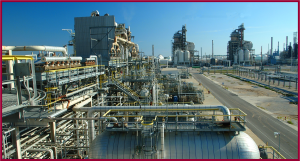
CITGO Petroleum Corporation will pay a $737,000 civil penalty and start projects to reduce harmful air pollution in a deal cut by the Department of Justice and EPA with the Venezuelan-owned, Houston-based, company. The agreement resolves alleged violations of the Clean Air Act, aka CAA, at its petroleum refining facilities located in Lemont, Illinois and Lake Charles, Louisiana.
In addition to the penalty, the settlement filed in U.S. District Court for the Southern District of Texas, requires that CITGO implement projects that are predicted to reduce emissions of volatile organic compounds by more than 100 tons during the next five years.
To reduce VOC emissions, including cancer causing air toxics, the settlement requires that CITGO install and maintain a geodesic dome on one of the fuel storage tanks at its Lemont refinery, as well as carbon adsorption systems on two fuel storage tanks at its Lake Charles refinery.
“Producing fuel for cars sold in the U.S. carries a requirement to meet Clean Air Act standards,” said Cynthia Giles, assistant administrator for EPA’s Office of Enforcement and Compliance Assurance.
In a complaint filed at the same time as the settlement, EPA alleges that the Lake Charles refinery produced fuel that exceeded the refinery’s annual average emissions limit for mobile source air toxics, including benzene. EPA further alleges that CITGO failed to sample and test reformulated gasoline blendstock at its Lemont refinery, as required by the CAA.
The CAA requires that all fuel produced, imported, and sold in the United States meet certain emissions standards for harmful pollutants, such as benzene and other cancer-causing air toxics. Air toxics emissions from vehicles and other mobile sources are of particular concern in the areas closest to where they are emitted, but can also be transported long distances, affecting the health and welfare of people in other geographic areas. Some of these toxic compounds can persist in the environment and bio-accumulate in the food chain, further spreading harmful effects.
The sampling, testing, record keeping and reporting requirements of the fuels program provide the foundation for EPA’s compliance program. Refiners that violate these requirements undermine the integrity of the fuels regulations and hinder the agency’s ability to ensure gasoline complies with fuel quality and performance standards, according to EPA.