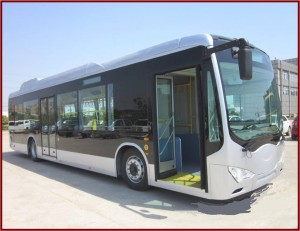
“One of our primary goals was to position Windsor among the first cities in North America to pioneer the efficient use of electric buses,” said Chinese company BYD.
Today, 15 states and the District of Columbia announced a joint memorandum of understanding so that 100% of all new medium- and heavy-duty vehicle sales be zero emission vehicles by 2050, with an interim target of 30% zero-emission vehicle sales by 2030.
While trucks and buses only account for 4% of vehicles on the road, they are responsible for ~25% of total transportation sector greenhouse gas emissions. Included in the sweeping reform are large pickup trucks and vans, delivery trucks, box trucks, school and transit buses, and long-haul delivery trucks (big-rigs).
States signing the MOU are California, Connecticut, Colorado, Hawaii, Maine, Maryland, Massachusetts, New Jersey, New York, North Carolina, Oregon, Pennsylvania, Rhode Island, Vermont, and Washington.
The MOU if enacted could slash harmful diesel emissions and cut carbon pollution that cause global warming. The transportation sector is the nation’s largest source of greenhouse gas emissions. It also contributes to unhealthy levels of smog in many of the signatory states.
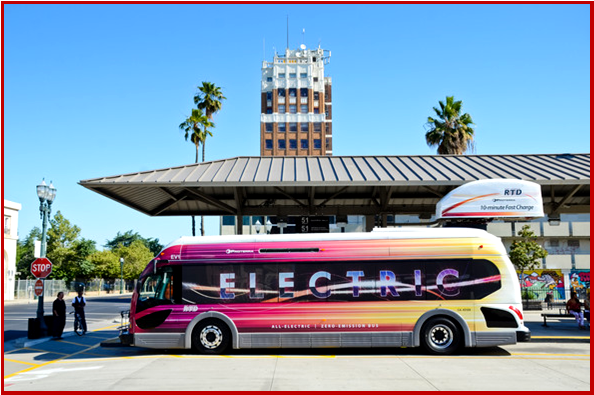
The transportation sector is the nation’s largest source of greenhouse gas emissions. It also contributes to unhealthy levels of smog in many of the signatory states.
Accelerating the electrification of trucks and buses is key to achieving the deep economy-wide emission reductions needed to avoid the worst consequences of climate change and protect the health of millions of Americans. In fact, CARB noted that emissions from trucks are the fastest growing source of greenhouse gases, and the number of truck miles traveled on the nation’s roads is forecast to continue to grow significantly in the coming decades.
Truck and bus electrification also guarantee wide-spread health benefits, particularly in communities with heavy truck traffic that are burdened with higher levels of air pollution. Medium- and heavy-duty trucks are a major source of harmful smog-forming pollution, particulate matter, and air toxics. These emissions disproportionately impact low-income communities and communities of color often located near major trucking corridors, ports, and distribution hubs.
The MOU comes at a transition point for the industry as investment in zero emission vehicle technology for the medium- and heavy-duty sector continues increase in the signatories’ view. Roughly 70 electric truck and bus models are on the market, and manufacturers are expected to make many more new models commercially available over the next decade.
Apart from the public health benefits and avoided health care costs zero emission trucks and buses provide, by 2030, the total cost of ownership for many common commercial vehicles is projected to reach parity with conventionally fueled vehicles.
To provide a framework and help coordinate state efforts to meet these goals, the signatory jurisdictions will work through the existing multi-state ZEV Task Force facilitated by the Northeast States for Coordinated Air Use Management (NESCAUM) to develop and implement a ZEV action plan for trucks and buses.
By promoting and investing in electric trucks and buses and the charging and fueling infrastructure needed to serve these vehicles, the signatory jurisdictions will support job creation, and help to build a resilient and clean economy, they said.
AutoInformed.com on Diesel Trucks and Buses

About Ken Zino
Ken Zino, editor and publisher of AutoInformed, is a versatile auto industry participant with global experience spanning decades in print and broadcast journalism, as well as social media. He has automobile testing, marketing, public relations and communications experience. He is past president of The International Motor Press Assn, the Detroit Press Club, founding member and first President of the Automotive Press Assn. He is a member of APA, IMPA and the Midwest Automotive Press Assn.
He also brings an historical perspective while citing their contemporary relevance of the work of legendary auto writers such as Ken Purdy, Jim Dunne or Jerry Flint, or writers such as Red Smith, Mark Twain, Thomas Jefferson – all to bring perspective to a chaotic automotive universe.
Above all, decades after he first drove a car, Zino still revels in the sound of the exhaust as the throttle is blipped during a downshift and the driver’s rush that occurs when the entry, apex and exit points of a turn are smoothly and swiftly crossed. It’s the beginning of a perfect lap.
AutoInformed has an editorial philosophy that loves transportation machines of all kinds while promoting critical thinking about the future use of cars and trucks.
Zino builds AutoInformed from his background in automotive journalism starting at Hearst Publishing in New York City on Motor and MotorTech Magazines and car testing where he reviewed hundreds of vehicles in his decade-long stint as the Detroit Bureau Chief of Road & Track magazine. Zino has also worked in Europe, and Asia – now the largest automotive market in the world with China at its center.







District of Columbia,15 States to Completely Wipe Out Toxic Diesel Fumes By 2050 in New MOU
“One of our primary goals was to position Windsor among the first cities in North America to pioneer the efficient use of electric buses,” said Chinese company BYD.
Today, 15 states and the District of Columbia announced a joint memorandum of understanding so that 100% of all new medium- and heavy-duty vehicle sales be zero emission vehicles by 2050, with an interim target of 30% zero-emission vehicle sales by 2030.
While trucks and buses only account for 4% of vehicles on the road, they are responsible for ~25% of total transportation sector greenhouse gas emissions. Included in the sweeping reform are large pickup trucks and vans, delivery trucks, box trucks, school and transit buses, and long-haul delivery trucks (big-rigs).
States signing the MOU are California, Connecticut, Colorado, Hawaii, Maine, Maryland, Massachusetts, New Jersey, New York, North Carolina, Oregon, Pennsylvania, Rhode Island, Vermont, and Washington.
The MOU if enacted could slash harmful diesel emissions and cut carbon pollution that cause global warming. The transportation sector is the nation’s largest source of greenhouse gas emissions. It also contributes to unhealthy levels of smog in many of the signatory states.
The transportation sector is the nation’s largest source of greenhouse gas emissions. It also contributes to unhealthy levels of smog in many of the signatory states.
Accelerating the electrification of trucks and buses is key to achieving the deep economy-wide emission reductions needed to avoid the worst consequences of climate change and protect the health of millions of Americans. In fact, CARB noted that emissions from trucks are the fastest growing source of greenhouse gases, and the number of truck miles traveled on the nation’s roads is forecast to continue to grow significantly in the coming decades.
Truck and bus electrification also guarantee wide-spread health benefits, particularly in communities with heavy truck traffic that are burdened with higher levels of air pollution. Medium- and heavy-duty trucks are a major source of harmful smog-forming pollution, particulate matter, and air toxics. These emissions disproportionately impact low-income communities and communities of color often located near major trucking corridors, ports, and distribution hubs.
The MOU comes at a transition point for the industry as investment in zero emission vehicle technology for the medium- and heavy-duty sector continues increase in the signatories’ view. Roughly 70 electric truck and bus models are on the market, and manufacturers are expected to make many more new models commercially available over the next decade.
Apart from the public health benefits and avoided health care costs zero emission trucks and buses provide, by 2030, the total cost of ownership for many common commercial vehicles is projected to reach parity with conventionally fueled vehicles.
To provide a framework and help coordinate state efforts to meet these goals, the signatory jurisdictions will work through the existing multi-state ZEV Task Force facilitated by the Northeast States for Coordinated Air Use Management (NESCAUM) to develop and implement a ZEV action plan for trucks and buses.
By promoting and investing in electric trucks and buses and the charging and fueling infrastructure needed to serve these vehicles, the signatory jurisdictions will support job creation, and help to build a resilient and clean economy, they said.
AutoInformed.com on Diesel Trucks and Buses
About Ken Zino
Ken Zino, editor and publisher of AutoInformed, is a versatile auto industry participant with global experience spanning decades in print and broadcast journalism, as well as social media. He has automobile testing, marketing, public relations and communications experience. He is past president of The International Motor Press Assn, the Detroit Press Club, founding member and first President of the Automotive Press Assn. He is a member of APA, IMPA and the Midwest Automotive Press Assn. He also brings an historical perspective while citing their contemporary relevance of the work of legendary auto writers such as Ken Purdy, Jim Dunne or Jerry Flint, or writers such as Red Smith, Mark Twain, Thomas Jefferson – all to bring perspective to a chaotic automotive universe. Above all, decades after he first drove a car, Zino still revels in the sound of the exhaust as the throttle is blipped during a downshift and the driver’s rush that occurs when the entry, apex and exit points of a turn are smoothly and swiftly crossed. It’s the beginning of a perfect lap. AutoInformed has an editorial philosophy that loves transportation machines of all kinds while promoting critical thinking about the future use of cars and trucks. Zino builds AutoInformed from his background in automotive journalism starting at Hearst Publishing in New York City on Motor and MotorTech Magazines and car testing where he reviewed hundreds of vehicles in his decade-long stint as the Detroit Bureau Chief of Road & Track magazine. Zino has also worked in Europe, and Asia – now the largest automotive market in the world with China at its center.