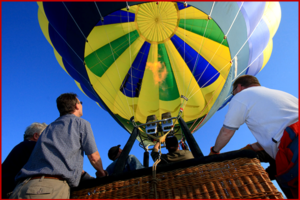
The FAA will publish the draft rule in the Federal Register in November. The public will have 60 days to comment. The FAA will review comments before publishing a final rule. Eventually.
The Federal Aviation Administration proposed a rule today requiring commercial hot-air-balloon pilots to hold medical certificates when operating for hire. The rule mandates a second-class medical certificate, the same standard required for commercial pilots.
“Balloon pilots are responsible for the safety of their passengers,” said FAA Administrator Steve Dickson. “This proposed rule would ensure that balloon pilots meet the same medical requirements as pilots of other commercial aircraft.” The rule in AutoInformed’s view is more than five years too late because of regulatory capture by the industry, a common problem at the FAA as recently exhibited with the Boeing 737 Max fiasco 1.
Commercial balloon pilots are now exempt from the medical requirement. In the FAA Reauthorization Act of 2018, Congress directed the FAA to revise the medical certification standards for commercial balloon pilots. The draft rule also addresses a National Transportation Safety Board (NTSB) recommendation that the FAA remove the exemption.
The FAA in recent years took some steps to increase the safety of hot-air-balloon tourism by working with the Balloon Federation of America (BFA) on an accreditation program. The program includes voluntary standards for pilots and operators and offers multiple tiers of BFA safety accreditation.
The FAA will publish the draft rule in the Federal Register in November, and the public will have 60 days to provide comments. After the comment period closes, the FAA will review all comments before publishing a final rule. Eventually.
1 On 13 October 2017, after a July 2016 balloon accident in Lockhart, TX that caused 16 fatalities, the FAA took steps to increase the safety of hot-air balloon tourism after a year-long FAA “Call to Action” with the commercial hot-air balloon industry. The Balloon Federation of America (BFA) developed an “Envelope of Safety” accreditation plan for balloon ride operations. Consumers can use the program to select a ride company or pilot that tries to reach a higher safety standard it was claimed.
To meet the BFA’s program requirements, company pilots of balloons that are capable of carrying more than 4-6 passengers must be commercially certificated for 18 months, have a specified amount of flight experience, and hold an FAA second-class medical certificate.
Pilots also must pass a drug and alcohol background check, have attended a BFA-sanctioned safety seminar within the last 12 months, and be enrolled in the FAA WINGS program. The BFA will verify this information annually and will check the safety background of pilot applicants by researching FAA accident and incident data.
A second part of the program provides balloon ride operators with a choice of three levels of safety accreditation: Silver, Gold, or Platinum. Each level has increasingly stringent safety requirements including:
- Meeting the pilot requirements
- Holding valid aircraft and commercial vehicle insurance
- Not exceeding a minimum specified number of accidents or incidents within a recent time period
- Verifying annual aircraft inspections
- Hosting a forum for passengers to rate the company
- Notifying local FAA offices of the location of their base of operations
- Executing and storing passenger liability waivers
- Conducting random pilot drug screening
- Developing written policies for crew safety.
AutoInformed.com on

About Ken Zino
Ken Zino, editor and publisher of AutoInformed, is a versatile auto industry participant with global experience spanning decades in print and broadcast journalism, as well as social media. He has automobile testing, marketing, public relations and communications experience. He is past president of The International Motor Press Assn, the Detroit Press Club, founding member and first President of the Automotive Press Assn. He is a member of APA, IMPA and the Midwest Automotive Press Assn.
He also brings an historical perspective while citing their contemporary relevance of the work of legendary auto writers such as Ken Purdy, Jim Dunne or Jerry Flint, or writers such as Red Smith, Mark Twain, Thomas Jefferson – all to bring perspective to a chaotic automotive universe.
Above all, decades after he first drove a car, Zino still revels in the sound of the exhaust as the throttle is blipped during a downshift and the driver’s rush that occurs when the entry, apex and exit points of a turn are smoothly and swiftly crossed. It’s the beginning of a perfect lap.
AutoInformed has an editorial philosophy that loves transportation machines of all kinds while promoting critical thinking about the future use of cars and trucks.
Zino builds AutoInformed from his background in automotive journalism starting at Hearst Publishing in New York City on Motor and MotorTech Magazines and car testing where he reviewed hundreds of vehicles in his decade-long stint as the Detroit Bureau Chief of Road & Track magazine. Zino has also worked in Europe, and Asia – now the largest automotive market in the world with China at its center.








FAA, Finally Five Years After Deadly Accident, Wants a Medical Certificate for Commercial Hot-Air Balloon Pilots
The FAA will publish the draft rule in the Federal Register in November. The public will have 60 days to comment. The FAA will review comments before publishing a final rule. Eventually.
The Federal Aviation Administration proposed a rule today requiring commercial hot-air-balloon pilots to hold medical certificates when operating for hire. The rule mandates a second-class medical certificate, the same standard required for commercial pilots.
“Balloon pilots are responsible for the safety of their passengers,” said FAA Administrator Steve Dickson. “This proposed rule would ensure that balloon pilots meet the same medical requirements as pilots of other commercial aircraft.” The rule in AutoInformed’s view is more than five years too late because of regulatory capture by the industry, a common problem at the FAA as recently exhibited with the Boeing 737 Max fiasco 1.
Commercial balloon pilots are now exempt from the medical requirement. In the FAA Reauthorization Act of 2018, Congress directed the FAA to revise the medical certification standards for commercial balloon pilots. The draft rule also addresses a National Transportation Safety Board (NTSB) recommendation that the FAA remove the exemption.
The FAA in recent years took some steps to increase the safety of hot-air-balloon tourism by working with the Balloon Federation of America (BFA) on an accreditation program. The program includes voluntary standards for pilots and operators and offers multiple tiers of BFA safety accreditation.
The FAA will publish the draft rule in the Federal Register in November, and the public will have 60 days to provide comments. After the comment period closes, the FAA will review all comments before publishing a final rule. Eventually.
1 On 13 October 2017, after a July 2016 balloon accident in Lockhart, TX that caused 16 fatalities, the FAA took steps to increase the safety of hot-air balloon tourism after a year-long FAA “Call to Action” with the commercial hot-air balloon industry. The Balloon Federation of America (BFA) developed an “Envelope of Safety” accreditation plan for balloon ride operations. Consumers can use the program to select a ride company or pilot that tries to reach a higher safety standard it was claimed.
To meet the BFA’s program requirements, company pilots of balloons that are capable of carrying more than 4-6 passengers must be commercially certificated for 18 months, have a specified amount of flight experience, and hold an FAA second-class medical certificate.
Pilots also must pass a drug and alcohol background check, have attended a BFA-sanctioned safety seminar within the last 12 months, and be enrolled in the FAA WINGS program. The BFA will verify this information annually and will check the safety background of pilot applicants by researching FAA accident and incident data.
A second part of the program provides balloon ride operators with a choice of three levels of safety accreditation: Silver, Gold, or Platinum. Each level has increasingly stringent safety requirements including:
AutoInformed.com on
About Ken Zino
Ken Zino, editor and publisher of AutoInformed, is a versatile auto industry participant with global experience spanning decades in print and broadcast journalism, as well as social media. He has automobile testing, marketing, public relations and communications experience. He is past president of The International Motor Press Assn, the Detroit Press Club, founding member and first President of the Automotive Press Assn. He is a member of APA, IMPA and the Midwest Automotive Press Assn. He also brings an historical perspective while citing their contemporary relevance of the work of legendary auto writers such as Ken Purdy, Jim Dunne or Jerry Flint, or writers such as Red Smith, Mark Twain, Thomas Jefferson – all to bring perspective to a chaotic automotive universe. Above all, decades after he first drove a car, Zino still revels in the sound of the exhaust as the throttle is blipped during a downshift and the driver’s rush that occurs when the entry, apex and exit points of a turn are smoothly and swiftly crossed. It’s the beginning of a perfect lap. AutoInformed has an editorial philosophy that loves transportation machines of all kinds while promoting critical thinking about the future use of cars and trucks. Zino builds AutoInformed from his background in automotive journalism starting at Hearst Publishing in New York City on Motor and MotorTech Magazines and car testing where he reviewed hundreds of vehicles in his decade-long stint as the Detroit Bureau Chief of Road & Track magazine. Zino has also worked in Europe, and Asia – now the largest automotive market in the world with China at its center.