Looks like a ghost town?
Automated vehicles are at heart computers on wheels. Now they need more computing power than previously if they are to negotiate city traffic automatically, with input sourced from an array of disparate sensors.
In their money making alliance – that’s the hope, anyway – designed to put highly automated and driverless vehicles on urban streets, Bosch and Daimler have now specified the computing power necessary for their proposed system. (See AutoInformed.com on: 2018 S-Class Takes Driver Assistance Upward?)As a result, the two uber German companies have selected and signed an agreement with the U.S. AI computing company NVIDIA as a supplier for the artificial intelligence (AI) platform they think they need. AI, of curse, is an important building block in fully automated and driverless vehicles’ network of several individual ECUs (Electronic control units).
Under this contract, NVIDIA will provide its Drive Pegasus platform powered by high performance AI automotive processors along with system software that will process the vehicle-driving algorithms generated by Bosch and Daimler using machine-learning methods IT’s claimed that the ECU network will reach a computing capacity of hundreds of trillion operations per second. This is roughly the performance delivered by at least six synchronized, highly advanced deskside computer workstations. Bosch and Daimler will also be able to tap NVIDIA expertise to help develop the platform.
Fractions of a Second
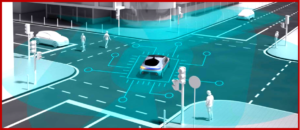
A versatile, redundant, and fail-operational systems architecture is needed to make automated driving in cities a reality. The performance bar for the networked ECUs is no lower, as navigating city traffic is a tremendous amount of work as any urban driver can tell you. This network handles all the information gathered and transmitted by radar, video, lidar, and ultrasonic sensors.
Just one video sensor, such as Bosch’s stereo video camera, generates 100 gigabytes of data in one kilometer. The ECU network combines data sourced from all the surround sensors in a process called sensor fusion. Within fractions of a second, it assesses this information and plans the path of the vehicle. This is as fast as the sensation of touch that needs between 20 and 500 milliseconds to reach the human brain.
Bosch and Daimler bring many years of experience to the development of functional safety systems. To achieve maximum safety and reliability, the necessary computing operations are done by a number of circuits in parallel. In the unlikely event of a malfunction, the results of these parallel calculations can be accessed in a flash.
ECU Network
The high computing capacity and the huge number of operations to be performed mean that the ECU network needs to be cooled. Bosch and Daimler developed a concept based on liquid cooling. In this jointly developed system for highly automated and driverless driving in cities, Mercedes-Benz intends to deploy battery-powered vehicles. These cars have a cooling system on board, so engineers can make the most of this legacy technology by integrating the ECU network into the battery cells’ advanced cooling circuit.
Bosch and Daimler Staff
In April 2017, Bosch and Daimler announced they would be joining forces in an effort to put highly automated and driverless vehicles on city streets. This alliance is developing a driving system for use in vehicles that will be able to maneuver through city traffic with out drivers. The technology is to be ready for some production by the beginning of the next decade. Bosch and Daimler are working together in the greater Stuttgart area and in Silicon Valley. The two companies’ personnel are co-located, working practically at adjacent desks. This allows them to quickly and perhaps efficiently share information across disciplines and to make decisions fast.








Pingback: BMW and Mercedes-Benz Stop Automated Driving JV | AutoInformed