
 A new study of the lifetime emissions of greenhouse gases says that electric cars are better than gasoline powered ones by producing 50% less pollutants. Earlier studies were less conclusive and less comprehensive.
One thing is clear from the latest report from the Union of Concerned Scientists – the benefits of EVs continue to increase in spite of the considerable propaganda and lies deployed against them by fossil fuel interests. The debate for policy makers is now how fast we should force their deployment.
In a report entitled Cleaner Cars from Cradle to Grave: How Electric Cars Beat Gasoline Cars in Lifetime Global Warming Emissions, UCS claims that on average, battery electric vehicles (BEVs) produce less than half the global warming emissions of comparable gasoline-powered ones. This takes into account the higher emissions associated with BEV manufacturing that previous studies were uncertain about. Both plug-in hybrids and pure EVs are included in the category.
Based on modeling of the two most popular BEVs available today – Nissan Leaf (84-mile range, 15,000 sales year-to-date) and Tesla Model S (265-mile range, 19,000 sold year-to-date) and the regions where they are currently being sold, excess-manufacturing emissions are offset within 6 to 16 months of driving. Other vehicles that play heavily in some parts of the data are the Chevrolet Volt, Toyota Prius and BMW i3 – all breakthrough vehicles.
The conclusion of an extremely detailed statistical and scientific work is that driving an average EV over its life results in lower global warming emissions by more than -50% compared to driving a gasoline car that gets 50 miles per gallon (MPG) in regions covering two-thirds of the U.S. population. This is up from -45% in UCS’ 2012 report.
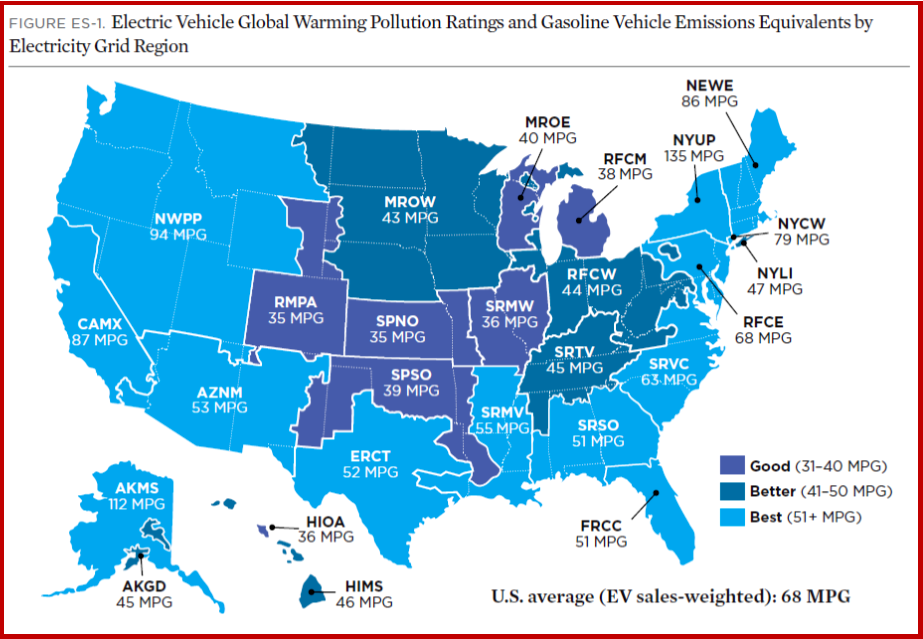 Based on where EVs are being sold in the United States today (mostly California), the average EV driving on electricity produces global warming emissions equal to a fossil fueled vehicle with a 68 MPG fuel economy rating.
Although a BEV has no tailpipe emissions, total global warming emissions from operating it are substantial, depending on the sources of the electricity that charge the batteries and of course on the efficiency of the vehicle itself.
USC estimates the global warming emissions from electricity consumption in the 26 “grid regions” of the United States, the group of powerplants that together serve as each region’s primary source of electricity. Then regions are rated based on how charging and using an EV there compares with driving a gasoline vehicle.
“Emissions from operating electric vehicles are likely to keep falling, as national data from 2013 to 2015 show a declining percentage of electricity generated by coal power and an increase in renewable resources such as wind and solar,” UCS said.
Moreover, the so-called Clean Power Plan from the U.S. Environmental Protection Agency (EPA) in 2015 offers opportunities for even more progress, as states must collectively cut their power-sector carbon emissions 32% by 2030 based on 2005 levels.
Anti-environmentalist Republicans – and there are many, many of them – are trying to derail this plan by any means possible, so the assumptions might be optimistic here. However, they are correctly pointing out the trends. (EPA Proposing Tighter Levels of Greenhouse Gas Emissions)