
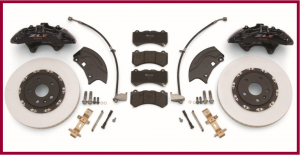
No word on whether there will be any cost increase as a result of the new brake pad formulation.
Funny thing about automakers, they are against regulation except when individual states start to wreak havoc with their production lineup, then automakers are all for strong central regulation.
This tendency was in evidence with today’s announcement that the U.S. Environmental Protection Agency, the automotive industry and the states signed an agreement to reduce the use of copper and other materials in brake pads.
The so-called Copper-Free Brake Initiative reduces copper in brake pads to less than 5% by 2021 and 0.5% by 2025. This voluntary deal also calls for cutting the amount of mercury, lead, cadmium, asbestiform fibers and chromium-6 salts in brake pads.
EPA says these steps will decrease runoff of these materials from roads into the nation’s streams, rivers and lakes, where these materials can harm fish, amphibians and plants. They are not exactly human friendly either.
California and Washington have already passed laws to reduce these materials in brake pads. Prior to their enactment, dust from vehicular braking released an estimated 1.3 million pounds of copper into California’s environment in 2010 and about 250,000 pounds into Washington’s environment in 2011. Estimates for California show copper in urban runoff down as much as 61% because of changes in brake pad composition.
“This historic MOU will provide the motor vehicle industry with consistent copper reduction guidelines and eliminate the potential for disparate state regulations,” said Steve Handschuh, president and CEO of the Motor and Equipment Manufacturers Association. “This has been a proactive, collaborative effort by regulatory agencies, states and the motor vehicle industry to reduce copper in U.S. streams, rivers and waterways.”
In addition to EPA and the Environmental Council of the States, eight industry groups signed the initiative: Motor & Equipment Manufacturers Association; Automotive Aftermarket Suppliers Association; Brake Manufacturers Council; Heavy Duty Manufacturers Association; Auto Care Association; Alliance of Automobile Manufacturers; Association of Global Automakers, Inc.; and the Truck and Engine Manufacturers Association.








“They are not exactly human friendly either.”
Good point. People tend to think, no matter how we throw toxic substances around, somehow all our infrastructure will filter them out before they get back to us.