“The City and Port of Los Angeles have allowed China Shipping to tear up the environmental mitigation promises that got them their permits to expand, while doing nothing to stop the company from pumping excessive amounts of pollution into nearby communities,” said CARB Chair Mary Nichols. “This must stop.”
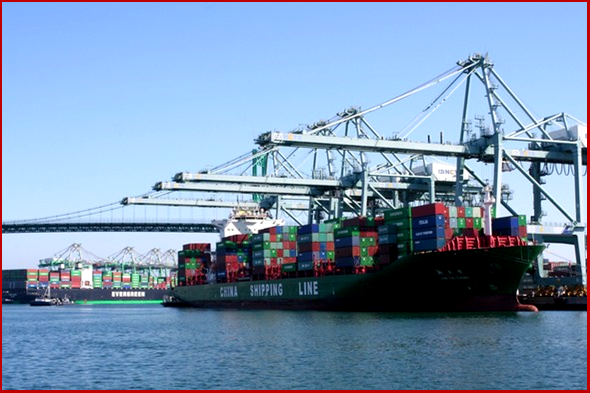
California Attorney General Xavier Becerra and the California Air Resources Board (CARB) have filed a motion to intervene in a lawsuit challenging the Port of Los Angeles’ approval of the revised China Shipping Terminal project and certification of its Supplemental Environmental Impact Report (EIR).
The China Shipping Terminal is located at the Port of Los Angeles, near residential communities that are already exposed to disproportionately high amounts of air pollution. Under the California Environmental Quality Act (CEQA), the Port of Los Angeles is required to implement all feasible mitigation measures to reduce harmful air pollution and other significant environmental impacts of the revised China Shipping Terminal project. However, as written, the Supplemental EIR fails both to include all feasible mitigation measures and to provide a mechanism for enforcement to ensure that the included measures are implemented, the Attorney General and CARB claim.
In 2008, the Port of Los Angeles certified an EIR that imposed feasible air quality mitigation measures to reduce the China Shipping Terminal’s anticipated adverse air quality impacts, including those on nearby communities. However, six of those measures were never implemented, exposing communities to harmful air quality impacts that should have been reduced by the mitigation measures included in the 2008 EIR. Long-term exposure to particulate matter and ozone has been linked to an increased risk of cancer and other adverse health outcomes, including the development of asthma, chronic obstructive pulmonary disease, decreased lung function, and nonfatal heart attacks.
More than a decade later, the Port of Los Angeles certified a Supplemental EIR that allows the China Shipping Terminal to continue to operate without implementing those mitigation measures. The Supplemental EIR removed or weakened these mitigation measures. In addition to failing to require all feasible mitigation, the Supplemental EIR also fails to include any mechanism for enforcing the inadequate mitigation measures that were included in the report.
The China Shipping Terminal has been operating continuously for sixteen years, exposing nearby environmental justice communities – including the communities of San Pedro, Wilmington, Carson, and West Long Beach – to significant emissions of air pollutants. The residents of these communities are already at higher risk of adverse health effects due to chronic exposure to air pollution, including particulate matter and ozone, resulting from operations at the Port of Los Angeles, CARB asserts.
On 16 September 2020, the South Coast Air Quality Management District filed a lawsuit challenging the Port’s approval of the revised China Shipping Terminal project and the certification of the Supplemental EIR for failing to meet the requirements of CEQA. In filing their motion late yesterday joining the South Coast Air Quality Management District’s lawsuit, Attorney General Becerra and CARB seek to ensure that mitigation measures will be implemented to substantially reduce or avoid the environmental impacts of the China Shipping Terminal, as required by CEQA.
“Far too often, modest income and minority communities bear the brunt of environmental pollution and the resulting health risks,” said Attorney General Becerra. “That’s why we have laws like CEQA that require companies to do everything they can to mitigate the environmental impacts of their projects. But without enforce-ability, these mitigation measures are just words on paper. If we’re going to secure a clean, healthy, and safe environment for all Californians, we need more than words. We need accountability. Today’s action aims to hold China Shipping and the Port of Los Angeles accountable.”

About Ken Zino
Ken Zino, editor and publisher of AutoInformed, is a versatile auto industry participant with global experience spanning decades in print and broadcast journalism, as well as social media. He has automobile testing, marketing, public relations and communications experience. He is past president of The International Motor Press Assn, the Detroit Press Club, founding member and first President of the Automotive Press Assn. He is a member of APA, IMPA and the Midwest Automotive Press Assn.
He also brings an historical perspective while citing their contemporary relevance of the work of legendary auto writers such as Ken Purdy, Jim Dunne or Jerry Flint, or writers such as Red Smith, Mark Twain, Thomas Jefferson – all to bring perspective to a chaotic automotive universe.
Above all, decades after he first drove a car, Zino still revels in the sound of the exhaust as the throttle is blipped during a downshift and the driver’s rush that occurs when the entry, apex and exit points of a turn are smoothly and swiftly crossed. It’s the beginning of a perfect lap.
AutoInformed has an editorial philosophy that loves transportation machines of all kinds while promoting critical thinking about the future use of cars and trucks.
Zino builds AutoInformed from his background in automotive journalism starting at Hearst Publishing in New York City on Motor and MotorTech Magazines and car testing where he reviewed hundreds of vehicles in his decade-long stint as the Detroit Bureau Chief of Road & Track magazine. Zino has also worked in Europe, and Asia – now the largest automotive market in the world with China at its center.







California AG, CARB File Motion To Shield LA Area Communities From Port of Los Angeles China Shipping Terminal Air Pollution
“The City and Port of Los Angeles have allowed China Shipping to tear up the environmental mitigation promises that got them their permits to expand, while doing nothing to stop the company from pumping excessive amounts of pollution into nearby communities,” said CARB Chair Mary Nichols. “This must stop.”
California Attorney General Xavier Becerra and the California Air Resources Board (CARB) have filed a motion to intervene in a lawsuit challenging the Port of Los Angeles’ approval of the revised China Shipping Terminal project and certification of its Supplemental Environmental Impact Report (EIR).
The China Shipping Terminal is located at the Port of Los Angeles, near residential communities that are already exposed to disproportionately high amounts of air pollution. Under the California Environmental Quality Act (CEQA), the Port of Los Angeles is required to implement all feasible mitigation measures to reduce harmful air pollution and other significant environmental impacts of the revised China Shipping Terminal project. However, as written, the Supplemental EIR fails both to include all feasible mitigation measures and to provide a mechanism for enforcement to ensure that the included measures are implemented, the Attorney General and CARB claim.
In 2008, the Port of Los Angeles certified an EIR that imposed feasible air quality mitigation measures to reduce the China Shipping Terminal’s anticipated adverse air quality impacts, including those on nearby communities. However, six of those measures were never implemented, exposing communities to harmful air quality impacts that should have been reduced by the mitigation measures included in the 2008 EIR. Long-term exposure to particulate matter and ozone has been linked to an increased risk of cancer and other adverse health outcomes, including the development of asthma, chronic obstructive pulmonary disease, decreased lung function, and nonfatal heart attacks.
More than a decade later, the Port of Los Angeles certified a Supplemental EIR that allows the China Shipping Terminal to continue to operate without implementing those mitigation measures. The Supplemental EIR removed or weakened these mitigation measures. In addition to failing to require all feasible mitigation, the Supplemental EIR also fails to include any mechanism for enforcing the inadequate mitigation measures that were included in the report.
The China Shipping Terminal has been operating continuously for sixteen years, exposing nearby environmental justice communities – including the communities of San Pedro, Wilmington, Carson, and West Long Beach – to significant emissions of air pollutants. The residents of these communities are already at higher risk of adverse health effects due to chronic exposure to air pollution, including particulate matter and ozone, resulting from operations at the Port of Los Angeles, CARB asserts.
On 16 September 2020, the South Coast Air Quality Management District filed a lawsuit challenging the Port’s approval of the revised China Shipping Terminal project and the certification of the Supplemental EIR for failing to meet the requirements of CEQA. In filing their motion late yesterday joining the South Coast Air Quality Management District’s lawsuit, Attorney General Becerra and CARB seek to ensure that mitigation measures will be implemented to substantially reduce or avoid the environmental impacts of the China Shipping Terminal, as required by CEQA.
“Far too often, modest income and minority communities bear the brunt of environmental pollution and the resulting health risks,” said Attorney General Becerra. “That’s why we have laws like CEQA that require companies to do everything they can to mitigate the environmental impacts of their projects. But without enforce-ability, these mitigation measures are just words on paper. If we’re going to secure a clean, healthy, and safe environment for all Californians, we need more than words. We need accountability. Today’s action aims to hold China Shipping and the Port of Los Angeles accountable.”
About Ken Zino
Ken Zino, editor and publisher of AutoInformed, is a versatile auto industry participant with global experience spanning decades in print and broadcast journalism, as well as social media. He has automobile testing, marketing, public relations and communications experience. He is past president of The International Motor Press Assn, the Detroit Press Club, founding member and first President of the Automotive Press Assn. He is a member of APA, IMPA and the Midwest Automotive Press Assn. He also brings an historical perspective while citing their contemporary relevance of the work of legendary auto writers such as Ken Purdy, Jim Dunne or Jerry Flint, or writers such as Red Smith, Mark Twain, Thomas Jefferson – all to bring perspective to a chaotic automotive universe. Above all, decades after he first drove a car, Zino still revels in the sound of the exhaust as the throttle is blipped during a downshift and the driver’s rush that occurs when the entry, apex and exit points of a turn are smoothly and swiftly crossed. It’s the beginning of a perfect lap. AutoInformed has an editorial philosophy that loves transportation machines of all kinds while promoting critical thinking about the future use of cars and trucks. Zino builds AutoInformed from his background in automotive journalism starting at Hearst Publishing in New York City on Motor and MotorTech Magazines and car testing where he reviewed hundreds of vehicles in his decade-long stint as the Detroit Bureau Chief of Road & Track magazine. Zino has also worked in Europe, and Asia – now the largest automotive market in the world with China at its center.