
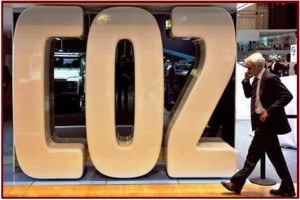
Marketplace pressures, social change as well as the stock markets are increasingly forcing CEOs to deal at some level with climate change.
Facts or prejudice caused by changing political winds? There is an ongoing, contentious air quality debate in Europe that attacks diesel fuel and vehicles – long subsidized by national governments, but apparently now are politically and medically incorrect.
There is a growing desire for increasingly stringent CO2, NOx and particulate matter targets. A number of studies say air pollution levels in urban areas are deadly – killing people and costing governments billions upon billions. Increasingly it appears that more diesel bans are coming.
Starting in 2021, the average new car in the EU will have an emissions cap of 95g of CO2 per kilometer. In other regions – notably the U.S. and China – diesel vehicles also by law will have to become much more efficient than they are now during the next few years.
Nevertheless, there is a rub. France claims it will allow French cities to ban diesel cars entirely. That is right, the home of Peugeot and Renault in the view of critics is facilitating the death of diesels because they are killing people. China claims to have plans to ban conventional fuel vehicles entirely.
An environmental law pressure group, ClientEarth, successfully sued the British government after a five year battle because 16 cities exceed the healthy limits of nitrogen dioxides produced by diesel engines. The UK failed to meet air quality standards for decades. The British government several years ago received an extension on meeting the latest EU standard, but now Britain’s highest court has ruled that the Government must draw up plans to eliminate illegal levels of nitrogen dioxide by the end of the year.
In Germany – arguably Europe’s most dynamic economy and home of many powerhouse automakers and suppliers (Audi, Bosch, BMW, Daimler, Mercedes-Benz, Siemens, among others) that do a thriving diesel business – diesel cars cause 10% of NOx emissions (4% of all CO2 emissions). Aside from road traffic, other NOx sources include energy generation (27%) and private households (11%), according to the German Federal Environment Agency (Umweltbundesamt, UBA).
Robert Bosch claims its measurements in major cities indicate that new diesel engines filter out particulates from the ambient air. For example, in Parisian suburb La Garenne, emissions from a diesel engine contain fewer particulates than the intake air.
Since 1992, the EU has introduced increasingly stricter limits on vehicle emissions through a series of ‘Euro’ standards, yet the air is still foul. The latest, toughest standard so far is Euro 6. Some new cars already comply with Euro 6, and starting September 2015 all new cars sold will have to meet this standard.
The problem comes in part from the old automakers’ game of cycle cheating – designing the vehicle to maximize test results. Euro 5 cars fail to deliver real-world improvements compared to the laboratory test cycle conditions that provides the numbers. Euro 6 will require real-world emissions testing of cars for the first time.
The automakers are protesting and fiercely lobbying against the latest trends in regulation. How they will buck the larger social trends underway is going to take more than a p.r. agency and a slick ad campaign. Thus far they are losing the argument.
“Political measures restricting the roll-out of the new generation of diesel technology would therefore undermine existing efforts to cut CO2 emissions,” said a consortium of diesel (self ) interests.
“Such measures make no sense from an environmental point of view,” said a letter from Presidents of the European Automobile Manufacturers’ Association (ACEA), Association for Emissions Control by Catalyst (AECC), European Association of Automotive Suppliers (CLEPA) and FuelsEurope, representing the Petroleum Refining Industry, that was sent the European Commission, European Parliament and Council.
The automakers reason that the most effective way to improve air quality is getting older cars and trucks off the road. New vehicles less than one year old are roughly 5% of the road population in the EU. As more of the older diesels are replaced, it looks like fewer of them will be diesels, no matter how clean the newest ones are.
“Our concerns are national and city measures or proposed measures addressing air quality concerns, where there is a proposal to discriminate on the basis of fuel type used, rather than the actual emissions standard against which vehicles are approved,” an ACEA spokeswoman told AutoInformed. Well, automakers by cheating brought this on themselves.







