Nel Hydrogen US, a subsidiary of Nel ASA* (Nel, OSE: NEL), has entered into a joint development agreement with General Motors (NYSE: GM) to help accelerate the industrialization of Nel’s proton exchange membrane (PEM) electrolyzer platform, the companies said today in a joint release.** (AutoInformed.com on GM Plans to Expand Fuel Cell Sales Beyond Vehicles)
PEM membrane. Click for more information.
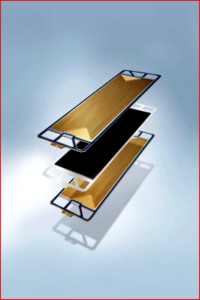
A PEM fuel cell is structured like a sandwich. In the center is a thin plastic film, the Proton Exchange Membrane (PEM). This is coated on both sides with a catalyst layer and a gas permeable electrode of graphite paper. The membrane is surrounded by two bipolar plates with milled gas ducts. Through these ducts flows hydrogen one side, and oxygen on the other. Several individual fuel cells are stacked to produce CO2 free energy.
A PEM electrolyzer and a fuel cell are largely based on the same principles. A PEM electrolyzer uses electricity and water to produce hydrogen and oxygen, while a fuel cell reverses the process, using hydrogen and oxygen to produce electricity and water. As GM has increased expertise with fuel cells, the two companies see substantial synergies by transferring this to Nel’s PEM platform.”
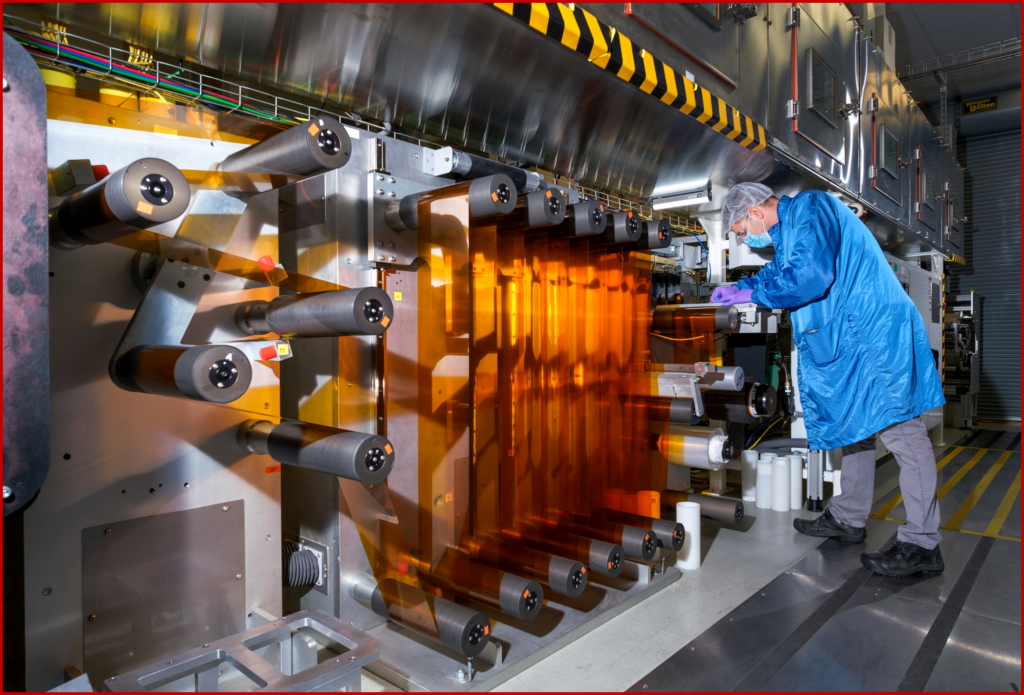
Nel said it was the first company in the world with a fully automated alkaline electrolyzer production line. The next step will be to industrialize the production of its PEM electrolyzer equipment in a similar way which will enable considerable technology advancement.
Click for more information.
GM is developing and commercializing both HYDROTEC hydrogen fuel cell and Ultium battery technologies that deliver performance and cost. This is opening a new revenue potential for GM as industries, including freight trucking, aerospace, power generation and locomotive, could turn to GM to improve performance and reduce emissions. Maybe GM’s sold off Electro-Motive division gets revived by GM?
“By combining GM’s extensive fuel cell expertise and Nel’s deep knowledge of electrolyzers, the two companies are looking to enable more cost competitive sources of renewable hydrogen,” the companies said.
“Adding Nel as a strategic collaborator is an important step to help us commercialize fuel cell technology. Electrolysis is key to creating consistent, clean sources of hydrogen to power fuel cells,” said Charles Freese, GM executive director, Global HYDROTEC. “Nel has some of the most promising electrolyzer technology to help develop clean hydrogen infrastructure, and we believe our HYDROTEC fuel cell IP can help them get closer to scale.”
Nel will pay GM for the development work and IP transfer on an ongoing basis and pay a license after successful commercialization depending on how much of the end product is based on GM technology.
*Nel is a global, dedicated hydrogen company, delivering “solutions” (trade technical jargon – AutoCrat) to produce, store and distribute hydrogen from renewable energy. “We serve industries, energy and gas companies with leading hydrogen technology. Since its origins in 1927, Nel has a proud history of development and continual improvement of hydrogen plants. Our hydrogen solutions cover the entire value chain from hydrogen production technologies to manufacturing of hydrogen fueling stations, providing all fuel cell electric vehicles with the same fast fueling and long range as conventional vehicles today,” Nel said.
**This information is subject to a duty of disclosure pursuant to Section 5-12 of the Norwegian Securities Trading Act. This information was issued as inside information pursuant to the EU Market Abuse Regulation, and was published by Wilhelm Finder, Head of Investor Relations, at NEL ASA on the date and time provided.

About Ken Zino
Ken Zino, editor and publisher of AutoInformed, is a versatile auto industry participant with global experience spanning decades in print and broadcast journalism, as well as social media. He has automobile testing, marketing, public relations and communications experience. He is past president of The International Motor Press Assn, the Detroit Press Club, founding member and first President of the Automotive Press Assn. He is a member of APA, IMPA and the Midwest Automotive Press Assn.
He also brings an historical perspective while citing their contemporary relevance of the work of legendary auto writers such as Ken Purdy, Jim Dunne or Jerry Flint, or writers such as Red Smith, Mark Twain, Thomas Jefferson – all to bring perspective to a chaotic automotive universe.
Above all, decades after he first drove a car, Zino still revels in the sound of the exhaust as the throttle is blipped during a downshift and the driver’s rush that occurs when the entry, apex and exit points of a turn are smoothly and swiftly crossed. It’s the beginning of a perfect lap.
AutoInformed has an editorial philosophy that loves transportation machines of all kinds while promoting critical thinking about the future use of cars and trucks.
Zino builds AutoInformed from his background in automotive journalism starting at Hearst Publishing in New York City on Motor and MotorTech Magazines and car testing where he reviewed hundreds of vehicles in his decade-long stint as the Detroit Bureau Chief of Road & Track magazine. Zino has also worked in Europe, and Asia – now the largest automotive market in the world with China at its center.








Big Oil Rebuff as Nel ASA, GM Unite on Renewable Hydrogen
Nel Hydrogen US, a subsidiary of Nel ASA* (Nel, OSE: NEL), has entered into a joint development agreement with General Motors (NYSE: GM) to help accelerate the industrialization of Nel’s proton exchange membrane (PEM) electrolyzer platform, the companies said today in a joint release.** (AutoInformed.com on GM Plans to Expand Fuel Cell Sales Beyond Vehicles)
PEM membrane. Click for more information.
A PEM fuel cell is structured like a sandwich. In the center is a thin plastic film, the Proton Exchange Membrane (PEM). This is coated on both sides with a catalyst layer and a gas permeable electrode of graphite paper. The membrane is surrounded by two bipolar plates with milled gas ducts. Through these ducts flows hydrogen one side, and oxygen on the other. Several individual fuel cells are stacked to produce CO2 free energy.
A PEM electrolyzer and a fuel cell are largely based on the same principles. A PEM electrolyzer uses electricity and water to produce hydrogen and oxygen, while a fuel cell reverses the process, using hydrogen and oxygen to produce electricity and water. As GM has increased expertise with fuel cells, the two companies see substantial synergies by transferring this to Nel’s PEM platform.”
Nel said it was the first company in the world with a fully automated alkaline electrolyzer production line. The next step will be to industrialize the production of its PEM electrolyzer equipment in a similar way which will enable considerable technology advancement.
Click for more information.
GM is developing and commercializing both HYDROTEC hydrogen fuel cell and Ultium battery technologies that deliver performance and cost. This is opening a new revenue potential for GM as industries, including freight trucking, aerospace, power generation and locomotive, could turn to GM to improve performance and reduce emissions. Maybe GM’s sold off Electro-Motive division gets revived by GM?
“By combining GM’s extensive fuel cell expertise and Nel’s deep knowledge of electrolyzers, the two companies are looking to enable more cost competitive sources of renewable hydrogen,” the companies said.
“Adding Nel as a strategic collaborator is an important step to help us commercialize fuel cell technology. Electrolysis is key to creating consistent, clean sources of hydrogen to power fuel cells,” said Charles Freese, GM executive director, Global HYDROTEC. “Nel has some of the most promising electrolyzer technology to help develop clean hydrogen infrastructure, and we believe our HYDROTEC fuel cell IP can help them get closer to scale.”
Nel will pay GM for the development work and IP transfer on an ongoing basis and pay a license after successful commercialization depending on how much of the end product is based on GM technology.
*Nel is a global, dedicated hydrogen company, delivering “solutions” (trade technical jargon – AutoCrat) to produce, store and distribute hydrogen from renewable energy. “We serve industries, energy and gas companies with leading hydrogen technology. Since its origins in 1927, Nel has a proud history of development and continual improvement of hydrogen plants. Our hydrogen solutions cover the entire value chain from hydrogen production technologies to manufacturing of hydrogen fueling stations, providing all fuel cell electric vehicles with the same fast fueling and long range as conventional vehicles today,” Nel said.
**This information is subject to a duty of disclosure pursuant to Section 5-12 of the Norwegian Securities Trading Act. This information was issued as inside information pursuant to the EU Market Abuse Regulation, and was published by Wilhelm Finder, Head of Investor Relations, at NEL ASA on the date and time provided.
About Ken Zino
Ken Zino, editor and publisher of AutoInformed, is a versatile auto industry participant with global experience spanning decades in print and broadcast journalism, as well as social media. He has automobile testing, marketing, public relations and communications experience. He is past president of The International Motor Press Assn, the Detroit Press Club, founding member and first President of the Automotive Press Assn. He is a member of APA, IMPA and the Midwest Automotive Press Assn. He also brings an historical perspective while citing their contemporary relevance of the work of legendary auto writers such as Ken Purdy, Jim Dunne or Jerry Flint, or writers such as Red Smith, Mark Twain, Thomas Jefferson – all to bring perspective to a chaotic automotive universe. Above all, decades after he first drove a car, Zino still revels in the sound of the exhaust as the throttle is blipped during a downshift and the driver’s rush that occurs when the entry, apex and exit points of a turn are smoothly and swiftly crossed. It’s the beginning of a perfect lap. AutoInformed has an editorial philosophy that loves transportation machines of all kinds while promoting critical thinking about the future use of cars and trucks. Zino builds AutoInformed from his background in automotive journalism starting at Hearst Publishing in New York City on Motor and MotorTech Magazines and car testing where he reviewed hundreds of vehicles in his decade-long stint as the Detroit Bureau Chief of Road & Track magazine. Zino has also worked in Europe, and Asia – now the largest automotive market in the world with China at its center.