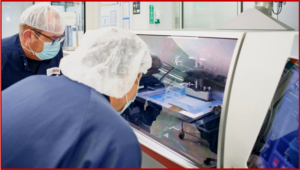
Bosch and Ceres are betting fuel-cell technology has a vital role to in future power supply.
Bosch says it will try and start full-scale production of distributed power stations based on solid oxide fuel-cell technology in 2024. The aim is an annual production capacity of 200 megawatts – enough to supply ~400,000 people with electricity in their homes. Bosch plans to invest hundreds of millions of euros in the solid oxide fuel cell (SOFC). SOFC systems can in theory ensure sustainable power supplies – with zero emissions of nitrogen oxides, particulates, and CO2. With an overall efficiency of more than 85% claimed, the solid oxide fuel cell is arguably superior to any other energy converter.
As a precursor, Bosch is now increasing its alliance with Ceres Power. Following what Bosch says is a successful prototype construction phase, the two companies will continue to explore the commercialization process for stationary fuel cells. Bosch holds a technology license from Ceres Power and has been manufacturing fuel cells and stacks in-house since 2019. Pilot plants based on solid oxide fuel cells are already being successfully tested at various Bosch locations. (AutoInformed – Bosch Buys Small Piece of Fuel-Cell Specialist Ceres Power)
Bosch is planning to produce stationary fuel-cell systems at its manufacturing sites in Bamberg, Wernau, and Homburg, as well as its development sites in Stuttgart-Feuerbach and Renningen. SOFC systems can already be operated with relatively green biogas or natural gas – and are already hydrogen-compatible for an energy system of the future.
One intended application of SOFCs is in small, distributed, connectivity-enabled power stations, which can then be used in cities, factories, trade and commerce, data centers, and electric vehicle charging infrastructure. Bosch estimates that the market for decentralized power generation will reach a volume of 20 billion euros by 2030. A total of more than 250 Bosch associates are now working in this field – 150 more than a year ago.
With urbanization on the increase, Bosch is betting that fuel-cell technology has a vital role to in power supply. By 2050, it is expected that more than 6 billion people worldwide – 70% of the global population – will live in cities. Currently, the world’s metropolitan areas account for 75% of global energy consumed. By 2035, global energy consumption will have increased 30%. In the future, meeting this increased demand for electricity solely with large, centralized power stations will not be possible, claims Bosch.
“We see the highly efficient solid oxide fuel cell as an essential element of a sustainable energy supply. To bring it about, we are pooling Bosch expertise from across several divisions,” says Dr. Christian Fischer, the Bosch board of management member responsible for the Energy and Building Technology business sector.

About Ken Zino
Ken Zino, editor and publisher of AutoInformed, is a versatile auto industry participant with global experience spanning decades in print and broadcast journalism, as well as social media. He has automobile testing, marketing, public relations and communications experience. He is past president of The International Motor Press Assn, the Detroit Press Club, founding member and first President of the Automotive Press Assn. He is a member of APA, IMPA and the Midwest Automotive Press Assn.
He also brings an historical perspective while citing their contemporary relevance of the work of legendary auto writers such as Ken Purdy, Jim Dunne or Jerry Flint, or writers such as Red Smith, Mark Twain, Thomas Jefferson – all to bring perspective to a chaotic automotive universe.
Above all, decades after he first drove a car, Zino still revels in the sound of the exhaust as the throttle is blipped during a downshift and the driver’s rush that occurs when the entry, apex and exit points of a turn are smoothly and swiftly crossed. It’s the beginning of a perfect lap.
AutoInformed has an editorial philosophy that loves transportation machines of all kinds while promoting critical thinking about the future use of cars and trucks.
Zino builds AutoInformed from his background in automotive journalism starting at Hearst Publishing in New York City on Motor and MotorTech Magazines and car testing where he reviewed hundreds of vehicles in his decade-long stint as the Detroit Bureau Chief of Road & Track magazine. Zino has also worked in Europe, and Asia – now the largest automotive market in the world with China at its center.








Bosch All In on Fuel Cell Power Stations. Production in 2024
Bosch and Ceres are betting fuel-cell technology has a vital role to in future power supply.
Bosch says it will try and start full-scale production of distributed power stations based on solid oxide fuel-cell technology in 2024. The aim is an annual production capacity of 200 megawatts – enough to supply ~400,000 people with electricity in their homes. Bosch plans to invest hundreds of millions of euros in the solid oxide fuel cell (SOFC). SOFC systems can in theory ensure sustainable power supplies – with zero emissions of nitrogen oxides, particulates, and CO2. With an overall efficiency of more than 85% claimed, the solid oxide fuel cell is arguably superior to any other energy converter.
As a precursor, Bosch is now increasing its alliance with Ceres Power. Following what Bosch says is a successful prototype construction phase, the two companies will continue to explore the commercialization process for stationary fuel cells. Bosch holds a technology license from Ceres Power and has been manufacturing fuel cells and stacks in-house since 2019. Pilot plants based on solid oxide fuel cells are already being successfully tested at various Bosch locations. (AutoInformed – Bosch Buys Small Piece of Fuel-Cell Specialist Ceres Power)
Bosch is planning to produce stationary fuel-cell systems at its manufacturing sites in Bamberg, Wernau, and Homburg, as well as its development sites in Stuttgart-Feuerbach and Renningen. SOFC systems can already be operated with relatively green biogas or natural gas – and are already hydrogen-compatible for an energy system of the future.
One intended application of SOFCs is in small, distributed, connectivity-enabled power stations, which can then be used in cities, factories, trade and commerce, data centers, and electric vehicle charging infrastructure. Bosch estimates that the market for decentralized power generation will reach a volume of 20 billion euros by 2030. A total of more than 250 Bosch associates are now working in this field – 150 more than a year ago.
With urbanization on the increase, Bosch is betting that fuel-cell technology has a vital role to in power supply. By 2050, it is expected that more than 6 billion people worldwide – 70% of the global population – will live in cities. Currently, the world’s metropolitan areas account for 75% of global energy consumed. By 2035, global energy consumption will have increased 30%. In the future, meeting this increased demand for electricity solely with large, centralized power stations will not be possible, claims Bosch.
“We see the highly efficient solid oxide fuel cell as an essential element of a sustainable energy supply. To bring it about, we are pooling Bosch expertise from across several divisions,” says Dr. Christian Fischer, the Bosch board of management member responsible for the Energy and Building Technology business sector.
About Ken Zino
Ken Zino, editor and publisher of AutoInformed, is a versatile auto industry participant with global experience spanning decades in print and broadcast journalism, as well as social media. He has automobile testing, marketing, public relations and communications experience. He is past president of The International Motor Press Assn, the Detroit Press Club, founding member and first President of the Automotive Press Assn. He is a member of APA, IMPA and the Midwest Automotive Press Assn. He also brings an historical perspective while citing their contemporary relevance of the work of legendary auto writers such as Ken Purdy, Jim Dunne or Jerry Flint, or writers such as Red Smith, Mark Twain, Thomas Jefferson – all to bring perspective to a chaotic automotive universe. Above all, decades after he first drove a car, Zino still revels in the sound of the exhaust as the throttle is blipped during a downshift and the driver’s rush that occurs when the entry, apex and exit points of a turn are smoothly and swiftly crossed. It’s the beginning of a perfect lap. AutoInformed has an editorial philosophy that loves transportation machines of all kinds while promoting critical thinking about the future use of cars and trucks. Zino builds AutoInformed from his background in automotive journalism starting at Hearst Publishing in New York City on Motor and MotorTech Magazines and car testing where he reviewed hundreds of vehicles in his decade-long stint as the Detroit Bureau Chief of Road & Track magazine. Zino has also worked in Europe, and Asia – now the largest automotive market in the world with China at its center.