
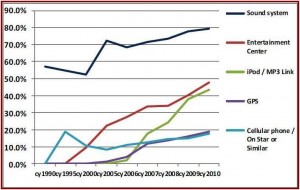
Automakers are adding electronic devices at record rates in an attempt to profit from the connectivity craze. Chart shows buyer importance of the devices.
In vehicle electronic devices continue to grow in popularity among new vehicle buyers as interest is growing beyond traditional sound systems to more elaborate entertainment centers, iPod/mp3 links, GPS Navigation Systems and OnStar or telematic types of devices.
As American households continue to spend what’s now the equivalent of a monthly car payment on various forms of satellite or fiber optic or cable communications, which in turn provide cell phone and internet connectivity, automakers are adding electronic devices at record rates in an attempt to profit from the connectivity craze.
This electronic trend, according to CNW Research, has been growing since at least 2006, which shouldn’t be news to auto industry marketers or critics, who decry the growing epidemic of Distracted Driving incidents, now responsible for more than 5,000 deaths annually in the U.S. and hundreds of thousands of serious injuries, according to the National Highway Traffic Safety Administration.
NHTSA – in a states’ rights argument that goes back to at least the Civil War during the 1860s – is forbidden by Congress from regulating drivers on a national basis, that power is reserved for the individual states, whose legislators show little interest in outlawing the demonstrably dangerous devices in automobiles.
CNW notes that both younger and older shoppers are virtually identical in their demand for electronic in-car devices. While electronics add to the complexity of vehicle production and hardware or software problems are compounding at automakers, there’s no practical way automakers can emerging customer demands. That’s because buyers are paying for the high profit options. CNW notes that on vehicles ordered through dealerships for personal-use customers, 86% add some form of upscale electronic systems.