
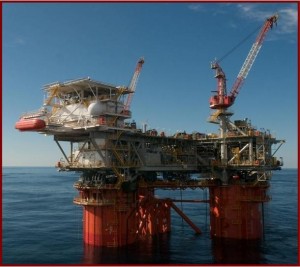
ATP failed to properly operate and maintain its wastewater treatment system on the ATP Innovator.
Today the United States filed suit against ATP Oil & Gas Corporation and ATP Infrastructure Partners for civil penalties and injunctive relief under the Clean Water Act and the Outer Continental Shelf Lands Act.
The complaint – United States v. ATP Oil & Gas Corporation et al., filed in the District Court for the Eastern District of Louisiana – alleges unlawful discharges of oil and banned chemical dispersants from the defendants’ floating oil and gas production platform, the ATP Innovator, into the Gulf of Mexico. The drilling rig is operating 45 nautical miles offshore of southeastern Louisiana.
ATP filed for bankruptcy last August because it said the Macondo well blowout in April 2010 and the imposition beginning in May 2010 of moratoria on drilling and related activities in the Gulf of Mexico prevented ATP from bringing to production in 2010 and in early 2011 six development wells that would have added significant production to ATP.
The case claims that ATP failed to properly operate and maintain its wastewater treatment system on the ATP Innovator. As a result, excess oil was discharged into the ocean, and an unauthorized chemical dispersant was added to the oily wastewater discharge to mask the presence of oil on the ocean’s surface.
The dispersant was added to the outfall pipe by way of a concealed metal tube that connected a tank of dispersant to the outfall pipe. The connection of the metal tubing to the outfall pipe was located downstream of the sample collection point, making the addition of unauthorized dispersant undetectable in samples that are required to be collected to show compliance with ATP’s Clean Water Act discharge permit.
According to the complaint, the dispersant had been used from at least October 2010 to March 2012. In addition to civil penalties under the Clean Water Act, the complaint also seeks injunctive relief for violations of the Clean Water Act and the Outer Continental Shelf Lands Act.







