The problems that Opel faces come not only from the moribund European economy and its high costs, but also from EU CO2 regulations that are forcing premium automakers downmarket into smaller vehicles, traditionally Opel’s strength.
Opel/Vauxhall CEO Karl-Friedrich Stracke, provided an outline for GM’s latest plan for returning the loss-making GM subsidiary to profitability after more than a decade of billions of dollars in losses at an all employee meeting in Rüsselsheim yesterday.
The run-up to the unusual meeting saw Stracke vaguely outline the plan to senior staff members and union representatives earlier in the month. This, of course, resulted in the usual amount of speculation because of partial leaks from various self-interested factions in what is now an ongoing media feeding frenzy. At the heart of the media fed ‘controversy’ is Opel’s plan to consolidate production of the compact Astra – briefly sold unsuccessfully (ominously?) in the U.S. as a Saturn at the now dead brand – in two, three-shift plants instead of the three it is made in now. There was also the hint that labor costs will have to decline, not unlike the UAW pay cuts imposed during the GM bankruptcy.
“The clear goal here is to run each of the plants on three shifts,” said Stracke in a GM release issued long after the employee meeting and days after a stampede of leaks started.
“The first example of that will be seen in conjunction with the allocation of the next Astra generation,” said Stracke. “Given the forecasted market volumes, it would not be viable to produce in more than two plants. If we run these two plants with three shifts, the production costs for the next Astra generation will be significantly below the costs of building the current Astra. Right now we’re operating three plants with just two shifts.”
Opel/Vauxhall is planning to invest more than €300 million in the two future Astra plants, which means one of the three now making it – Rüsselsheim, Ellesmere Port in the U.K. and a Polish plant in Gliwice – will lose a high volume model. If replacement product isn’t put into the losing plant, then inevitably it will close. Any thoughts of exporting out of Europe is a clear losing strategy, as Chevrolet not Opel is now GM’s anointed global brand. And then there’s the unstated goal for containing or – what’s really needed – reducing labor costs at all European plants – there are 11 final assembly and component plants in total – and white collar work sites under the next contract in 2015.
Worrisome for GM shareholders, including the U.S. taxpayers who still own 32% of the world’s largest, but only marginally profitable, automaker after a $50 billion bailout, Stracke told employees that Opel will stay with existing labor agreements through 2014. With the European auto market headed for its fifth straight year of sales declines and with no upturn predicted for years, it’s impossible to see how Opel will cease being a drag on GM earnings. It’s also difficult to see that without bold action now, how the losses will not continue to grow.
When GM reported weak earnings for Q1 earlier this month, as usual GM Europe lost money. GME reported an EBIT-adjusted loss of $300 million compared with break-even results in the first quarter of 2011. “Europe remains a work in progress,” said Dan Akerson, chairman and CEO at the time. The company also took an impairment charge in Europe and International Operations that reduced net income by $600 million. When will this end?
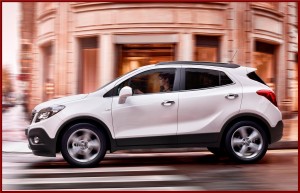
Opel/Vauxhall will most recently have invested about €11 billion – $14 billion – in a new model campaign through 2014. Opel introduces six new models in Europe this year, in a thus far unproven attempt to enter new segments, including the compact SUV Mokka, a new Astra version, a completely new convertible and the Adam, Opel/Vauxhall’s new, tiny urban vehicle. The Adam will be built at the Eisenach plant, making it the only model in that segment built in high-cost Germany.
The problems that Opel faces comes not only from the moribund European economy and its high costs, but also from EU CO2 regulations that are forcing premium automakers downmarket into smaller, less expensive vehicles that were traditionally Opel’s strength.