
Republicans Pass Polluter Protection Act

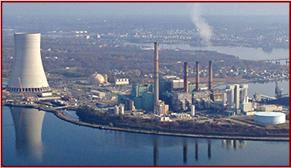
Brayton Point is one of New England's largest fossil-fueled generating facilities, consists of four generating units that produce enough electricity to power about 1.5 million homes.

Brayton Point is one of New England’s largest fossil-fueled generating facilities. Each year coal accounts for less and less of power generation as utilities switch to natural gas.

The Republican Leadership of the House of Representatives brought a bill [H.R. 3826] to the House Floor that cancels the authority of the Environmental Protection Agency to address carbon pollution from coal-fired power plants, the largest source of carbon pollution in the United States. The House approved the measure with a vote of 229 to 183. (See EPA Sets Strict Carbon Pollution Limits for New Powerplants)

This latest example of the power of money in the Congress is a setback for citizens. In 2009, EPA determined that greenhouse gas pollution threatens Americans’ health and welfare by leading to long lasting changes in our climate that can have a range of negative effects on human health and the environment. The Senate controlled by Democrats will likely refuse to act on the bill.

The regulation the Republicans are opposing says that new large natural gas-fired turbines would need to meet a limit of 1,000 pounds of CO2 per megawatt-hour, while new small natural gas-fired turbines would need to meet a limit of 1,100 pounds of CO2 per megawatt-hour. New coal-fired units would need to meet a limit of 1,100 pounds of CO2 per megawatt-hour, and would have the option to meet a somewhat tighter limit if they choose to average emissions over multiple years.

On average, a coal powerplant emits 1,768 pounds of carbon dioxide per megawatt-hour. Coal is responsible for more than 35% of U.S. power generation. Natural gas powerplants emit 800-850 pounds, and have been the favored technology used when companies build new plants.


About Ken Zino

Ken Zino, editor and publisher of AutoInformed, is a versatile auto industry participant with global experience spanning decades in print and broadcast journalism, as well as social media. He has automobile testing, marketing, public relations and communications experience. He is past president of The International Motor Press Assn, the Detroit Press Club, founding member and first President of the Automotive Press Assn. He is a member of APA, IMPA and the Midwest Automotive Press Assn. He also brings an historical perspective while citing their contemporary relevance of the work of legendary auto writers such as Ken Purdy, Jim Dunne or Jerry Flint, or writers such as Red Smith, Mark Twain, Thomas Jefferson – all to bring perspective to a chaotic automotive universe. Above all, decades after he first drove a car, Zino still revels in the sound of the exhaust as the throttle is blipped during a downshift and the driver’s rush that occurs when the entry, apex and exit points of a turn are smoothly and swiftly crossed. It’s the beginning of a perfect lap. AutoInformed has an editorial philosophy that loves transportation machines of all kinds while promoting critical thinking about the future use of cars and trucks. Zino builds AutoInformed from his background in automotive journalism starting at Hearst Publishing in New York City on Motor and MotorTech Magazines and car testing where he reviewed hundreds of vehicles in his decade-long stint as the Detroit Bureau Chief of Road & Track magazine. Zino has also worked in Europe, and Asia – now the largest automotive market in the world with China at its center.
This entry was posted in environment, fuel economy or emissions, news analysis and tagged , , , , . Bookmark the permalink.

Leave a Reply

Your email address will not be published. Required fields are marked *


