Click for more.
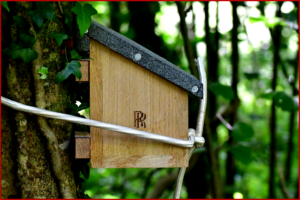
Apprentices at Rolls-Royce Motor Cars have designed and handmade a series of nest boxes for one of the UK’s most endangered mammals, the hazel dormouse (Muscardinus avellanarius), as part of the brands long-term environmental partnership with the neighboring Goodwood Estate, Rolls Royce said today.
“Studies have shown that our 42-acre site and the adjoining Goodwood Estate are home to some of Britain’s most important mammals, reptiles, birds, insects and plants – all of which we’re helping to conserve through our long-term environmental partnership. In this latest initiative, we’re working together to measure and monitor the local population of another rare and protected species, the hazel dormouse, using nest boxes designed and handmade by our Apprentices,” said Andrew Ball, Head of Corporate Relations and Heritage, Rolls-Royce Motor Cars.
“The nest boxes are located in prime dormouse habitats and we’re very hopeful that these delightful but highly endangered creatures will soon take up residence in the palatial new accommodation we’ve provided,” Ball said.
“The hazel dormouse is a tiny creature, with a body 6-9cm (~3”) long plus a tail of similar length, and typically weighs around 25g (1 oz), roughly the same as a pencil. The Apprentices based their design on detailed research, conducted online and through contact with various wildlife trusts, to determine the appropriate shape and dimensions for the nest boxes. Most importantly, they needed to ensure the entrance hole would be large enough to admit the dormice, while obstructing their many predators, which include owls, badgers and domestic cats,” the release said.
The nest boxes are made of oak, quarter-sawn perpendicular to the growth rings to show off its grain patterns, notably the medullary or pith rays created by thin, ribbon-like structures that radiate from the center of the trunk. The pith rays are particularly pronounced, creating a shimmering, iridescent surface effect called “ray fleck.” The nest boxes are finished with roofing felt to further protect them from the weather and increase their durability.
During an on-site visit, the Apprentices met the Goodwood Estate’s head of forestry and learned about the types of habitat favored by dormice, and how to install the nest boxes into a new area of woodland. The nest boxes have been placed in an area of hazel and other broadleaf species, with a dense understory including honeysuckle and ivy, which dormice use to climb into safe hiding spaces.
“Despite these promising conditions, to date, there has been no definitive evidence of dormice living in this area; the Goodwood Estate team hopes that by installing the nest boxes, their presence can be confirmed,” Rolls-Royce said.
“The hazel dormouse is the only species of dormice native to Britain, commonly found in the south of England and Wales. Its population numbers are thought to have fallen by 52% between 2009 and 2018, mainly through the loss and fragmentation of the ancient woodland and hedgerows that make up its habitat. This, combined with dormice being nocturnal and arboreal creatures, makes seeing them extremely difficult and unusual,” Rolls-Royce said.
Hazel dormice are protected in the UK under the Wildlife and Countryside Act 1981, meaning it is illegal to intentionally kill, injure or handle them. This safeguard also extends to any location or structure, including the new Rolls-Royce nest boxes, that hazel dormice use for shelter or protection.

About Ken Zino
Ken Zino, editor and publisher of AutoInformed, is a versatile auto industry participant with global experience spanning decades in print and broadcast journalism, as well as social media. He has automobile testing, marketing, public relations and communications experience. He is past president of The International Motor Press Assn, the Detroit Press Club, founding member and first President of the Automotive Press Assn. He is a member of APA, IMPA and the Midwest Automotive Press Assn.
He also brings an historical perspective while citing their contemporary relevance of the work of legendary auto writers such as Ken Purdy, Jim Dunne or Jerry Flint, or writers such as Red Smith, Mark Twain, Thomas Jefferson – all to bring perspective to a chaotic automotive universe.
Above all, decades after he first drove a car, Zino still revels in the sound of the exhaust as the throttle is blipped during a downshift and the driver’s rush that occurs when the entry, apex and exit points of a turn are smoothly and swiftly crossed. It’s the beginning of a perfect lap.
AutoInformed has an editorial philosophy that loves transportation machines of all kinds while promoting critical thinking about the future use of cars and trucks.
Zino builds AutoInformed from his background in automotive journalism starting at Hearst Publishing in New York City on Motor and MotorTech Magazines and car testing where he reviewed hundreds of vehicles in his decade-long stint as the Detroit Bureau Chief of Road & Track magazine. Zino has also worked in Europe, and Asia – now the largest automotive market in the world with China at its center.







Rolls-Royce Apprentices Make Dormouse Houses
Click for more.
Apprentices at Rolls-Royce Motor Cars have designed and handmade a series of nest boxes for one of the UK’s most endangered mammals, the hazel dormouse (Muscardinus avellanarius), as part of the brands long-term environmental partnership with the neighboring Goodwood Estate, Rolls Royce said today.
“Studies have shown that our 42-acre site and the adjoining Goodwood Estate are home to some of Britain’s most important mammals, reptiles, birds, insects and plants – all of which we’re helping to conserve through our long-term environmental partnership. In this latest initiative, we’re working together to measure and monitor the local population of another rare and protected species, the hazel dormouse, using nest boxes designed and handmade by our Apprentices,” said Andrew Ball, Head of Corporate Relations and Heritage, Rolls-Royce Motor Cars.
“The nest boxes are located in prime dormouse habitats and we’re very hopeful that these delightful but highly endangered creatures will soon take up residence in the palatial new accommodation we’ve provided,” Ball said.
“The hazel dormouse is a tiny creature, with a body 6-9cm (~3”) long plus a tail of similar length, and typically weighs around 25g (1 oz), roughly the same as a pencil. The Apprentices based their design on detailed research, conducted online and through contact with various wildlife trusts, to determine the appropriate shape and dimensions for the nest boxes. Most importantly, they needed to ensure the entrance hole would be large enough to admit the dormice, while obstructing their many predators, which include owls, badgers and domestic cats,” the release said.
The nest boxes are made of oak, quarter-sawn perpendicular to the growth rings to show off its grain patterns, notably the medullary or pith rays created by thin, ribbon-like structures that radiate from the center of the trunk. The pith rays are particularly pronounced, creating a shimmering, iridescent surface effect called “ray fleck.” The nest boxes are finished with roofing felt to further protect them from the weather and increase their durability.
During an on-site visit, the Apprentices met the Goodwood Estate’s head of forestry and learned about the types of habitat favored by dormice, and how to install the nest boxes into a new area of woodland. The nest boxes have been placed in an area of hazel and other broadleaf species, with a dense understory including honeysuckle and ivy, which dormice use to climb into safe hiding spaces.
“Despite these promising conditions, to date, there has been no definitive evidence of dormice living in this area; the Goodwood Estate team hopes that by installing the nest boxes, their presence can be confirmed,” Rolls-Royce said.
“The hazel dormouse is the only species of dormice native to Britain, commonly found in the south of England and Wales. Its population numbers are thought to have fallen by 52% between 2009 and 2018, mainly through the loss and fragmentation of the ancient woodland and hedgerows that make up its habitat. This, combined with dormice being nocturnal and arboreal creatures, makes seeing them extremely difficult and unusual,” Rolls-Royce said.
Hazel dormice are protected in the UK under the Wildlife and Countryside Act 1981, meaning it is illegal to intentionally kill, injure or handle them. This safeguard also extends to any location or structure, including the new Rolls-Royce nest boxes, that hazel dormice use for shelter or protection.
About Ken Zino
Ken Zino, editor and publisher of AutoInformed, is a versatile auto industry participant with global experience spanning decades in print and broadcast journalism, as well as social media. He has automobile testing, marketing, public relations and communications experience. He is past president of The International Motor Press Assn, the Detroit Press Club, founding member and first President of the Automotive Press Assn. He is a member of APA, IMPA and the Midwest Automotive Press Assn. He also brings an historical perspective while citing their contemporary relevance of the work of legendary auto writers such as Ken Purdy, Jim Dunne or Jerry Flint, or writers such as Red Smith, Mark Twain, Thomas Jefferson – all to bring perspective to a chaotic automotive universe. Above all, decades after he first drove a car, Zino still revels in the sound of the exhaust as the throttle is blipped during a downshift and the driver’s rush that occurs when the entry, apex and exit points of a turn are smoothly and swiftly crossed. It’s the beginning of a perfect lap. AutoInformed has an editorial philosophy that loves transportation machines of all kinds while promoting critical thinking about the future use of cars and trucks. Zino builds AutoInformed from his background in automotive journalism starting at Hearst Publishing in New York City on Motor and MotorTech Magazines and car testing where he reviewed hundreds of vehicles in his decade-long stint as the Detroit Bureau Chief of Road & Track magazine. Zino has also worked in Europe, and Asia – now the largest automotive market in the world with China at its center.