Click for more.
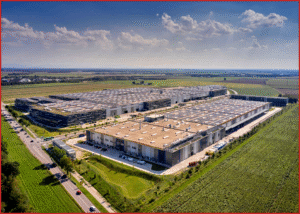
The BMW Group (BMW.DE) said today that operations in Parsdorf (slightly northeast of Munich) are now part of the European environmental register, EMAS. In addition to the BMW Group Cell Manufacturing Competence Center, (CMCC) and test-parts logistics, the pilot plant for high-voltage batteries in Parsdorf has been included in the environmental impact statement and EMAS registration for the first time. EMAS stands for the “Eco-Management and Audit Scheme,” which claims to be the most stringent environmental management system in the world.**
“We are very pleased with the EMAS registration of all our operations in Parsdorf, which underlines that our processes operate at a very high level – both economically and environmentally,” says Hansjörg Schilp, director of the CMCC and pilot plant for high-voltage batteries in Parsdorf. “The entire team has done an outstanding job.”
Efficient Operations and Concepts For The Circular Economy
The validated environmental impact statement and the resulting inclusion in the EMAS Register by the Chamber of Commerce and Industry (IHK) for Munich and Upper Bavaria highlight “the rigorous environmental standards upheld by the BMW Group in Parsdorf. Battery cell production at the CMCC, one of the three Parsdorf facilities, is powered entirely by electricity from 100% renewable energy sources. Hot water for process ventilation is generated using waste heat recovered from various primary processes, and all three Parsdorf facilities utilize heat pumps in their operations.
“On our pilot lines for battery cells and high-voltage batteries, we are focusing on reducing the use of critical raw materials and energy, avoiding solvents and developing innovative circular economy approaches,” said Schilp. “Raw materials represent a significant cost factor for battery cells and high-voltage batteries. Efficient and responsible use of these resources is therefore necessary and also makes economic sense. The BMW Group is gaining valuable insights in this area in Parsdorf. Residual materials from the production process are collected and wherever technically feasible, reintegrated into the value-creation cycle at the BMW Group’s Competence Centers through direct recycling. This innovative procedure enables residual materials from battery cell production, as well as whole battery cells, to be mechanically dismantled into their components,” BMW said.
Environmental Impact Statement Now Online
The environmental impact statement for the BMW Group’s Parsdorf operations (CMCC, pilot plant for high-voltage batteries and test-parts logistics) has been independently reviewed by TÜV SÜD Umweltgutachter GmbH. It is now available online at: www.bmwgroup-werke.com/produktionskompetenz/de.html.
“Cell manufacturing at the CMCC in Parsdorf begins with electrode production: Here, the base material, comprising, for example, graphite for the anode and nickel oxides for the cathode, with binders and solvents, is metered and mixed in a precisely measured ratio. This creates the so-called “slurry” – which means wafer-thin metal foils are coated and then compressed after drying. In technical jargon, this is referred to as ‘calendering.’ The highest level of precision is required: The foil is just a few micrometers thick –thinner than the threads of a spider web – while the coating is in the micrometer range. During cell assembly, the coated foils, referred to in jargon as calendered electrodes, are coiled into so-called ‘jelly rolls’ using the separator and inserted into the cell housing. The cells are filled with electrolyte, then charged for the first time and finally checked for functionality and quality,” BMW said.
Parsdorf is also home to the BMW Group’s largest pilot plant for Gen6 high-voltage batteries, where production processes are developed and tested before large-scale production begins at the series plants in Debrecen (Hungary), Irlbach-Straßkirchen (Lower Bavaria), Shenyang (China), San Luis Potosí (Mexico) and Woodruff (USA). More than 350 employees have been building initial high-voltage battery prototypes here since 2023.
“These batteries have also been delivered to the vehicle plant in Debrecen, Hungary, where they were installed in test vehicles for the Neue Klasse. For series production, the BMW Group sources battery cells for its high-voltage batteries from leading cell manufacturers, who produce the cells to the company’s specifications. The highest technical standards apply. Upon receipt of goods, additional measurements – such as voltage checks – are carried out. Next comes cell clustering, where the battery cells are connected to coolers. This step ensures optimal insulation and cooling of the cells. The cell clusters and cell contact system are then laser-cleaned and welded with pinpoint precision. The in-line inspection continuously monitors each weld seam in real time.
“An innovative foaming process follows, ensuring that all elements are protected as a mechanical unit. The foam thus guarantees the safety, stability and durability of the high-voltage battery. The housing is then closed, sealed and riveted. In the final assembly step, the Energy Master – the central control unit – is installed onto the high-voltage battery. A permanently elastic sealing adhesive is applied to ensure a reliable seal. Finally, each high-voltage battery undergoes a 100% end-of-line inspection to ensure quality, safety and function,” BMW said.
*AutoInformed on
**EMAS
To be listed in the EMAS Register, companies must fulfil strict requirements and adhere to rigorous environmental standards, according to BMW. EMAS is a globally recognized framework that enables organizations to manage and continuously improve their environmental impact. A key element of the EMAS environmental management system is the international environmental management standard ISO 14001. EMAS also focuses on measurable improvements, transparency and legal certainty. Auditing aims to support companies in continuously improving their environmental performance. Examples include using energy and material more efficiently and reducing emissions, wastewater and waste from sites. Outside of direct environmental impacts, EMAS also addresses and evaluates indirect aspects, including the sustainability of products, procurement and supply chains, contractor practices and the environmental impact of employees commuting to work. (See it here.

About Ken Zino
Ken Zino, editor and publisher of AutoInformed, is a versatile auto industry participant with global experience spanning decades in print and broadcast journalism, as well as social media. He has automobile testing, marketing, public relations and communications experience. He is past president of The International Motor Press Assn, the Detroit Press Club, founding member and first President of the Automotive Press Assn. He is a member of APA, IMPA and the Midwest Automotive Press Assn.
He also brings an historical perspective while citing their contemporary relevance of the work of legendary auto writers such as Ken Purdy, Jim Dunne or Jerry Flint, or writers such as Red Smith, Mark Twain, Thomas Jefferson – all to bring perspective to a chaotic automotive universe.
Above all, decades after he first drove a car, Zino still revels in the sound of the exhaust as the throttle is blipped during a downshift and the driver’s rush that occurs when the entry, apex and exit points of a turn are smoothly and swiftly crossed. It’s the beginning of a perfect lap.
AutoInformed has an editorial philosophy that loves transportation machines of all kinds while promoting critical thinking about the future use of cars and trucks.
Zino builds AutoInformed from his background in automotive journalism starting at Hearst Publishing in New York City on Motor and MotorTech Magazines and car testing where he reviewed hundreds of vehicles in his decade-long stint as the Detroit Bureau Chief of Road & Track magazine. Zino has also worked in Europe, and Asia – now the largest automotive market in the world with China at its center.








All BMW Group Parsdorf Operations Now in EMAS
Click for more.
The BMW Group (BMW.DE) said today that operations in Parsdorf (slightly northeast of Munich) are now part of the European environmental register, EMAS. In addition to the BMW Group Cell Manufacturing Competence Center, (CMCC) and test-parts logistics, the pilot plant for high-voltage batteries in Parsdorf has been included in the environmental impact statement and EMAS registration for the first time. EMAS stands for the “Eco-Management and Audit Scheme,” which claims to be the most stringent environmental management system in the world.**
“We are very pleased with the EMAS registration of all our operations in Parsdorf, which underlines that our processes operate at a very high level – both economically and environmentally,” says Hansjörg Schilp, director of the CMCC and pilot plant for high-voltage batteries in Parsdorf. “The entire team has done an outstanding job.”
Efficient Operations and Concepts For The Circular Economy
The validated environmental impact statement and the resulting inclusion in the EMAS Register by the Chamber of Commerce and Industry (IHK) for Munich and Upper Bavaria highlight “the rigorous environmental standards upheld by the BMW Group in Parsdorf. Battery cell production at the CMCC, one of the three Parsdorf facilities, is powered entirely by electricity from 100% renewable energy sources. Hot water for process ventilation is generated using waste heat recovered from various primary processes, and all three Parsdorf facilities utilize heat pumps in their operations.
“On our pilot lines for battery cells and high-voltage batteries, we are focusing on reducing the use of critical raw materials and energy, avoiding solvents and developing innovative circular economy approaches,” said Schilp. “Raw materials represent a significant cost factor for battery cells and high-voltage batteries. Efficient and responsible use of these resources is therefore necessary and also makes economic sense. The BMW Group is gaining valuable insights in this area in Parsdorf. Residual materials from the production process are collected and wherever technically feasible, reintegrated into the value-creation cycle at the BMW Group’s Competence Centers through direct recycling. This innovative procedure enables residual materials from battery cell production, as well as whole battery cells, to be mechanically dismantled into their components,” BMW said.
Environmental Impact Statement Now Online
The environmental impact statement for the BMW Group’s Parsdorf operations (CMCC, pilot plant for high-voltage batteries and test-parts logistics) has been independently reviewed by TÜV SÜD Umweltgutachter GmbH. It is now available online at: www.bmwgroup-werke.com/produktionskompetenz/de.html.
“Cell manufacturing at the CMCC in Parsdorf begins with electrode production: Here, the base material, comprising, for example, graphite for the anode and nickel oxides for the cathode, with binders and solvents, is metered and mixed in a precisely measured ratio. This creates the so-called “slurry” – which means wafer-thin metal foils are coated and then compressed after drying. In technical jargon, this is referred to as ‘calendering.’ The highest level of precision is required: The foil is just a few micrometers thick –thinner than the threads of a spider web – while the coating is in the micrometer range. During cell assembly, the coated foils, referred to in jargon as calendered electrodes, are coiled into so-called ‘jelly rolls’ using the separator and inserted into the cell housing. The cells are filled with electrolyte, then charged for the first time and finally checked for functionality and quality,” BMW said.
Parsdorf is also home to the BMW Group’s largest pilot plant for Gen6 high-voltage batteries, where production processes are developed and tested before large-scale production begins at the series plants in Debrecen (Hungary), Irlbach-Straßkirchen (Lower Bavaria), Shenyang (China), San Luis Potosí (Mexico) and Woodruff (USA). More than 350 employees have been building initial high-voltage battery prototypes here since 2023.
“These batteries have also been delivered to the vehicle plant in Debrecen, Hungary, where they were installed in test vehicles for the Neue Klasse. For series production, the BMW Group sources battery cells for its high-voltage batteries from leading cell manufacturers, who produce the cells to the company’s specifications. The highest technical standards apply. Upon receipt of goods, additional measurements – such as voltage checks – are carried out. Next comes cell clustering, where the battery cells are connected to coolers. This step ensures optimal insulation and cooling of the cells. The cell clusters and cell contact system are then laser-cleaned and welded with pinpoint precision. The in-line inspection continuously monitors each weld seam in real time.
“An innovative foaming process follows, ensuring that all elements are protected as a mechanical unit. The foam thus guarantees the safety, stability and durability of the high-voltage battery. The housing is then closed, sealed and riveted. In the final assembly step, the Energy Master – the central control unit – is installed onto the high-voltage battery. A permanently elastic sealing adhesive is applied to ensure a reliable seal. Finally, each high-voltage battery undergoes a 100% end-of-line inspection to ensure quality, safety and function,” BMW said.
*AutoInformed on
**EMAS
To be listed in the EMAS Register, companies must fulfil strict requirements and adhere to rigorous environmental standards, according to BMW. EMAS is a globally recognized framework that enables organizations to manage and continuously improve their environmental impact. A key element of the EMAS environmental management system is the international environmental management standard ISO 14001. EMAS also focuses on measurable improvements, transparency and legal certainty. Auditing aims to support companies in continuously improving their environmental performance. Examples include using energy and material more efficiently and reducing emissions, wastewater and waste from sites. Outside of direct environmental impacts, EMAS also addresses and evaluates indirect aspects, including the sustainability of products, procurement and supply chains, contractor practices and the environmental impact of employees commuting to work. (See it here.
About Ken Zino
Ken Zino, editor and publisher of AutoInformed, is a versatile auto industry participant with global experience spanning decades in print and broadcast journalism, as well as social media. He has automobile testing, marketing, public relations and communications experience. He is past president of The International Motor Press Assn, the Detroit Press Club, founding member and first President of the Automotive Press Assn. He is a member of APA, IMPA and the Midwest Automotive Press Assn. He also brings an historical perspective while citing their contemporary relevance of the work of legendary auto writers such as Ken Purdy, Jim Dunne or Jerry Flint, or writers such as Red Smith, Mark Twain, Thomas Jefferson – all to bring perspective to a chaotic automotive universe. Above all, decades after he first drove a car, Zino still revels in the sound of the exhaust as the throttle is blipped during a downshift and the driver’s rush that occurs when the entry, apex and exit points of a turn are smoothly and swiftly crossed. It’s the beginning of a perfect lap. AutoInformed has an editorial philosophy that loves transportation machines of all kinds while promoting critical thinking about the future use of cars and trucks. Zino builds AutoInformed from his background in automotive journalism starting at Hearst Publishing in New York City on Motor and MotorTech Magazines and car testing where he reviewed hundreds of vehicles in his decade-long stint as the Detroit Bureau Chief of Road & Track magazine. Zino has also worked in Europe, and Asia – now the largest automotive market in the world with China at its center.