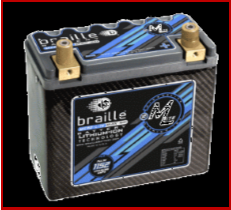
 One-fifth of battery handlers and sorters did not receive or provide battery sorting training for new employees, placing their ability to manage spent batteries in question. This potentially puts lead battery recyclers’ employees at risk.
Battery Council International says the lead battery recycling process was uniquely designed for lead batteries. Lead batteries have almost a 100% recycling rate. However, when lithium batteries enter the lead battery recycling stream, they pose a serious threat to lead battery recyclers’ employees and equipment. This is because lithium batteries can explode if they are crushed during the lead battery recycling process.
BCI has released a lithium battery training toolkit to aid lead battery sorters and handlers in identifying lithium batteries. This toolkit of electronic resources is available to the public free-of-charge and includes three primary pieces:
- Lithium battery training video
- Lithium battery training poster
- Lithium battery training flyer
The lithium battery training toolkit project began in January 2018 when BCI surveyed 123 battery sorters and handlers and found that 21% of respondents did not provide or receive battery sorting training for new employees. The organization also learned that 5% of respondents did not know the difference between a lead and a lithium battery. BCI’s Marketing Committee created a Lithium Training Subcommittee comprised of 19 industry professionals: The goal is to decrease and ultimately eliminate lithium batteries from entering the lead battery recycling stream.
“The toolkit is an easily accessible set of materials that allows people to learn about the differences between lead and lithium batteries,” says Bruce Murray, chair of BCI’s Lithium Training Subcommittee and vice president of sales for RSR Corporation.
The video is designed to be incorporated into companies’ learning management systems. There are also complementary electronic flyer and poster files available on BCI’s website.
The graphics reinforce the three main differences between lead and lithium batteries – weight, terminals and labels. Users are encouraged to take the files to their local printer and use them in their facilities for employee reference.

About Ken Zino
Ken Zino, editor and publisher of AutoInformed, is a versatile auto industry participant with global experience spanning decades in print and broadcast journalism, as well as social media. He has automobile testing, marketing, public relations and communications experience. He is past president of The International Motor Press Assn, the Detroit Press Club, founding member and first President of the Automotive Press Assn. He is a member of APA, IMPA and the Midwest Automotive Press Assn.
He also brings an historical perspective while citing their contemporary relevance of the work of legendary auto writers such as Ken Purdy, Jim Dunne or Jerry Flint, or writers such as Red Smith, Mark Twain, Thomas Jefferson – all to bring perspective to a chaotic automotive universe.
Above all, decades after he first drove a car, Zino still revels in the sound of the exhaust as the throttle is blipped during a downshift and the driver’s rush that occurs when the entry, apex and exit points of a turn are smoothly and swiftly crossed. It’s the beginning of a perfect lap.
AutoInformed has an editorial philosophy that loves transportation machines of all kinds while promoting critical thinking about the future use of cars and trucks.
Zino builds AutoInformed from his background in automotive journalism starting at Hearst Publishing in New York City on Motor and MotorTech Magazines and car testing where he reviewed hundreds of vehicles in his decade-long stint as the Detroit Bureau Chief of Road & Track magazine. Zino has also worked in Europe, and Asia – now the largest automotive market in the world with China at its center.








Battery Handlers or Sorters Untrained, at Risk from Lithium
Battery Council International says the lead battery recycling process was uniquely designed for lead batteries. Lead batteries have almost a 100% recycling rate. However, when lithium batteries enter the lead battery recycling stream, they pose a serious threat to lead battery recyclers’ employees and equipment. This is because lithium batteries can explode if they are crushed during the lead battery recycling process.
BCI has released a lithium battery training toolkit to aid lead battery sorters and handlers in identifying lithium batteries. This toolkit of electronic resources is available to the public free-of-charge and includes three primary pieces:
The lithium battery training toolkit project began in January 2018 when BCI surveyed 123 battery sorters and handlers and found that 21% of respondents did not provide or receive battery sorting training for new employees. The organization also learned that 5% of respondents did not know the difference between a lead and a lithium battery. BCI’s Marketing Committee created a Lithium Training Subcommittee comprised of 19 industry professionals: The goal is to decrease and ultimately eliminate lithium batteries from entering the lead battery recycling stream.
“The toolkit is an easily accessible set of materials that allows people to learn about the differences between lead and lithium batteries,” says Bruce Murray, chair of BCI’s Lithium Training Subcommittee and vice president of sales for RSR Corporation.
The video is designed to be incorporated into companies’ learning management systems. There are also complementary electronic flyer and poster files available on BCI’s website.
The graphics reinforce the three main differences between lead and lithium batteries – weight, terminals and labels. Users are encouraged to take the files to their local printer and use them in their facilities for employee reference.
About Ken Zino
Ken Zino, editor and publisher of AutoInformed, is a versatile auto industry participant with global experience spanning decades in print and broadcast journalism, as well as social media. He has automobile testing, marketing, public relations and communications experience. He is past president of The International Motor Press Assn, the Detroit Press Club, founding member and first President of the Automotive Press Assn. He is a member of APA, IMPA and the Midwest Automotive Press Assn. He also brings an historical perspective while citing their contemporary relevance of the work of legendary auto writers such as Ken Purdy, Jim Dunne or Jerry Flint, or writers such as Red Smith, Mark Twain, Thomas Jefferson – all to bring perspective to a chaotic automotive universe. Above all, decades after he first drove a car, Zino still revels in the sound of the exhaust as the throttle is blipped during a downshift and the driver’s rush that occurs when the entry, apex and exit points of a turn are smoothly and swiftly crossed. It’s the beginning of a perfect lap. AutoInformed has an editorial philosophy that loves transportation machines of all kinds while promoting critical thinking about the future use of cars and trucks. Zino builds AutoInformed from his background in automotive journalism starting at Hearst Publishing in New York City on Motor and MotorTech Magazines and car testing where he reviewed hundreds of vehicles in his decade-long stint as the Detroit Bureau Chief of Road & Track magazine. Zino has also worked in Europe, and Asia – now the largest automotive market in the world with China at its center.