Click for more.
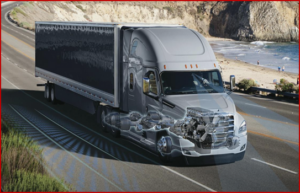
Detroit Diesel, a manufacturer of diesel engines and axles, has announced the addition of a third shift, the recall of laid-off workers, and the hiring of dozens more, the UAW said today. The win for union workers came about because the Trump Mis-Administration actually legally imposed a 25% tariff on heavy truck imports to prevent further offshoring and encourage investment in the U.S. heavy truck industry. [More on tariff law, the U.S. Constitution and the Supreme Court below- AutoCrat]*
“Strategic, targeted tariffs are an important tool in the toolbox to undo the damage of our free trade disaster and bring back good union jobs to the U.S.,” said UAW President Shawn Fain. “Companies like Detroit Diesel, and their parent company Daimler Truck North America, need to step up to reinvest in the workers who make the product and stop laying off American workers while making billions in profit. We applaud this first step in the right direction.”
In 2025, workers from the Detroit Diesel Axle unit voted by 99% to ratify a new contract that won profit-sharing and cost-of-living adjustments for the first time after authorizing a strike.**
“Detroit Diesel UAW members build a high-quality product that makes this company billions, and it’s only right that this company would invest right here in Michigan and recognize that success,” said UAW Region 1A Director Mark DePaoli. “We congratulate our members who are coming off of layoff and all those who will join our union with the creation of these new jobs.”
*Tariffs and the U.S. Constitution
In October, after months of UAW lobbying, the federal government imposed a 25% tariff on heavy truck imports. The UAW said it would “prevent further offshoring and drive investment in the US heavy truck industry.”
Among the tariffs imposed by the Trump mis-administration were so-called Section 301 tariffs on imports from China and Nicaragua and the global Section 232 tariffs on imports of steel and steel derivatives; aluminum and aluminum derivatives; passenger vehicles, light trucks, and parts; copper and copper derivative products; timber, lumber, and wood products; trucks, buses, and truck parts; and some advanced semiconductors. Diesel trucks were part of Section 302. These were and remain legal.
However, the Mis-administration of 47th President of the United States also used the International Emergency Economic Powers Act (IEEPA). This where the Trump reign fell afoul of the U.S. Supreme Court. Looking at the U.S. Constitution and the statutory text of IEEPA, the majority of the Supreme Court justices held that IEEPA does not authorize the President to impose tariffs in any instance whatsoever. The Supreme Court reiterated that the US Constitution grants Congress alone the power to impose taxes or tariffs; that the President has no fundamental authority to impose tariffs during peacetime. The Court determined that the President’s imposition of IEEPA-based tariffs must rely exclusively on a delegation of tariff power from Congress.
Then the Court analyzed the text of IEEPA and determined that Congress did not delegate its tariff authority to the President through IEEPA. The Court held that while IEEPA does authorize the President to “regulate … importation,” the word “regulate” does not encompass the power to impose tariffs or taxes, as “the ‘power to regulate commerce’ is ‘entirely distinct from the right to levy taxes.’”
**AutoInformed on

About Ken Zino
Ken Zino, editor and publisher of AutoInformed, is a versatile auto industry participant with global experience spanning decades in print and broadcast journalism, as well as social media. He has automobile testing, marketing, public relations and communications experience. He is past president of The International Motor Press Assn, the Detroit Press Club, founding member and first President of the Automotive Press Assn. He is a member of APA, IMPA and the Midwest Automotive Press Assn.
He also brings an historical perspective while citing their contemporary relevance of the work of legendary auto writers such as Ken Purdy, Jim Dunne or Jerry Flint, or writers such as Red Smith, Mark Twain, Thomas Jefferson – all to bring perspective to a chaotic automotive universe.
Above all, decades after he first drove a car, Zino still revels in the sound of the exhaust as the throttle is blipped during a downshift and the driver’s rush that occurs when the entry, apex and exit points of a turn are smoothly and swiftly crossed. It’s the beginning of a perfect lap.
AutoInformed has an editorial philosophy that loves transportation machines of all kinds while promoting critical thinking about the future use of cars and trucks.
Zino builds AutoInformed from his background in automotive journalism starting at Hearst Publishing in New York City on Motor and MotorTech Magazines and car testing where he reviewed hundreds of vehicles in his decade-long stint as the Detroit Bureau Chief of Road & Track magazine. Zino has also worked in Europe, and Asia – now the largest automotive market in the world with China at its center.








Legal Tariffs – Detroit Diesel to Add Third Shift, Recall Laid Off Workers
Click for more.
Detroit Diesel, a manufacturer of diesel engines and axles, has announced the addition of a third shift, the recall of laid-off workers, and the hiring of dozens more, the UAW said today. The win for union workers came about because the Trump Mis-Administration actually legally imposed a 25% tariff on heavy truck imports to prevent further offshoring and encourage investment in the U.S. heavy truck industry. [More on tariff law, the U.S. Constitution and the Supreme Court below- AutoCrat]*
“Strategic, targeted tariffs are an important tool in the toolbox to undo the damage of our free trade disaster and bring back good union jobs to the U.S.,” said UAW President Shawn Fain. “Companies like Detroit Diesel, and their parent company Daimler Truck North America, need to step up to reinvest in the workers who make the product and stop laying off American workers while making billions in profit. We applaud this first step in the right direction.”
In 2025, workers from the Detroit Diesel Axle unit voted by 99% to ratify a new contract that won profit-sharing and cost-of-living adjustments for the first time after authorizing a strike.**
“Detroit Diesel UAW members build a high-quality product that makes this company billions, and it’s only right that this company would invest right here in Michigan and recognize that success,” said UAW Region 1A Director Mark DePaoli. “We congratulate our members who are coming off of layoff and all those who will join our union with the creation of these new jobs.”
*Tariffs and the U.S. Constitution
In October, after months of UAW lobbying, the federal government imposed a 25% tariff on heavy truck imports. The UAW said it would “prevent further offshoring and drive investment in the US heavy truck industry.”
Among the tariffs imposed by the Trump mis-administration were so-called Section 301 tariffs on imports from China and Nicaragua and the global Section 232 tariffs on imports of steel and steel derivatives; aluminum and aluminum derivatives; passenger vehicles, light trucks, and parts; copper and copper derivative products; timber, lumber, and wood products; trucks, buses, and truck parts; and some advanced semiconductors. Diesel trucks were part of Section 302. These were and remain legal.
However, the Mis-administration of 47th President of the United States also used the International Emergency Economic Powers Act (IEEPA). This where the Trump reign fell afoul of the U.S. Supreme Court. Looking at the U.S. Constitution and the statutory text of IEEPA, the majority of the Supreme Court justices held that IEEPA does not authorize the President to impose tariffs in any instance whatsoever. The Supreme Court reiterated that the US Constitution grants Congress alone the power to impose taxes or tariffs; that the President has no fundamental authority to impose tariffs during peacetime. The Court determined that the President’s imposition of IEEPA-based tariffs must rely exclusively on a delegation of tariff power from Congress.
Then the Court analyzed the text of IEEPA and determined that Congress did not delegate its tariff authority to the President through IEEPA. The Court held that while IEEPA does authorize the President to “regulate … importation,” the word “regulate” does not encompass the power to impose tariffs or taxes, as “the ‘power to regulate commerce’ is ‘entirely distinct from the right to levy taxes.’”
**AutoInformed on
About Ken Zino
Ken Zino, editor and publisher of AutoInformed, is a versatile auto industry participant with global experience spanning decades in print and broadcast journalism, as well as social media. He has automobile testing, marketing, public relations and communications experience. He is past president of The International Motor Press Assn, the Detroit Press Club, founding member and first President of the Automotive Press Assn. He is a member of APA, IMPA and the Midwest Automotive Press Assn. He also brings an historical perspective while citing their contemporary relevance of the work of legendary auto writers such as Ken Purdy, Jim Dunne or Jerry Flint, or writers such as Red Smith, Mark Twain, Thomas Jefferson – all to bring perspective to a chaotic automotive universe. Above all, decades after he first drove a car, Zino still revels in the sound of the exhaust as the throttle is blipped during a downshift and the driver’s rush that occurs when the entry, apex and exit points of a turn are smoothly and swiftly crossed. It’s the beginning of a perfect lap. AutoInformed has an editorial philosophy that loves transportation machines of all kinds while promoting critical thinking about the future use of cars and trucks. Zino builds AutoInformed from his background in automotive journalism starting at Hearst Publishing in New York City on Motor and MotorTech Magazines and car testing where he reviewed hundreds of vehicles in his decade-long stint as the Detroit Bureau Chief of Road & Track magazine. Zino has also worked in Europe, and Asia – now the largest automotive market in the world with China at its center.