Click for more.
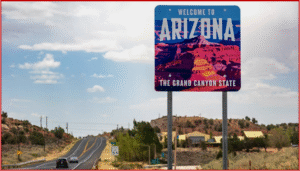
An Arizona law making it illegal to hold a cellphone while driving cut handheld conversations, but other problems remain, according to a study published today by Insurance Institute for Highway Safety (IIHS). In Arizona, the number of warnings issued by state police fell by about a quarter and the number of citations fell by a third between 2021 and 2024.*
“These results are a bit of a reality check. ‘No holding’ laws are a positive step, but it will take more than better-worded legislation alone to combat cellphone distraction,” said IIHS President David Harkey.
Telematics data compiled anonymously (note the anonymous claim, Data Gathering and Privacy remain problematic – AutoCrat) from insurance companies’ safe-driving apps showed that Arizona drivers spent 26% less time on handheld calls after the ban went into effect than before, However, the new law had little impact on cellphone manipulation — a collective term that covers scrolling, swiping, typing and any other action that requires holding the device.
“The fact that drivers continued to type and scroll in the wake of a law that made it illegal even to hold the device shows how hard it’s going to be to stop this behavior,” said Ian Reagan, senior research scientist at IIHS, the lead author of the study. “Sustained, high-visibility enforcement efforts are likely needed to make drivers take the new law seriously.”
Cellphones and Crash risk
“There are no reliable estimates of the number of crashes caused by distracted drivers. But the evidence is strong that looking away from the road to focus on something other than driving increases crash risk. The more demanding the secondary task and the longer the driver’s eyes are away from the road, the greater the danger becomes.
“While that’s true of any secondary activity, cellphones are the most common culprit. A national two-year study of 3,100 drivers found that they used their cellphones more than 6 times as often as they reached for other objects.
“Early bans targeted narrow behaviors like handheld conversations or texting, but jurisdictions are increasingly adopting comprehensive bans on holding an electronic device while driving. An earlier IIHS study showed these stronger laws were associated with rear-end crash reductions in Oregon and Washington, though not in California,” IIHS said.
Arizona passed such a law in April 2019, allowing police to issue written warnings immediately and to begin issuing citations in January 2021. Prior to 2019, Arizona had no statewide cellphone ban for drivers of all ages, though some local communities banned handheld calls, texting or both.
To measure the law’s impact, IIHS researchers analyzed roadside observation data from trained observers and telematics data from insurers’ safe-driving apps from before and after the law went into effect. They compared the trends from Arizona with Nevada, which does not have a law against holding a cellphone but has banned texting and handheld calls since 2012.
The roadside observers recorded the percentage of drivers they saw holding a phone, manipulating a phone or holding a phone to their ear, as well as the apparent age and sex of the driver. Stationed at specific locations, they could only note drivers using their phones at the moment they passed the observation spot.
In contrast, with the accelerometers used in smartphones, the telematics data recorded every instance that the participating drivers moved or picked up their phones while their vehicle was traveling at least 9.3 mph (15 kph). Collected from the phones themselves, the data recorded when drivers were making handheld calls and manipulating their phones. Both the percentage of trips during which the behavior occurred and how much of the total trip time was spent on the activities were logged. Calls fell, but other behaviors didn’t.
Roadside Observations, Telematics Data Show Declines in Handheld Calls
Roadside observations showed that, relative to Nevada drivers, Arizona drivers were about 7% less likely to be seen having handheld conversations immediately after the law went into effect than before, though the result was not statistically significant.
The telematics data showed larger reductions. The first year that the law was in effect, drivers were about 17% less likely to make handheld calls and 22% less likely to be on a handheld call at any given moment. By 2024, those reductions widened to 21% and 26%, respectively.
Cellphone Manipulation is Problematic
Roadside observations showed a small decline, but it was not statistically significant. Telematics data showed slight increases in the likelihood of cellphone manipulation occurring on trips. At any given moment of a trip, cellphone manipulation declined slightly the first year the law was in effect and then increased slightly through 2024.
Pre-existing local ordinances may have influenced results. The roadside observation data showed reductions in handheld calls in Mesa-Scottsdale and Phoenix, which did not have prior handheld calling bans. Tucson, which already had handheld calling and texting bans before the state law, did not see reductions.
Bad timing?
“The timing of the state law may have presented a hurdle. Enacted in 2019, it went into effect during the COVID-19 pandemic, when police enforcement fell nationwide. That might explain why warnings and citations fell over the study period.
“A sustained, high-profile campaign coupled with consistent enforcement — similar to the “Click It or Ticket” program that was influential in improving seat belt use — could yield better results,” IIHS claimed.
“Efforts to reduce speeding, impaired driving and other kinds of risky behaviors show that laws are more effective when drivers know there’s a strong possibility that they’ll be penalized,” Harkey said.
AutoInformed on

About Ken Zino
Ken Zino, editor and publisher of AutoInformed, is a versatile auto industry participant with global experience spanning decades in print and broadcast journalism, as well as social media. He has automobile testing, marketing, public relations and communications experience. He is past president of The International Motor Press Assn, the Detroit Press Club, founding member and first President of the Automotive Press Assn. He is a member of APA, IMPA and the Midwest Automotive Press Assn.
He also brings an historical perspective while citing their contemporary relevance of the work of legendary auto writers such as Ken Purdy, Jim Dunne or Jerry Flint, or writers such as Red Smith, Mark Twain, Thomas Jefferson – all to bring perspective to a chaotic automotive universe.
Above all, decades after he first drove a car, Zino still revels in the sound of the exhaust as the throttle is blipped during a downshift and the driver’s rush that occurs when the entry, apex and exit points of a turn are smoothly and swiftly crossed. It’s the beginning of a perfect lap.
AutoInformed has an editorial philosophy that loves transportation machines of all kinds while promoting critical thinking about the future use of cars and trucks.
Zino builds AutoInformed from his background in automotive journalism starting at Hearst Publishing in New York City on Motor and MotorTech Magazines and car testing where he reviewed hundreds of vehicles in his decade-long stint as the Detroit Bureau Chief of Road & Track magazine. Zino has also worked in Europe, and Asia – now the largest automotive market in the world with China at its center.







Distracted Driving – Cell Phone Manipulation Persists
Click for more.
An Arizona law making it illegal to hold a cellphone while driving cut handheld conversations, but other problems remain, according to a study published today by Insurance Institute for Highway Safety (IIHS). In Arizona, the number of warnings issued by state police fell by about a quarter and the number of citations fell by a third between 2021 and 2024.*
“These results are a bit of a reality check. ‘No holding’ laws are a positive step, but it will take more than better-worded legislation alone to combat cellphone distraction,” said IIHS President David Harkey.
Telematics data compiled anonymously (note the anonymous claim, Data Gathering and Privacy remain problematic – AutoCrat) from insurance companies’ safe-driving apps showed that Arizona drivers spent 26% less time on handheld calls after the ban went into effect than before, However, the new law had little impact on cellphone manipulation — a collective term that covers scrolling, swiping, typing and any other action that requires holding the device.
“The fact that drivers continued to type and scroll in the wake of a law that made it illegal even to hold the device shows how hard it’s going to be to stop this behavior,” said Ian Reagan, senior research scientist at IIHS, the lead author of the study. “Sustained, high-visibility enforcement efforts are likely needed to make drivers take the new law seriously.”
Cellphones and Crash risk
“There are no reliable estimates of the number of crashes caused by distracted drivers. But the evidence is strong that looking away from the road to focus on something other than driving increases crash risk. The more demanding the secondary task and the longer the driver’s eyes are away from the road, the greater the danger becomes.
“While that’s true of any secondary activity, cellphones are the most common culprit. A national two-year study of 3,100 drivers found that they used their cellphones more than 6 times as often as they reached for other objects.
“Early bans targeted narrow behaviors like handheld conversations or texting, but jurisdictions are increasingly adopting comprehensive bans on holding an electronic device while driving. An earlier IIHS study showed these stronger laws were associated with rear-end crash reductions in Oregon and Washington, though not in California,” IIHS said.
Arizona passed such a law in April 2019, allowing police to issue written warnings immediately and to begin issuing citations in January 2021. Prior to 2019, Arizona had no statewide cellphone ban for drivers of all ages, though some local communities banned handheld calls, texting or both.
To measure the law’s impact, IIHS researchers analyzed roadside observation data from trained observers and telematics data from insurers’ safe-driving apps from before and after the law went into effect. They compared the trends from Arizona with Nevada, which does not have a law against holding a cellphone but has banned texting and handheld calls since 2012.
The roadside observers recorded the percentage of drivers they saw holding a phone, manipulating a phone or holding a phone to their ear, as well as the apparent age and sex of the driver. Stationed at specific locations, they could only note drivers using their phones at the moment they passed the observation spot.
In contrast, with the accelerometers used in smartphones, the telematics data recorded every instance that the participating drivers moved or picked up their phones while their vehicle was traveling at least 9.3 mph (15 kph). Collected from the phones themselves, the data recorded when drivers were making handheld calls and manipulating their phones. Both the percentage of trips during which the behavior occurred and how much of the total trip time was spent on the activities were logged. Calls fell, but other behaviors didn’t.
Roadside Observations, Telematics Data Show Declines in Handheld Calls
Roadside observations showed that, relative to Nevada drivers, Arizona drivers were about 7% less likely to be seen having handheld conversations immediately after the law went into effect than before, though the result was not statistically significant.
The telematics data showed larger reductions. The first year that the law was in effect, drivers were about 17% less likely to make handheld calls and 22% less likely to be on a handheld call at any given moment. By 2024, those reductions widened to 21% and 26%, respectively.
Cellphone Manipulation is Problematic
Roadside observations showed a small decline, but it was not statistically significant. Telematics data showed slight increases in the likelihood of cellphone manipulation occurring on trips. At any given moment of a trip, cellphone manipulation declined slightly the first year the law was in effect and then increased slightly through 2024.
Pre-existing local ordinances may have influenced results. The roadside observation data showed reductions in handheld calls in Mesa-Scottsdale and Phoenix, which did not have prior handheld calling bans. Tucson, which already had handheld calling and texting bans before the state law, did not see reductions.
Bad timing?
“The timing of the state law may have presented a hurdle. Enacted in 2019, it went into effect during the COVID-19 pandemic, when police enforcement fell nationwide. That might explain why warnings and citations fell over the study period.
“A sustained, high-profile campaign coupled with consistent enforcement — similar to the “Click It or Ticket” program that was influential in improving seat belt use — could yield better results,” IIHS claimed.
“Efforts to reduce speeding, impaired driving and other kinds of risky behaviors show that laws are more effective when drivers know there’s a strong possibility that they’ll be penalized,” Harkey said.
AutoInformed on
About Ken Zino
Ken Zino, editor and publisher of AutoInformed, is a versatile auto industry participant with global experience spanning decades in print and broadcast journalism, as well as social media. He has automobile testing, marketing, public relations and communications experience. He is past president of The International Motor Press Assn, the Detroit Press Club, founding member and first President of the Automotive Press Assn. He is a member of APA, IMPA and the Midwest Automotive Press Assn. He also brings an historical perspective while citing their contemporary relevance of the work of legendary auto writers such as Ken Purdy, Jim Dunne or Jerry Flint, or writers such as Red Smith, Mark Twain, Thomas Jefferson – all to bring perspective to a chaotic automotive universe. Above all, decades after he first drove a car, Zino still revels in the sound of the exhaust as the throttle is blipped during a downshift and the driver’s rush that occurs when the entry, apex and exit points of a turn are smoothly and swiftly crossed. It’s the beginning of a perfect lap. AutoInformed has an editorial philosophy that loves transportation machines of all kinds while promoting critical thinking about the future use of cars and trucks. Zino builds AutoInformed from his background in automotive journalism starting at Hearst Publishing in New York City on Motor and MotorTech Magazines and car testing where he reviewed hundreds of vehicles in his decade-long stint as the Detroit Bureau Chief of Road & Track magazine. Zino has also worked in Europe, and Asia – now the largest automotive market in the world with China at its center.