Ford Motor (NYSE: F) is recalling ~1,592,809 vehicles for a variety of safety defects on Lincoln MKX and Aviator, Ford Edge, Explorer and Mustang models, according to documents made public by The National Highway Traffic Safety Administration (NHTSA) on Labor Day. During the first half of 2025 Ford Motor booked a $1.3 billion loss from repairs of vehicles under warranty, cancellation of plans to build an electric sport utility vehicle and other one-time costs. Ford is operating under a consent order from NHTSA because of its handing of recalls. The largest current recall covers leaking brake hoses made in Mexico.
“The root cause of rear brake hose leaks has not been fully determined to date,” Ford told NHTSA in the mandatory safety defect recall filing. “Ford observed a significantly reduced rate of repair after the introduction of a robustness improvement change to the hose’s inner and outer braid material from Polyvinyl Alcohol (PVA) to Polyethylene Terephthalate (PET) in December 2017. The driver may notice a change to the brake pedal feel and travel. The red brake fluid warning indicator light will illuminate if the brake fluid level in the master cylinder reservoir reaches a specified level,” Ford told NHTSA in the mandatory safety defect recall filing.
“The remedy is under development. Owner letters notifying owners of the safety risk are expected to be mailed 8 September 2025. Additional letters will be sent once the remedy is available, anticipated April 2026. Owners may contact Ford customer service at 1-866-436-7332. Ford’s number for this recall is 25S87.”See Leaking Rear Brake Hose Chronology below.*
Ford (Ford) is also recalling 355,656 model year 2025-2026 F-550 SD, F-450 SD, F-350 SD, F-250 SD, and 2025 F-150 vehicles. The Instrument Panel Cluster (IPC) may fail at startup. The instrument panel cluster software will be updated by a dealer or through an over-the-air (OTA) update, free of charge as require by U.S. Safety regulations. Owner notification letters are expected to be mailed September 2, 2025. Owners may contact Ford customer service at 1-866-436-7332. Ford’s number for this recall is 25S88. NHTSA recall 25V540 or 25V-540. See Instrument Panel Cluster Failure below.*
Ford Motor Company is also recalling ~213,121 model year 2025 Explorer and Aviator SUVs. “When towing a trailer, the tail lights on the trailer may fail to illuminate due to an improperly manufactured body control module. As such, these vehicles fail to comply with the requirements of Federal Motor Vehicle Safety Standard number 108, ‘Lamps, Reflective Devices, and Associated Equipment.’ “Affected vehicles have a Mexican made Body Control Module C (BCMC) that may have improperly soldered components on their printed circuit board assemblies (PCBA).
Dealers will replace the body control module C on vehicles with less than 9000 miles. For vehicles over 9000 miles, dealers will perform a functional check on the body control module C and replace it as necessary. Repairs will be performed free of charge as required by U.S. safety regulations. Interim letters, notifying owners of the safety risk, are expected to be mailed October 13, 2025. Additional letters will be sent once the final remedy is available, anticipated April 2026. Owners may contact Ford customer service at 1-866-436-7332. Ford’s number for this recall is 25C42, NHTSA recall 25V543 or 25V-543. See Explorer and Aviator Trailer Tail Lights Chronology below.*
Ford Motor is also recalling ~105,441 model year 2024-2025 Mustang vehicles. Water may enter the body control module and cause a loss of communication with the exterior lighting, including the license plate light, side marker, and tail lights. These vehicles fail to comply with the requirements of Federal Motor Vehicle Safety Standard number 108, “Lamps, Reflective Devices, and Associated Equipment.”
Dealers will inspect and seal the body seams as necessary. Dealers will also inspect the body control module for corrosion and replace it, if necessary. Repairs will be performed free of charge as required by U.S. safety regulations. Interim letters, notifying owners of the safety risk, are expected to be mailed September 1, 2025. Additional letters will be mailed once the remedy is available, anticipated first quarter 2026? Owners may contact Ford customer service at 1-866-436-7332. Ford’s number for this recall is 25C43. NHTSA recall 25V546 or 25V-546. See Mustang Exterior Lighting Chronology below.*
Ford Motor Company is also recalling ~100,900 model year 2024-2026 Ranger vehicles. The side curtain air bags may contact the B-Pillar inner reinforcements and tear during deployment. As such, these vehicles fail to comply with the requirements of Federal Motor Vehicle Safety Standard number 226, “Ejection Mitigation.”
Dealers will install protective shields, free of charge as required by U.S. safety regulations. Interim letters, notifying owners of the safety risk, are expected to be mailed September 8, 2025. Additional letters will be sent once the final remedy is available, anticipated December 2025. Owners may contact Ford customer service at 1-866-436-7332. Ford’s number for this recall is 25C41. NHTSA recall 25V541 or 25V-541.See Ranger Air Bag Recall Chronology below.*
Chronology Leaking Rear Brake Hose. NHTSA Recall 25V544 or 25V-544
- On March 18, 2021, the National Highway Traffic Safety Administration (NHTSA) contacted Ford regarding five Vehicle Owner Questionnaires (VOQs) alleging rear brake jounce hose leaks on 2016- 2017 Edge vehicles. At that time, Ford identified 17 warranty claims for leaking rear brake jounce hoses on 2015-2017 Edge vehicles in the U.S., indicating an occurrence rate of 0.03 R/1000. Symptoms cited in these repairs included a red brake warning light in the instrument panel cluster and/or a long brake pedal travel, and one allegation of reduced brake performance. Ford identified no accidents or injuries related to this condition and did not interpret the reports as indicative of a trend of rear brake jounce hose leaks. Ford continued to monitor field reports for issues relating to this concern as part of routine processes.
- On July 8, 2024, NHTSA contacted Ford regarding 37 VOQs received in the prior 36 months alleging rear brake jounce hose leaks in 2015 – 2017 Edge vehicles.
- On July 23, 2024, Ford’s Critical Concern Review Group (CCRG) opened an investigation into this concern. At that time, Ford identified a repair rate of 0.16 R/1000 for rear brake jounce hose leaks and a 10-year/150,000-mile predicted cumulative failure probability of 0.12% on 2015-2018 Edge and 2016-2018 MKX vehicles in the U.S. The investigation identified no accidents or injuries relating to this condition.
- On August 27, 2024, Ford met with NHTSA and shared investigation findings.
- On September 10, 2024, Ford’s CCRG assessed this concern as not an unreasonable risk to motor vehicle safety and closed its investigation based on findings that (1) customers would receive a red brake warning light before experiencing a reduction in rate of deceleration, (2) the braking system contains two isolated circuits so in the event of loss of brake fluid in one circuit the vehicle could be stopped with two of four brakes per FMVSS 135, and (3) current and projected occurrence rates were not interpreted as indicative of a defect trend. The CCRG also noted that relative to the front brake jounce hoses on these vehicles, which were the subject component of safety field service action 20S42, rear brake hoses had larger bend radii and were not subjected to steering articulations and therefore were subjected to lower fatiguing forces.
- On October 3, 2024, NHTSA opened a Preliminary Evaluation (PE24-027) to “investigate allegations loss of braking ability in certain model year (MY) 2015-2017 Ford Edge vehicles.”
- Ford provided responses to PE24-027 on November 18, 2024, and December 10, 2024.
- On July 23, 2025, Ford had a meeting with NHTSA in which NHTSA provided a technical briefing on their analysis of material provided in Ford’s PE24-027 response and their concerns about rear brake jounce hoses on the subject vehicles.
- On July 29, 2025, the CCRG reopened their investigation As of June 9, 2025, Ford is aware of 64 warranty claims, 3 field reports, and 16 customer complaints related to rear brake jounce hose leaks.
- On August 15, 2025, Ford’s Field Review Committee reviewed the concern and approved a field action. Ford is not aware of any accident or injury related to this concern. The recalled rear brake hoses were introduced into production on June 25, 2014, and were taken out of production December 17, 2017.
Chronology Instrument Panel Cluster Failure. NHTSA recall 25V540 or 25V-540
- On May 9, 2025, an issue pertaining to allegations of blank instrument cluster screens on 2025 F-150 vehicles with Remote Cluster Box (RCB) Instrument Panel Clusters (IPC) was brought to Ford’s Critical Concern Review Group (CCRG) for review.
- From May to August 2025, the CCRG reviewed Visteon’s identification of a memory protection fault as a causal factor. CCRG also reviewed this issue for compliance to the various FMVSSs attributed to the instrument cluster finding that the vehicles left Ford’s control and arrived at the Ford dealership in a compliant state. Discussions about this concern occurred with NHTSA’s Office of Vehicle Safety Compliance. CCRG also reviewed relevant data for this concern. Specifically, CCRG collected and analyzed connected vehicle data which indicates that 65% of connected vehicles surveyed had ignition cycle events that are in the window of susceptibility to this concern. Further, CCRG reviewed the future projections for this concern, which suggest that this concern will continue to increase in occurrences as the vehicle ages.
- As of June 26, 2025, Ford is aware of 95 warranty claims potentially related to this concern. The first warranty claim was received on January 30, 2025. Ford has identified one VOQ potentially related to this concern.
- On August 15, 2025, Ford’s Field Review Committee reviewed the concern and approved a field action. Ford is not aware of any reports of accident or injury related to this condition.
Chronology Explorer and Aviator Trailer Tail Lights. NHTSA 25V543 or 25V-543
- On June 6, 2025, Ford’s North America Engineering team identified a potential issue with the Body Control Module C (BCMC) on 2025 Model Year Explorer and Aviator vehicles after a review of warranty claims reporting inoperative side windows resolved with BCMC replacement. Other BCMC-controlled features were also inoperable.
- On June 10, 2025, Ford’s Critical Concern Review Group (CCRG) opened an investigation into this issue.
- From June to July 2025, Ford and the Tier 1 BCMC supplier reviewed parts returned in warranty to determine the root cause. The investigation determined that the issue resulted from insufficient solder joints at the terminals of electronic components on BCMC Printed Circuit Board Assemblies (PCBA) produced at the supplier’s facility. Statistical analysis performed by Ford’s Six Sigma Black Belt team indicates high confidence that the condition will not occur if a vehicle has reached 9000 miles without occurrence. Ford is aware of 21 warranty claims potentially related to this condition.
- On August 15, 2025, Ford’s Field Review Committee reviewed the concern and approved a field action. Ford is not aware of any accidents or injuries related to this condition.
Chronology Mustang Exterior Lighting. NHTSA Recall 25V546 or 25V-546
- On April 11, 2025, Ford’s Product Development Body Exterior Lighting team contacted Ford’s Critical Concern Review Group (CCRG) regarding a 2025 Mustang vehicle that experienced headlamp lighting issues while undergoing durability testing.
- On April 15, 2025, CCRG opened an investigation into this concern. CCRG’s investigation determined that beginning in August 2024, warranty claims alleging interior/exterior lighting and battery drain concerns resulting from water intrusion into vehicles’ Body Control Modules (BCMs) began to increase.
- From December 2024 through May 2025, the Ford’s Body Static Sealing engineering team ran multiple vehicle level tests to verify the source of the water leaks reaching the BCM. Leak points were identified at multiple locations due to improper application of sealer. Containment actions to address the leak points were implemented.
- Throughout June 2025, the investigation team worked with the BCM hardware team to better understand all potential effects/symptoms of water intrusion into the BCM.
- On July 09, 2025, the CCRG closed their investigation based on an assessment that the vehicles were compliant to all Federal Motor Vehicle Safety Standards (FMVSS) when shipped from their assembly plant and the low current and projected occurrence rate of the water intrusion condition.
- On August 11, 2025, the CCRG reopened the investigation based on newly assessed information regarding low time in service claims. Further review of warranty claim data showed the water intrusion condition may manifest more quickly than previously assumed, possibly affecting their compliance to FMVSS standards at the time of sale.
- As of July 1, 2025, Ford is aware of 69 warranty claims and 17 field reports related to water and/or corrosion at the BCM connectors.
- On August 15, 2025, Ford’s Field Review Committee reviewed the concern and approved a field action. Ford is not aware of any reports of accident or injury related to this condition.
Chronology Ranger Air Bag. NHTSA recall 25V541 or 25V-541
- On June 20, 2025, Ford’s Critical Concern Review Group opened a concern related to side air curtain deployment. In June 2025, Ford learned of an FMVSS 226 Ejection Mitigation audit test on a 2025 model year Ranger. The test had been conducted at a third-party facility on behalf of the National Highway Traffic Safety Administration and the vehicle had passed the compliance test, however the displacement test result for the right-hand (RH) side of the vehicle was close to the FMVSS limit. Ford and the third-party lab removed the side and air curtain modules from the vehicle and identified an approximately 12mm slit on the RH curtain near the top of the cushion, rearward of the B-pillar trim and forward of the inflator during visual inspection.
- From June to August 2025, Ford conducted a comprehensive review of the vehicle environment, including B-pillar surfaces, side curtain airbag packaging, and changes made from the start of current Ranger model production in 2024 model year. Ford reviewed the history of all prior Ranger side air curtain deployments, including deployments conducted during the Design Verification (DV) development stage. Finally, Ford conducted new deployment tests replicating the RH failure mode in tests and determined that the cause was the interaction of the airbag with the B-pillar inner reinforcement flange, which could cause a tear and premature pressure loss. Ford is not aware of any warranty claims, field reports, or Customer Service Reports related to this concern.
- On August 15, 2025, Ford’s Field Review Committee reviewed the concern and approved a field action. Ford is not aware of any reports of accident or injury related to this condition.

About Ken Zino
Ken Zino, editor and publisher of AutoInformed, is a versatile auto industry participant with global experience spanning decades in print and broadcast journalism, as well as social media. He has automobile testing, marketing, public relations and communications experience. He is past president of The International Motor Press Assn, the Detroit Press Club, founding member and first President of the Automotive Press Assn. He is a member of APA, IMPA and the Midwest Automotive Press Assn.
He also brings an historical perspective while citing their contemporary relevance of the work of legendary auto writers such as Ken Purdy, Jim Dunne or Jerry Flint, or writers such as Red Smith, Mark Twain, Thomas Jefferson – all to bring perspective to a chaotic automotive universe.
Above all, decades after he first drove a car, Zino still revels in the sound of the exhaust as the throttle is blipped during a downshift and the driver’s rush that occurs when the entry, apex and exit points of a turn are smoothly and swiftly crossed. It’s the beginning of a perfect lap.
AutoInformed has an editorial philosophy that loves transportation machines of all kinds while promoting critical thinking about the future use of cars and trucks.
Zino builds AutoInformed from his background in automotive journalism starting at Hearst Publishing in New York City on Motor and MotorTech Magazines and car testing where he reviewed hundreds of vehicles in his decade-long stint as the Detroit Bureau Chief of Road & Track magazine. Zino has also worked in Europe, and Asia – now the largest automotive market in the world with China at its center.







More Ford Motor Recalls – Air Bags, Brakes, Instrument Panels, Tail Lights, Trailer Lights
Ford Motor (NYSE: F) is recalling ~1,592,809 vehicles for a variety of safety defects on Lincoln MKX and Aviator, Ford Edge, Explorer and Mustang models, according to documents made public by The National Highway Traffic Safety Administration (NHTSA) on Labor Day. During the first half of 2025 Ford Motor booked a $1.3 billion loss from repairs of vehicles under warranty, cancellation of plans to build an electric sport utility vehicle and other one-time costs. Ford is operating under a consent order from NHTSA because of its handing of recalls. The largest current recall covers leaking brake hoses made in Mexico.
“The root cause of rear brake hose leaks has not been fully determined to date,” Ford told NHTSA in the mandatory safety defect recall filing. “Ford observed a significantly reduced rate of repair after the introduction of a robustness improvement change to the hose’s inner and outer braid material from Polyvinyl Alcohol (PVA) to Polyethylene Terephthalate (PET) in December 2017. The driver may notice a change to the brake pedal feel and travel. The red brake fluid warning indicator light will illuminate if the brake fluid level in the master cylinder reservoir reaches a specified level,” Ford told NHTSA in the mandatory safety defect recall filing.
“The remedy is under development. Owner letters notifying owners of the safety risk are expected to be mailed 8 September 2025. Additional letters will be sent once the remedy is available, anticipated April 2026. Owners may contact Ford customer service at 1-866-436-7332. Ford’s number for this recall is 25S87.”See Leaking Rear Brake Hose Chronology below.*
Ford (Ford) is also recalling 355,656 model year 2025-2026 F-550 SD, F-450 SD, F-350 SD, F-250 SD, and 2025 F-150 vehicles. The Instrument Panel Cluster (IPC) may fail at startup. The instrument panel cluster software will be updated by a dealer or through an over-the-air (OTA) update, free of charge as require by U.S. Safety regulations. Owner notification letters are expected to be mailed September 2, 2025. Owners may contact Ford customer service at 1-866-436-7332. Ford’s number for this recall is 25S88. NHTSA recall 25V540 or 25V-540. See Instrument Panel Cluster Failure below.*
Ford Motor Company is also recalling ~213,121 model year 2025 Explorer and Aviator SUVs. “When towing a trailer, the tail lights on the trailer may fail to illuminate due to an improperly manufactured body control module. As such, these vehicles fail to comply with the requirements of Federal Motor Vehicle Safety Standard number 108, ‘Lamps, Reflective Devices, and Associated Equipment.’ “Affected vehicles have a Mexican made Body Control Module C (BCMC) that may have improperly soldered components on their printed circuit board assemblies (PCBA).
Dealers will replace the body control module C on vehicles with less than 9000 miles. For vehicles over 9000 miles, dealers will perform a functional check on the body control module C and replace it as necessary. Repairs will be performed free of charge as required by U.S. safety regulations. Interim letters, notifying owners of the safety risk, are expected to be mailed October 13, 2025. Additional letters will be sent once the final remedy is available, anticipated April 2026. Owners may contact Ford customer service at 1-866-436-7332. Ford’s number for this recall is 25C42, NHTSA recall 25V543 or 25V-543. See Explorer and Aviator Trailer Tail Lights Chronology below.*
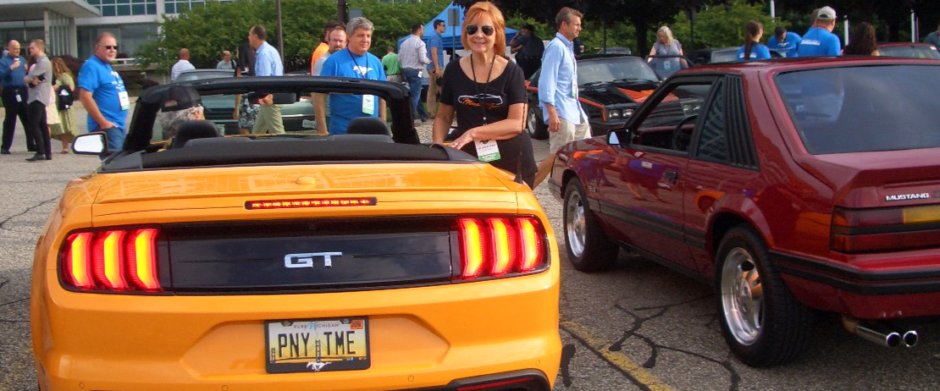
Ford Motor is also recalling ~105,441 model year 2024-2025 Mustang vehicles. Water may enter the body control module and cause a loss of communication with the exterior lighting, including the license plate light, side marker, and tail lights. These vehicles fail to comply with the requirements of Federal Motor Vehicle Safety Standard number 108, “Lamps, Reflective Devices, and Associated Equipment.”
Dealers will inspect and seal the body seams as necessary. Dealers will also inspect the body control module for corrosion and replace it, if necessary. Repairs will be performed free of charge as required by U.S. safety regulations. Interim letters, notifying owners of the safety risk, are expected to be mailed September 1, 2025. Additional letters will be mailed once the remedy is available, anticipated first quarter 2026? Owners may contact Ford customer service at 1-866-436-7332. Ford’s number for this recall is 25C43. NHTSA recall 25V546 or 25V-546. See Mustang Exterior Lighting Chronology below.*
Ford Motor Company is also recalling ~100,900 model year 2024-2026 Ranger vehicles. The side curtain air bags may contact the B-Pillar inner reinforcements and tear during deployment. As such, these vehicles fail to comply with the requirements of Federal Motor Vehicle Safety Standard number 226, “Ejection Mitigation.”
Dealers will install protective shields, free of charge as required by U.S. safety regulations. Interim letters, notifying owners of the safety risk, are expected to be mailed September 8, 2025. Additional letters will be sent once the final remedy is available, anticipated December 2025. Owners may contact Ford customer service at 1-866-436-7332. Ford’s number for this recall is 25C41. NHTSA recall 25V541 or 25V-541.See Ranger Air Bag Recall Chronology below.*
Chronology Leaking Rear Brake Hose. NHTSA Recall 25V544 or 25V-544
Chronology Instrument Panel Cluster Failure. NHTSA recall 25V540 or 25V-540
Chronology Explorer and Aviator Trailer Tail Lights. NHTSA 25V543 or 25V-543
Chronology Mustang Exterior Lighting. NHTSA Recall 25V546 or 25V-546
Chronology Ranger Air Bag. NHTSA recall 25V541 or 25V-541
About Ken Zino
Ken Zino, editor and publisher of AutoInformed, is a versatile auto industry participant with global experience spanning decades in print and broadcast journalism, as well as social media. He has automobile testing, marketing, public relations and communications experience. He is past president of The International Motor Press Assn, the Detroit Press Club, founding member and first President of the Automotive Press Assn. He is a member of APA, IMPA and the Midwest Automotive Press Assn. He also brings an historical perspective while citing their contemporary relevance of the work of legendary auto writers such as Ken Purdy, Jim Dunne or Jerry Flint, or writers such as Red Smith, Mark Twain, Thomas Jefferson – all to bring perspective to a chaotic automotive universe. Above all, decades after he first drove a car, Zino still revels in the sound of the exhaust as the throttle is blipped during a downshift and the driver’s rush that occurs when the entry, apex and exit points of a turn are smoothly and swiftly crossed. It’s the beginning of a perfect lap. AutoInformed has an editorial philosophy that loves transportation machines of all kinds while promoting critical thinking about the future use of cars and trucks. Zino builds AutoInformed from his background in automotive journalism starting at Hearst Publishing in New York City on Motor and MotorTech Magazines and car testing where he reviewed hundreds of vehicles in his decade-long stint as the Detroit Bureau Chief of Road & Track magazine. Zino has also worked in Europe, and Asia – now the largest automotive market in the world with China at its center.