Click for more.
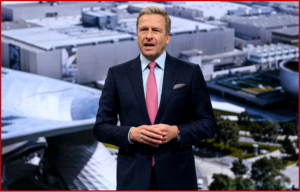
At the 106th Annual BMW (XETRA: BMWG.DE) General Meeting today, Chair Oliver Zipse retired after 35 years with the German maker of premium automobiles and motorcycles.* Effective tomorrow, Milan Nedeljković assumes the Chair position on the Board of Management of BMW AG. Raymond Wittmann will succeed Nedeljković as Board Member for Production.
“For more than 35 years, the BMW Group has been my professional home. I am leaving with a deep sense of gratitude: for the trust that was placed in me, for the professional challenges that have taken me to various areas in the company; and above all, for an exceptional team that is shaping the mobility of the future with passion and a pioneering spirit. It has been a great honor for me to lead the BMW Group as Chairman of the Board of Management for seven years,” said Zipse.**
“Through his strategic leadership and long-standing commitment, Oliver Zipse has shaped the development of the BMW Group. His name will be closely associated with the NEUE KLASSE, as BMW’s central future-oriented project,” said Supervisory Board Chairman Dr. Nicolas Peter.
Oliver Zipse Remarks [mildly edited for space and clarity – AutoCrat]
“This is our opportunity to stand before you and answer your questions. We commit to doing so objectively, based on the facts. What you can always expect from BMW is confidence. Confidence is not a mood or an attitude. It is an active decision – especially when what we know becomes fragile. In hindsight, difficult situations often appear less dramatic than they do at the time.
“It is our responsibility to set the right course. We refer to this as making robust decisions: decisions that are geared towards the company’s long-term success, based on data, facts and informed analysis. We assess developments with nuance, both globally and regionally – because that is how our world works. We make decisions with the future in mind.
“This is possible because our investors also take the long view, especially our anchor shareholders, Stefan Quandt and Susanne Klatten, as well as our many institutional investors. For BMW, this is a privilege; for our employees, it is a source of stability and support; and, in a competitive environment, it is an advantage. This is one of the reasons why BMW turns external crises into opportunities for progress. In the current environment, many things are uncertain. That is why anti-fragility is our strategic tool of choice for ensuring the long-term future of your company.
“Building on a foundation of continuity, we can achieve major advances in innovation – connecting brands, products, technologies and markets….
“We met the following goals in financial year 2025:
- Our target profitability range for the Automotive Segment.
- Group earnings before tax of over €10 billion.
- A 10-cent increase in our dividend to €4.40 euros per share of common stock.
We achieved all of this despite unfavorable currency translation effects, a difficult market situation in China and tariff headwinds….
“In 2025, we delivered more than 2.46 million vehicles to customers. That is more than the previous year. All brands are contributing to this:
- BMW leads the global premium segment.
- BMW M GmbH increased its sales for the 14th consecutive year.
- The MINI brand posted growth of around 18 %, with the new model family being very well received.
- At Rolls-Royce, the number of handcrafted motor cars remained at the same high level as the previous year. We are now expanding our workshop in Goodwood to give our luxury brand more space for its Bespoke models and top-of-the-range Coachbuild products.
- BMW Motorrad sold more than 200,000 two-wheeled vehicles in the segment above 500 cc, although the total market declined during the same period….
“In Europe, we were – and still are – really strong. For the first time since the pre-Covid era, we once again delivered more than one million vehicles to customers. Although the US market is considered saturated, we made gains there. This is also thanks to our long-standing presence in the US. Spartanburg is our largest plant. It exports worldwide, with an export volume of more than $100 billion over the past ten years. BMW remained the country’s largest automotive exporter by value in 2025. A fact that is recognized and appreciated in US political circles….
“Let’s turn our attention to China. China receives a great deal of coverage – and you, our shareholders, also have questions about it. More than 24 million vehicles were sold in China in 2025. China is also one of our industry’s most important technology hubs. However, the market there is normalizing, with fewer purchases being made. Local manufacturers are increasingly entering the market and trying to gain market share. Competition is extremely intense.
“Our objective for 2025 was to stabilize sales – and we achieved that, delivering 625,000 vehicles to customers in China. In the first quarter of 2026, the total market continued to decline. This is also affecting domestic suppliers and, specifically, the smaller vehicle segments. In this situation, BMW outperformed the market overall.
“Our measures are taking effect. Three core areas are particularly important in China: local relevance, speed and software.
- We create value locally: This applies at our plants in Shenyang, our engine plant and the new battery center – all through our BBA joint venture.
- We responded quickly to the changing environment by consolidating development and purchasing activities and by reducing costs through increased local sourcing. Our new sales structure is making rapid progress.
- Digitalized vehicles: This is a key issue in China, where we have strong local technology partners in Momenta, DeepSeek and Alibaba Banma. Together, we are integrating innovations into our models.
“Local relevance, speed and software are essential conditions for strengthening our competitive position. In China, we also benefit from BMW’s ongoing dialogue with policymakers in Liaoning Province and at national level. In February, I was part of Federal Chancellor Merz’s business delegation to China. Our goal is very clear: We intend to resume our growth in China….
“That also includes exporting from China. This is where the European Commission’s punitive tariffs on imports of fully electric vehicles from China are hurting us. They are among the highest tariffs we have to pay. That cannot be in the EU’s interest. Tariffs are like a boomerang. Who pays them? The customer.
“The same applies to the tariffs between the EU and the US. Imports into the US are subject to tariffs of 15%. For us, this means higher financial outlays. On the other hand, we would benefit from the new tariff rate for imports into the EU, which is expected to fall to 0 %. The emphasis here is on “expected to.” The new rate has not yet been implemented by the EU.
“The tariff debate remains dynamic and highly complex. The fundamental principle here is that tariffs do not protect; they cause damage – on all sides. A global production and supply network is a strength. Any industry that is supposedly shielded by tariff barriers is weaker – and ultimately shrinks.
“We make this point clearly wherever we engage in political dialogue. Who knows better than we do in Europe that exports and free trade lay the foundation for innovation and for jobs. The European Commission generally has good intentions, but the execution often falls short. Take the “Made in Europe” initiative.
“Every industrial policy measure should recognize that exports drive value creation – especially in Germany and ensure continuity in cooperation with international trading partners. This is crucial for our globally interconnected industry. E-mobility, in particular, is not possible without global value chains.
“Another example of ‘good idea, poor execution:’ the CO2 requirements from 2035. The current proposal does not support technology-openness and ignores market realities. For more than 90% of vehicles across the EU, a de facto ban looks set to remain in place. Strict electrification quotas are also planned for company fleets.
“Following the ban on the supply side, restrictions on the demand side are now also set to be introduced. This benefits neither customers, nor European industry, nor the environment.
“If key areas of the e-mobility value chain are to be located outside of Europe, we risk becoming unilaterally dependent. The European Parliament and the European Council have a clear responsibility in this regard. Things cannot remain as they are.
“BMW shows how it can be done: with a technology-neutral approach. Our vehicles with conventional drivetrains remain in demand. They, too, can achieve an even smaller climate footprint through the use of renewable fuels. At the same time, we are growing with our fully-electric models – BEVs for short – and our plug-in hybrids, or PHEVs.
“We consistently outperform EU CO2 targets and did so again in 2025 – by a significant margin of 2.9 grams. Based on our preliminary calculations, our fleet-wide emissions came in less than 90 grams of CO2 per kilometer in Europe. We achieved this entirely through our own efforts – without “pooling” with other manufacturers or “averaging” across multiple years.
“We are also setting our own targets, with goals that are realistic, reliable and ambitious. What matters most to us is the overall impact. That means every ton of CO2 we can avoid emitting. Scope 3 upstream is becoming increasingly relevant in this respect: In other words, reducing the carbon footprint throughout the supply chain.
“The overall balance determines the climate impact – not the drivetrain alone. Our plants require 36 million parts every day. These are delivered by 2,700 direct suppliers and another 65,000 second-tier suppliers. By 2030, we aim to reduce our CO2 emissions by at least 40 million tons compared to 2019 levels. You already know that. Now, we are aiming even higher, targeting a further 20 million tons of CO2 by 2035. As you can see: We are on track to reach NET ZERO by 2050. To achieve this, we are relying even more on secondary materials and CO2-free energy.
“Germany carries significant weight as an industrial location within Europe. Here, academic research, technological development and industrial implementation are closely intertwined. However, we are falling behind:
- Energy and labor costs are substantially higher than in other countries.
- The European Commission does not reward innovation and export orientation, but rather downsizing. It is replacing effective market mechanisms by bans and protectionism.
“We are already feeling the effects of this trend. However, BMW is standing firm. In 2025, we built more than one million vehicles in our home country. About a quarter of all cars produced in Germany now come from BMW.
Our plants are operating at high capacity:
- Regensburg was our highest-volume plant in Germany in 2025,
- operating in three shifts.
- Leipzig is our only plant where BMW and MINI vehicles are built on a single line – also in three shifts.
- At our main plant in Munich, the new BMW i3 is also ready to go. From 2027, the plant will produce only EVs. This follows a €650-million investment in extensive remodeling in line with the principles of the BMW iFactory.
- In Dingolfing, the two-millionth BEV has just come off the production line: a BMW i5 that we are delivering to Spain.
“We can build different models and drivetrains on the same production line – not only in Germany, but worldwide. So, when demand fluctuates, we are able to balance it out. Your company, esteemed shareholders, remains financially solid – capable of taking action and making investments.
“In 2026, deliveries are forecast to be on a par with last year. The same applies to our BEVs. Our electric models have recently achieved strong year-on-year growth. Model cycles are now beginning to have an impact. The dynamics of the market regions and regulatory frameworks are shifting. In both the US and China, e-mobility now receives less government support.
“The situation is different in Europe: In the first three months of the year, BMW recorded its highest-ever new orders for a first quarter: BEV sales are up more than 60% on the previous year, with well over 50,000 orders for the BMW iX3 alone since the IAA International Motor Show.
“Our sales of fully electric vehicles have already surpassed last year’s strong performance in Europe. This, too, shows that different regions of the world are developing at different rates. In this context, our technology-neutral approach is proving all the more effective….
“There are cars that belong to history – and then there are cars that make history. The BMW i3 definitely falls into the second category. We celebrated the i3 premiere with around 40,000 employees at the BMW Park in Munich…. We will begin series production in August, and the i3 will be launched shortly afterwards in Europe. The technical specifications of the i3 are truly exceptional – boasting a range of up to 900 kilometers in the WLTP cycle. In just ten minutes, it charges enough energy to drive up to 400 kilometers. This is made possible by the sixth-generation e-drive with 800-volt technology….
“How many global manufacturers do you think there are in our industry? Not even a handful – but BMW is one of them. What does GLOBAL even mean in this context? Naturally, a global footprint across production, research and development, and sales. We call this local for local. It is how we secure access to individual markets, strengthening our local supply chains to make ourselves more resilient.
“One example of this is our five new locations for high-voltage batteries – in Europe, the Americas and China. A global manufacturer has global brands – like we do with BMW, MINI, Rolls-Royce and BMW Motorrad.
“We offer our customers a broad range of products across all key segments – from the urban compact-car segment to the absolute luxury class. And now, they are joined by BMW ALPINA, a highly exclusive brand with a strong tradition. With BMW ALPINA, we are tapping into a highly profitable, high-growth segment positioned above the BMW brand’s top models and below our Rolls-Royce luxury brand.
“On the drivetrain side, we also offer battery-electric vehicles in all relevant segments. By end of the year, we will have 20 BEVs across all brands. Our plug-in hybrids also remain important. In 2028, BMW will add a further drive train: hydrogen. The next generation of our BMW X5 will then be available with five drive train variants….
“Resilience is a word we hear a lot these days. But we are taking it a step further: We are making BMW anti-fragile. That means more than being resilient. Resilient companies withstand challenges, while anti-fragile companies use them to become better and to grow. This mindset transforms uncertainty into strategic clarity and pressure into momentum.
“Difficult circumstances generate forward impetus that makes our company even stronger. Our global team makes this possible. In the autumn, we once again surveyed all our employees worldwide. More than 90% said they support our goals and our strategy and 92 % said they are proud to work at BMW….
“What you see here is genuine. It is authentic. That is our BMW spirit, my dear Shareholders! At BMW, it is never about the individual – not the Board of Management; not the CEO.
“It is always about our products and our brands; about the company – and its success. This is what we work for and strive towards. Because we can – and because we want to. Because it makes sense and unlocks potential. And because it brings joy – to our customers and to us in our daily work.
For almost seven years, since August 2019, I have been responsible for your company. Seven months after I took office, the coronavirus brought the world – and our plants – to a standstill. As you know, the period that followed remained turbulent….
“Tomorrow, dear Milan Nedeljković, you take over as Chairman of the Board of Management. The two of us have worked well together on the Board of Management. Strategy is the responsibility of the Board of Management, and our strategy is focused on the long term. We consider and prepare for different scenarios. Decisions are made jointly by the Board of Management.
We implement them unanimously and with a united approach. Everything is done calmly and consistently, with a clear focus on the road ahead….
“Milan, I wish you and the Board of Management team continued strength in shaping the future. You, ladies and gentlemen of the Supervisory Board, continue to support us with critical and constructive guidance in true BMW style – always solution-oriented and focused on our shared success.
“The fact that the entire Supervisory Board is present at our Annual General Meetings visibly underscores the support you give us…Thank you for 35 intense and exciting years at BMW!”
*AutoInformed on
**The BMW Group
With its four brands, BMW, MINI, Rolls-Royce and BMW Motorrad, the BMW Group says “it is the world’s leading premium manufacturer of automobiles and motorcycles and also provides premium financial services. The BMW Group production network comprises more than 30 production sites worldwide; the company has a global sales network in more than 140 countries.
“During 2025, the BMW Group sold 2.46 million passenger vehicles and more than 202,500 motorcycles worldwide. The profit before tax in the financial year 2025 was €10.2 billion on revenues amounting to €133,5 billion. As of 31 December 2025, the BMW Group had a workforce of 154,540 employees.”







BMW Annual General Meeting – Chair Oliver Zipse Retires
Click for more.
At the 106th Annual BMW (XETRA: BMWG.DE) General Meeting today, Chair Oliver Zipse retired after 35 years with the German maker of premium automobiles and motorcycles.* Effective tomorrow, Milan Nedeljković assumes the Chair position on the Board of Management of BMW AG. Raymond Wittmann will succeed Nedeljković as Board Member for Production.
“For more than 35 years, the BMW Group has been my professional home. I am leaving with a deep sense of gratitude: for the trust that was placed in me, for the professional challenges that have taken me to various areas in the company; and above all, for an exceptional team that is shaping the mobility of the future with passion and a pioneering spirit. It has been a great honor for me to lead the BMW Group as Chairman of the Board of Management for seven years,” said Zipse.**
“Through his strategic leadership and long-standing commitment, Oliver Zipse has shaped the development of the BMW Group. His name will be closely associated with the NEUE KLASSE, as BMW’s central future-oriented project,” said Supervisory Board Chairman Dr. Nicolas Peter.
Oliver Zipse Remarks [mildly edited for space and clarity – AutoCrat]
“This is our opportunity to stand before you and answer your questions. We commit to doing so objectively, based on the facts. What you can always expect from BMW is confidence. Confidence is not a mood or an attitude. It is an active decision – especially when what we know becomes fragile. In hindsight, difficult situations often appear less dramatic than they do at the time.
“It is our responsibility to set the right course. We refer to this as making robust decisions: decisions that are geared towards the company’s long-term success, based on data, facts and informed analysis. We assess developments with nuance, both globally and regionally – because that is how our world works. We make decisions with the future in mind.
“This is possible because our investors also take the long view, especially our anchor shareholders, Stefan Quandt and Susanne Klatten, as well as our many institutional investors. For BMW, this is a privilege; for our employees, it is a source of stability and support; and, in a competitive environment, it is an advantage. This is one of the reasons why BMW turns external crises into opportunities for progress. In the current environment, many things are uncertain. That is why anti-fragility is our strategic tool of choice for ensuring the long-term future of your company.
“Building on a foundation of continuity, we can achieve major advances in innovation – connecting brands, products, technologies and markets….
“We met the following goals in financial year 2025:
We achieved all of this despite unfavorable currency translation effects, a difficult market situation in China and tariff headwinds….
“In 2025, we delivered more than 2.46 million vehicles to customers. That is more than the previous year. All brands are contributing to this:
“In Europe, we were – and still are – really strong. For the first time since the pre-Covid era, we once again delivered more than one million vehicles to customers. Although the US market is considered saturated, we made gains there. This is also thanks to our long-standing presence in the US. Spartanburg is our largest plant. It exports worldwide, with an export volume of more than $100 billion over the past ten years. BMW remained the country’s largest automotive exporter by value in 2025. A fact that is recognized and appreciated in US political circles….
“Let’s turn our attention to China. China receives a great deal of coverage – and you, our shareholders, also have questions about it. More than 24 million vehicles were sold in China in 2025. China is also one of our industry’s most important technology hubs. However, the market there is normalizing, with fewer purchases being made. Local manufacturers are increasingly entering the market and trying to gain market share. Competition is extremely intense.
“Our objective for 2025 was to stabilize sales – and we achieved that, delivering 625,000 vehicles to customers in China. In the first quarter of 2026, the total market continued to decline. This is also affecting domestic suppliers and, specifically, the smaller vehicle segments. In this situation, BMW outperformed the market overall.
“Our measures are taking effect. Three core areas are particularly important in China: local relevance, speed and software.
“Local relevance, speed and software are essential conditions for strengthening our competitive position. In China, we also benefit from BMW’s ongoing dialogue with policymakers in Liaoning Province and at national level. In February, I was part of Federal Chancellor Merz’s business delegation to China. Our goal is very clear: We intend to resume our growth in China….
“That also includes exporting from China. This is where the European Commission’s punitive tariffs on imports of fully electric vehicles from China are hurting us. They are among the highest tariffs we have to pay. That cannot be in the EU’s interest. Tariffs are like a boomerang. Who pays them? The customer.
“The same applies to the tariffs between the EU and the US. Imports into the US are subject to tariffs of 15%. For us, this means higher financial outlays. On the other hand, we would benefit from the new tariff rate for imports into the EU, which is expected to fall to 0 %. The emphasis here is on “expected to.” The new rate has not yet been implemented by the EU.
“The tariff debate remains dynamic and highly complex. The fundamental principle here is that tariffs do not protect; they cause damage – on all sides. A global production and supply network is a strength. Any industry that is supposedly shielded by tariff barriers is weaker – and ultimately shrinks.
“We make this point clearly wherever we engage in political dialogue. Who knows better than we do in Europe that exports and free trade lay the foundation for innovation and for jobs. The European Commission generally has good intentions, but the execution often falls short. Take the “Made in Europe” initiative.
“Every industrial policy measure should recognize that exports drive value creation – especially in Germany and ensure continuity in cooperation with international trading partners. This is crucial for our globally interconnected industry. E-mobility, in particular, is not possible without global value chains.
“Another example of ‘good idea, poor execution:’ the CO2 requirements from 2035. The current proposal does not support technology-openness and ignores market realities. For more than 90% of vehicles across the EU, a de facto ban looks set to remain in place. Strict electrification quotas are also planned for company fleets.
“Following the ban on the supply side, restrictions on the demand side are now also set to be introduced. This benefits neither customers, nor European industry, nor the environment.
“If key areas of the e-mobility value chain are to be located outside of Europe, we risk becoming unilaterally dependent. The European Parliament and the European Council have a clear responsibility in this regard. Things cannot remain as they are.
“BMW shows how it can be done: with a technology-neutral approach. Our vehicles with conventional drivetrains remain in demand. They, too, can achieve an even smaller climate footprint through the use of renewable fuels. At the same time, we are growing with our fully-electric models – BEVs for short – and our plug-in hybrids, or PHEVs.
“We consistently outperform EU CO2 targets and did so again in 2025 – by a significant margin of 2.9 grams. Based on our preliminary calculations, our fleet-wide emissions came in less than 90 grams of CO2 per kilometer in Europe. We achieved this entirely through our own efforts – without “pooling” with other manufacturers or “averaging” across multiple years.
“We are also setting our own targets, with goals that are realistic, reliable and ambitious. What matters most to us is the overall impact. That means every ton of CO2 we can avoid emitting. Scope 3 upstream is becoming increasingly relevant in this respect: In other words, reducing the carbon footprint throughout the supply chain.
“The overall balance determines the climate impact – not the drivetrain alone. Our plants require 36 million parts every day. These are delivered by 2,700 direct suppliers and another 65,000 second-tier suppliers. By 2030, we aim to reduce our CO2 emissions by at least 40 million tons compared to 2019 levels. You already know that. Now, we are aiming even higher, targeting a further 20 million tons of CO2 by 2035. As you can see: We are on track to reach NET ZERO by 2050. To achieve this, we are relying even more on secondary materials and CO2-free energy.
“Germany carries significant weight as an industrial location within Europe. Here, academic research, technological development and industrial implementation are closely intertwined. However, we are falling behind:
“We are already feeling the effects of this trend. However, BMW is standing firm. In 2025, we built more than one million vehicles in our home country. About a quarter of all cars produced in Germany now come from BMW.
Our plants are operating at high capacity:
“We can build different models and drivetrains on the same production line – not only in Germany, but worldwide. So, when demand fluctuates, we are able to balance it out. Your company, esteemed shareholders, remains financially solid – capable of taking action and making investments.
“In 2026, deliveries are forecast to be on a par with last year. The same applies to our BEVs. Our electric models have recently achieved strong year-on-year growth. Model cycles are now beginning to have an impact. The dynamics of the market regions and regulatory frameworks are shifting. In both the US and China, e-mobility now receives less government support.
“The situation is different in Europe: In the first three months of the year, BMW recorded its highest-ever new orders for a first quarter: BEV sales are up more than 60% on the previous year, with well over 50,000 orders for the BMW iX3 alone since the IAA International Motor Show.
“Our sales of fully electric vehicles have already surpassed last year’s strong performance in Europe. This, too, shows that different regions of the world are developing at different rates. In this context, our technology-neutral approach is proving all the more effective….
“There are cars that belong to history – and then there are cars that make history. The BMW i3 definitely falls into the second category. We celebrated the i3 premiere with around 40,000 employees at the BMW Park in Munich…. We will begin series production in August, and the i3 will be launched shortly afterwards in Europe. The technical specifications of the i3 are truly exceptional – boasting a range of up to 900 kilometers in the WLTP cycle. In just ten minutes, it charges enough energy to drive up to 400 kilometers. This is made possible by the sixth-generation e-drive with 800-volt technology….
“How many global manufacturers do you think there are in our industry? Not even a handful – but BMW is one of them. What does GLOBAL even mean in this context? Naturally, a global footprint across production, research and development, and sales. We call this local for local. It is how we secure access to individual markets, strengthening our local supply chains to make ourselves more resilient.
“One example of this is our five new locations for high-voltage batteries – in Europe, the Americas and China. A global manufacturer has global brands – like we do with BMW, MINI, Rolls-Royce and BMW Motorrad.
“We offer our customers a broad range of products across all key segments – from the urban compact-car segment to the absolute luxury class. And now, they are joined by BMW ALPINA, a highly exclusive brand with a strong tradition. With BMW ALPINA, we are tapping into a highly profitable, high-growth segment positioned above the BMW brand’s top models and below our Rolls-Royce luxury brand.
“On the drivetrain side, we also offer battery-electric vehicles in all relevant segments. By end of the year, we will have 20 BEVs across all brands. Our plug-in hybrids also remain important. In 2028, BMW will add a further drive train: hydrogen. The next generation of our BMW X5 will then be available with five drive train variants….
“Resilience is a word we hear a lot these days. But we are taking it a step further: We are making BMW anti-fragile. That means more than being resilient. Resilient companies withstand challenges, while anti-fragile companies use them to become better and to grow. This mindset transforms uncertainty into strategic clarity and pressure into momentum.
“Difficult circumstances generate forward impetus that makes our company even stronger. Our global team makes this possible. In the autumn, we once again surveyed all our employees worldwide. More than 90% said they support our goals and our strategy and 92 % said they are proud to work at BMW….
“What you see here is genuine. It is authentic. That is our BMW spirit, my dear Shareholders! At BMW, it is never about the individual – not the Board of Management; not the CEO.
“It is always about our products and our brands; about the company – and its success. This is what we work for and strive towards. Because we can – and because we want to. Because it makes sense and unlocks potential. And because it brings joy – to our customers and to us in our daily work.
For almost seven years, since August 2019, I have been responsible for your company. Seven months after I took office, the coronavirus brought the world – and our plants – to a standstill. As you know, the period that followed remained turbulent….
“Tomorrow, dear Milan Nedeljković, you take over as Chairman of the Board of Management. The two of us have worked well together on the Board of Management. Strategy is the responsibility of the Board of Management, and our strategy is focused on the long term. We consider and prepare for different scenarios. Decisions are made jointly by the Board of Management.
We implement them unanimously and with a united approach. Everything is done calmly and consistently, with a clear focus on the road ahead….
“Milan, I wish you and the Board of Management team continued strength in shaping the future. You, ladies and gentlemen of the Supervisory Board, continue to support us with critical and constructive guidance in true BMW style – always solution-oriented and focused on our shared success.
“The fact that the entire Supervisory Board is present at our Annual General Meetings visibly underscores the support you give us…Thank you for 35 intense and exciting years at BMW!”
*AutoInformed on
**The BMW Group
With its four brands, BMW, MINI, Rolls-Royce and BMW Motorrad, the BMW Group says “it is the world’s leading premium manufacturer of automobiles and motorcycles and also provides premium financial services. The BMW Group production network comprises more than 30 production sites worldwide; the company has a global sales network in more than 140 countries.
“During 2025, the BMW Group sold 2.46 million passenger vehicles and more than 202,500 motorcycles worldwide. The profit before tax in the financial year 2025 was €10.2 billion on revenues amounting to €133,5 billion. As of 31 December 2025, the BMW Group had a workforce of 154,540 employees.”
About Ken Zino
Ken Zino, editor and publisher of AutoInformed, is a versatile auto industry participant with global experience spanning decades in print and broadcast journalism, as well as social media. He has automobile testing, marketing, public relations and communications experience. He is past president of The International Motor Press Assn, the Detroit Press Club, founding member and first President of the Automotive Press Assn. He is a member of APA, IMPA and the Midwest Automotive Press Assn. He also brings an historical perspective while citing their contemporary relevance of the work of legendary auto writers such as Ken Purdy, Jim Dunne or Jerry Flint, or writers such as Red Smith, Mark Twain, Thomas Jefferson – all to bring perspective to a chaotic automotive universe. Above all, decades after he first drove a car, Zino still revels in the sound of the exhaust as the throttle is blipped during a downshift and the driver’s rush that occurs when the entry, apex and exit points of a turn are smoothly and swiftly crossed. It’s the beginning of a perfect lap. AutoInformed has an editorial philosophy that loves transportation machines of all kinds while promoting critical thinking about the future use of cars and trucks. Zino builds AutoInformed from his background in automotive journalism starting at Hearst Publishing in New York City on Motor and MotorTech Magazines and car testing where he reviewed hundreds of vehicles in his decade-long stint as the Detroit Bureau Chief of Road & Track magazine. Zino has also worked in Europe, and Asia – now the largest automotive market in the world with China at its center.