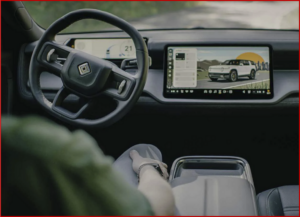
What’s wrong here? Click for more.
Uber (NYSE: UBER) announced today a partnership to put 50,000 Rivian Robotaxis on the road (NASDAQ: RIVN), including in San Francisco, the site of the Cruise AV crash with a pedestrian and Fire Truck. This comes as powerful corporate and legal interests are embattled in a fight over an upcoming California ballot initiative in November limiting victims’ medical recovery in all accident cases. Opponents claim it will prevent the seriously injured from finding contingency fee attorneys, making it difficult to sue robocar operators, manufacturers, or any reckless driver or automaker.*
“This is a naked power grab by Uber to remove liability for its robotaxis and accelerate their rollout without accountability when their robotaxis harm or kill pedestrians and other drivers,” said Jamie Court, president of Consumer Watchdog, a non-profit that issued a report, “License To Kill: How Uber’s Rush To Close Courthouse Doors And Roll Out Robocars Threatens Public Safety.”
“Uber’s ballot measure would strictly limit robotaxis’ liability for accidents, injuries and product liability design cases. These are untested technologies that polls show Californians don’t want on their roads. Uber’s record with self-driving cars is horrific as the company’s autonomous car is responsible for the one and only death of a pedestrian from a robocar. Uber is arrogantly using its power to change the rules of the road so that it can push robotaxis out before they are ready for the road and the public is ready for them,” Consumer Watchdog said.
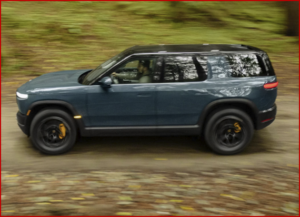
Click for more.
Uber’s new partner, the Rivian R2, hasn’t logged a single AV testing mile in California, according to California DMV disengagement records filed through the end of 2025. However, a report from Torque News at the end of February 2026 found a broken-down Rivian R2 prototype being towed. Companies typically would need to test drive their robocars hundreds of millions of miles before they are safe to deploy. A RAND report** on robocars states: “Fully autonomous vehicles would have to be driven hundreds of millions of miles and sometimes hundreds of billions of miles to demonstrate their safety in terms of fatalities and injuries.” [The so-called and controversial – because of alleged flaws in data gathering and compliance – Autonomous Vehicle Disengagement Reports is published annually by the California DMV, These latest report issued in February 2026 reports lists autonomous vehicle mileage and incidents when these vehicles “disengage,” which means the safety driver took control due to a technology failure or other concern.- AutoCrat.]
Consumer Watchdog, License To Kill Report Findings
- Medical Cost Caps Limit Access To Care: Uber’s California proposal would cap recoverable medical expenses at levels tied closely to Medicare reimbursement rates. These limits could prevent accidents victims from getting care and healthcare providers from treating crash victims because the capped reimbursements would not cover the actual cost of care.
- Proposed CA Law Would Block Seriously Injured Victims From Finding Lawyers: Under Uber’s proposed California law, seriously injured accident victims would not be able to get contingency lawyers because the proposal makes it economically unviable for an attorney to take a case on a contingency basis. The proposal requires that, for the purposes of an attorney fees contract, medical expenses and contingency fees come out of the same 25% pot that attorneys would receive. If, for example, medical expenses total more than $250,000 on a $1 million accident policy, the attorney would receive nothing.
- Product Liability Cases Would Be Eviscerated: The initiative would also apply to product defect claims related to vehicle crashes, such as those that have been used to hold the makers of semi-autonomous vehicles accountable. This would make it significantly harder to pursue cases involving defective airbags, braking systems, steering failures, battery problems, or faulty software. These lawsuits have historically played a critical role in forcing manufacturers to improve vehicle safety. Weakening these legal tools would reduce incentives for companies to address dangerous defects, including those in autonomous driving systems.
- Liability Limits Will Normalize Robotaxis Before They Are Ready For The Road: Uber has announced plans, for example, to deploy up to 20,000 robotaxis in partnership with autonomous vehicle developer Nuro over the next six years. However, its partner Nuro’s testing record in California lags far behind competitors. Nuro could not go 700 miles without a human intervention when Waymo could go nearly 20,000 miles. In 2025, Nuro vehicles reportedly logged fewer than 160,000 autonomous miles in California, compared with more than 3 million miles driven by Waymo. The Nuro cars are cheaply made and without the sensor capacity of Waymo’s.
Experts interviewed by Consumer Watchdog say little is publicly known about Uber’s testing protocols, safety standards, or vehicle specifications. “There are a lot of unknowns,” said Bryant Walker-Smith, an associate professor in the School of Law and the College of Engineering and Computing at the University of South Carolina, in January. “Uber is running a prototype that it started testing last month. We don’t know what safety standards, if any, Uber is adhering to. We don’t know the specs of the car. We don’t know about their internal testing. We don’t know cost of production.” At recent Senate hearings, lawmakers also raised concerns about autonomous vehicles being monitored by remote operators overseas, so-called “trans-Atlantic backseat drivers,” who are not covered by existing regulatory frameworks.
*AutoInformed on
**RAND Report Findings
- Autonomous vehicles would have to be driven hundreds of millions of miles and sometimes hundreds of billions of miles to demonstrate their reliability in terms of fatalities and injuries.
- Under even aggressive testing assumptions, existing fleets would take tens and sometimes hundreds of years to drive these miles — an impossible proposition if the aim is to demonstrate their performance prior to releasing them on the roads for consumer use.
- Therefore, at least for fatalities and injuries, test-driving alone cannot provide sufficient evidence for demonstrating autonomous vehicle safety.
- Developers of this technology and third-party testers will need to develop innovative methods of demonstrating safety and reliability.
- Even with these methods, it may not be possible to establish with certainty the safety of autonomous vehicles. Uncertainty will remain.
- In parallel to developing new testing methods, it is imperative to develop adaptive regulations that are designed from the outset to evolve with the technology so that society can better harness the benefits and manage the risks of these rapidly evolving and potentially transformative technologies.

About Ken Zino
Ken Zino, editor and publisher of AutoInformed, is a versatile auto industry participant with global experience spanning decades in print and broadcast journalism, as well as social media. He has automobile testing, marketing, public relations and communications experience. He is past president of The International Motor Press Assn, the Detroit Press Club, founding member and first President of the Automotive Press Assn. He is a member of APA, IMPA and the Midwest Automotive Press Assn.
He also brings an historical perspective while citing their contemporary relevance of the work of legendary auto writers such as Ken Purdy, Jim Dunne or Jerry Flint, or writers such as Red Smith, Mark Twain, Thomas Jefferson – all to bring perspective to a chaotic automotive universe.
Above all, decades after he first drove a car, Zino still revels in the sound of the exhaust as the throttle is blipped during a downshift and the driver’s rush that occurs when the entry, apex and exit points of a turn are smoothly and swiftly crossed. It’s the beginning of a perfect lap.
AutoInformed has an editorial philosophy that loves transportation machines of all kinds while promoting critical thinking about the future use of cars and trucks.
Zino builds AutoInformed from his background in automotive journalism starting at Hearst Publishing in New York City on Motor and MotorTech Magazines and car testing where he reviewed hundreds of vehicles in his decade-long stint as the Detroit Bureau Chief of Road & Track magazine. Zino has also worked in Europe, and Asia – now the largest automotive market in the world with China at its center.







California Ballot Scheme Limiting Robocar Liability Criticized
What’s wrong here? Click for more.
Uber (NYSE: UBER) announced today a partnership to put 50,000 Rivian Robotaxis on the road (NASDAQ: RIVN), including in San Francisco, the site of the Cruise AV crash with a pedestrian and Fire Truck. This comes as powerful corporate and legal interests are embattled in a fight over an upcoming California ballot initiative in November limiting victims’ medical recovery in all accident cases. Opponents claim it will prevent the seriously injured from finding contingency fee attorneys, making it difficult to sue robocar operators, manufacturers, or any reckless driver or automaker.*
“This is a naked power grab by Uber to remove liability for its robotaxis and accelerate their rollout without accountability when their robotaxis harm or kill pedestrians and other drivers,” said Jamie Court, president of Consumer Watchdog, a non-profit that issued a report, “License To Kill: How Uber’s Rush To Close Courthouse Doors And Roll Out Robocars Threatens Public Safety.”
“Uber’s ballot measure would strictly limit robotaxis’ liability for accidents, injuries and product liability design cases. These are untested technologies that polls show Californians don’t want on their roads. Uber’s record with self-driving cars is horrific as the company’s autonomous car is responsible for the one and only death of a pedestrian from a robocar. Uber is arrogantly using its power to change the rules of the road so that it can push robotaxis out before they are ready for the road and the public is ready for them,” Consumer Watchdog said.
Click for more.
Uber’s new partner, the Rivian R2, hasn’t logged a single AV testing mile in California, according to California DMV disengagement records filed through the end of 2025. However, a report from Torque News at the end of February 2026 found a broken-down Rivian R2 prototype being towed. Companies typically would need to test drive their robocars hundreds of millions of miles before they are safe to deploy. A RAND report** on robocars states: “Fully autonomous vehicles would have to be driven hundreds of millions of miles and sometimes hundreds of billions of miles to demonstrate their safety in terms of fatalities and injuries.” [The so-called and controversial – because of alleged flaws in data gathering and compliance – Autonomous Vehicle Disengagement Reports is published annually by the California DMV, These latest report issued in February 2026 reports lists autonomous vehicle mileage and incidents when these vehicles “disengage,” which means the safety driver took control due to a technology failure or other concern.- AutoCrat.]
Consumer Watchdog, License To Kill Report Findings
Experts interviewed by Consumer Watchdog say little is publicly known about Uber’s testing protocols, safety standards, or vehicle specifications. “There are a lot of unknowns,” said Bryant Walker-Smith, an associate professor in the School of Law and the College of Engineering and Computing at the University of South Carolina, in January. “Uber is running a prototype that it started testing last month. We don’t know what safety standards, if any, Uber is adhering to. We don’t know the specs of the car. We don’t know about their internal testing. We don’t know cost of production.” At recent Senate hearings, lawmakers also raised concerns about autonomous vehicles being monitored by remote operators overseas, so-called “trans-Atlantic backseat drivers,” who are not covered by existing regulatory frameworks.
*AutoInformed on
**RAND Report Findings
About Ken Zino
Ken Zino, editor and publisher of AutoInformed, is a versatile auto industry participant with global experience spanning decades in print and broadcast journalism, as well as social media. He has automobile testing, marketing, public relations and communications experience. He is past president of The International Motor Press Assn, the Detroit Press Club, founding member and first President of the Automotive Press Assn. He is a member of APA, IMPA and the Midwest Automotive Press Assn. He also brings an historical perspective while citing their contemporary relevance of the work of legendary auto writers such as Ken Purdy, Jim Dunne or Jerry Flint, or writers such as Red Smith, Mark Twain, Thomas Jefferson – all to bring perspective to a chaotic automotive universe. Above all, decades after he first drove a car, Zino still revels in the sound of the exhaust as the throttle is blipped during a downshift and the driver’s rush that occurs when the entry, apex and exit points of a turn are smoothly and swiftly crossed. It’s the beginning of a perfect lap. AutoInformed has an editorial philosophy that loves transportation machines of all kinds while promoting critical thinking about the future use of cars and trucks. Zino builds AutoInformed from his background in automotive journalism starting at Hearst Publishing in New York City on Motor and MotorTech Magazines and car testing where he reviewed hundreds of vehicles in his decade-long stint as the Detroit Bureau Chief of Road & Track magazine. Zino has also worked in Europe, and Asia – now the largest automotive market in the world with China at its center.