Click for more.
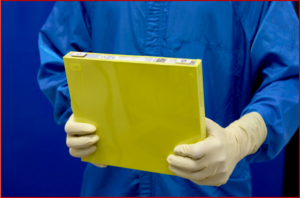
General Motors (NYSE: GM) said today that it will with LG Energy Solution (KRX: 373220),* commercialize lithium manganese-rich (LMR) prismatic battery cells for future GM electric trucks and full-size SUVs. The announcement could be a battery technology breakthrough with significant sales and marketing advantages. This builds on a partnership between the two companies to develop prismatic battery cell technology and related chemistries.
“GM aims to become the first automaker to deploy LMR batteries in EVs. Ultium Cells, a GM and LG Energy Solution joint venture, plans to start commercial production of LMR prismatic cells in the United States by 2028, with pre-production expected to begin at an LG Energy Solution facility by late 2027. The final production-design of these LMR battery cells will be validated at GM’s Battery Cell Development Center in Warren, MI, which is expected to open earlier that year, as well as LG Energy Solution’s facility,” GM said.
Battery cathodes require materials such as cobalt, nickel and manganese, with cobalt being the most expensive. LMR battery cells use a higher proportion of more affordable manganese, while also delivering greater capacity and energy density. Battery engineers at GM and LG Energy Solution have developed a new LMR prismatic battery cell that has a 33% higher energy density compared to the best-performing lithium iron phosphate (LFP) based cells – at a comparable cost.
“We’re excited to introduce the first-ever LMR prismatic cells for EVs, the culmination of our decades-long research and investment in the technology,” said Wonjoon Suh, executive VP and head of the Advanced Automotive Battery division at LG Energy Solution. “GM’s future trucks powered by this new chemistry are a strong example of our shared commitment to offering diverse EV options to consumers.”
GM began researching manganese-rich lithium-ion battery cells in 2015, accelerating this technology development by prototyping LMR cells at its Wallace Battery Cell Innovation Center in Warren. In collaboration with partners, GM engineers advanced cathode materials, electrolytes, additives, form factors, and cell assembly processes to overcome LMR’s legacy challenges in performance and durability.
LG Energy Solution holds the largest LMR technology IP portfolio globally, having secured over 200 patents [footnote 1]** in this technology field. Its expertise reflects extensive research, with its first patent on LMR chemistry dating back to 2010.***
GM’s electric truck platform has segment-leading range using high-nickel chemistry today. By integrating LMR battery technology and the manufacturing and space efficiency benefits of prismatic cells, GM strives to offer more than 400 miles of range in an electric truck while achieving significant battery pack cost savings compared to today’s high-nickel pack.
“We’re pioneering manganese-rich battery technology to unlock premium range and performance at an affordable cost, especially in electric trucks,” said Kurt Kelty, VP of battery, propulsion, and sustainability at GM. “As we look to engineer the ideal battery for each vehicle in our diverse EV portfolio, LMR will complement our high-nickel and iron-phosphate solutions to expand customer choice in the truck and full-size SUV markets, advance American battery innovation, and create jobs well into the future.”
*AutoInformed on
**Inevitable Footnote
- Number of patent applications in IP5 (Korea, U.S., Europe, Japan, China) as of 31 December 2024.
***LG Energy Solution (KRX: 373220), a split-off from LG Chem, says it is a global manufacturer of lithium-ion batteries for electric vehicles, mobility, IT, and energy storage systems. With 30 years of experience in revolutionary battery technology and extensive research and development (R&D), the company is the top battery-related patent holder in the world with more than 69,600 patents. [footnote 1 above] Its robust global network, which spans North America, Europe, and Asia, includes battery manufacturing facilities established through joint ventures with major automakers. “Committed to building sustainable battery ecosystem, LG Energy Solution aims to achieve carbon neutrality across its value chain by 2050, while embodying the value of shared growth and promoting diverse and inclusive corporate culture,” LG says.

About Ken Zino
Ken Zino, editor and publisher of AutoInformed, is a versatile auto industry participant with global experience spanning decades in print and broadcast journalism, as well as social media. He has automobile testing, marketing, public relations and communications experience. He is past president of The International Motor Press Assn, the Detroit Press Club, founding member and first President of the Automotive Press Assn. He is a member of APA, IMPA and the Midwest Automotive Press Assn.
He also brings an historical perspective while citing their contemporary relevance of the work of legendary auto writers such as Ken Purdy, Jim Dunne or Jerry Flint, or writers such as Red Smith, Mark Twain, Thomas Jefferson – all to bring perspective to a chaotic automotive universe.
Above all, decades after he first drove a car, Zino still revels in the sound of the exhaust as the throttle is blipped during a downshift and the driver’s rush that occurs when the entry, apex and exit points of a turn are smoothly and swiftly crossed. It’s the beginning of a perfect lap.
AutoInformed has an editorial philosophy that loves transportation machines of all kinds while promoting critical thinking about the future use of cars and trucks.
Zino builds AutoInformed from his background in automotive journalism starting at Hearst Publishing in New York City on Motor and MotorTech Magazines and car testing where he reviewed hundreds of vehicles in his decade-long stint as the Detroit Bureau Chief of Road & Track magazine. Zino has also worked in Europe, and Asia – now the largest automotive market in the world with China at its center.








GM and LG Energy Solution to Make Prismatic Cells in U.S.
Click for more.
General Motors (NYSE: GM) said today that it will with LG Energy Solution (KRX: 373220),* commercialize lithium manganese-rich (LMR) prismatic battery cells for future GM electric trucks and full-size SUVs. The announcement could be a battery technology breakthrough with significant sales and marketing advantages. This builds on a partnership between the two companies to develop prismatic battery cell technology and related chemistries.
“GM aims to become the first automaker to deploy LMR batteries in EVs. Ultium Cells, a GM and LG Energy Solution joint venture, plans to start commercial production of LMR prismatic cells in the United States by 2028, with pre-production expected to begin at an LG Energy Solution facility by late 2027. The final production-design of these LMR battery cells will be validated at GM’s Battery Cell Development Center in Warren, MI, which is expected to open earlier that year, as well as LG Energy Solution’s facility,” GM said.
Battery cathodes require materials such as cobalt, nickel and manganese, with cobalt being the most expensive. LMR battery cells use a higher proportion of more affordable manganese, while also delivering greater capacity and energy density. Battery engineers at GM and LG Energy Solution have developed a new LMR prismatic battery cell that has a 33% higher energy density compared to the best-performing lithium iron phosphate (LFP) based cells – at a comparable cost.
“We’re excited to introduce the first-ever LMR prismatic cells for EVs, the culmination of our decades-long research and investment in the technology,” said Wonjoon Suh, executive VP and head of the Advanced Automotive Battery division at LG Energy Solution. “GM’s future trucks powered by this new chemistry are a strong example of our shared commitment to offering diverse EV options to consumers.”
GM began researching manganese-rich lithium-ion battery cells in 2015, accelerating this technology development by prototyping LMR cells at its Wallace Battery Cell Innovation Center in Warren. In collaboration with partners, GM engineers advanced cathode materials, electrolytes, additives, form factors, and cell assembly processes to overcome LMR’s legacy challenges in performance and durability.
LG Energy Solution holds the largest LMR technology IP portfolio globally, having secured over 200 patents [footnote 1]** in this technology field. Its expertise reflects extensive research, with its first patent on LMR chemistry dating back to 2010.***
GM’s electric truck platform has segment-leading range using high-nickel chemistry today. By integrating LMR battery technology and the manufacturing and space efficiency benefits of prismatic cells, GM strives to offer more than 400 miles of range in an electric truck while achieving significant battery pack cost savings compared to today’s high-nickel pack.
“We’re pioneering manganese-rich battery technology to unlock premium range and performance at an affordable cost, especially in electric trucks,” said Kurt Kelty, VP of battery, propulsion, and sustainability at GM. “As we look to engineer the ideal battery for each vehicle in our diverse EV portfolio, LMR will complement our high-nickel and iron-phosphate solutions to expand customer choice in the truck and full-size SUV markets, advance American battery innovation, and create jobs well into the future.”
*AutoInformed on
**Inevitable Footnote
***LG Energy Solution (KRX: 373220), a split-off from LG Chem, says it is a global manufacturer of lithium-ion batteries for electric vehicles, mobility, IT, and energy storage systems. With 30 years of experience in revolutionary battery technology and extensive research and development (R&D), the company is the top battery-related patent holder in the world with more than 69,600 patents. [footnote 1 above] Its robust global network, which spans North America, Europe, and Asia, includes battery manufacturing facilities established through joint ventures with major automakers. “Committed to building sustainable battery ecosystem, LG Energy Solution aims to achieve carbon neutrality across its value chain by 2050, while embodying the value of shared growth and promoting diverse and inclusive corporate culture,” LG says.
About Ken Zino
Ken Zino, editor and publisher of AutoInformed, is a versatile auto industry participant with global experience spanning decades in print and broadcast journalism, as well as social media. He has automobile testing, marketing, public relations and communications experience. He is past president of The International Motor Press Assn, the Detroit Press Club, founding member and first President of the Automotive Press Assn. He is a member of APA, IMPA and the Midwest Automotive Press Assn. He also brings an historical perspective while citing their contemporary relevance of the work of legendary auto writers such as Ken Purdy, Jim Dunne or Jerry Flint, or writers such as Red Smith, Mark Twain, Thomas Jefferson – all to bring perspective to a chaotic automotive universe. Above all, decades after he first drove a car, Zino still revels in the sound of the exhaust as the throttle is blipped during a downshift and the driver’s rush that occurs when the entry, apex and exit points of a turn are smoothly and swiftly crossed. It’s the beginning of a perfect lap. AutoInformed has an editorial philosophy that loves transportation machines of all kinds while promoting critical thinking about the future use of cars and trucks. Zino builds AutoInformed from his background in automotive journalism starting at Hearst Publishing in New York City on Motor and MotorTech Magazines and car testing where he reviewed hundreds of vehicles in his decade-long stint as the Detroit Bureau Chief of Road & Track magazine. Zino has also worked in Europe, and Asia – now the largest automotive market in the world with China at its center.