Click for more on recycling.
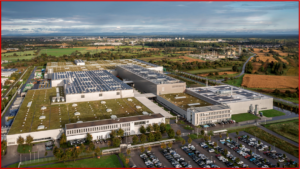
Mercedes-Benz today opened Europe’s first battery recycling plant with an integrated mechanical-hydrometallurgical process making it the first auto manufacturer globally to close the battery recycling loop with its own in-house facility. In contrast with established processes, the expected recovery rate of the mechanical-hydrometallurgical recycling plant is more than 96%. Expensive and scarce raw materials such as lithium, nickel and cobalt can be recovered in a way which is suitable for use in new batteries for future all-electric Mercedes-Benz vehicles. The company has invested tens of millions of euros in the construction of the new battery recycling plant.*
“Mercedes-Benz has set itself the goal of building the most desirable cars in a sustainable way. As a pioneer in automotive engineering, Europe’s first integrated mechanical-hydrometallurgical battery recycling factory marks a key milestone towards enhancing raw-materials sustainability. Together with our partners from industry and science, we are sending a strong signal of innovative strength for sustainable electric mobility and value creation in Germany and Europe,” said Ola Källenius, Chairman of the Board of Management of Mercedes-Benz Group AG.
The Mercedes-Benz battery recycling plant in Kuppenheim has an annual capacity of 2500 tons. The recovered materials feed into the production of more than 50,000 battery modules for new all-electric Mercedes-Benz models. This at the startup. The production volumes could increase in the medium to long term.
Mercedes-Benz’s technology partner for the battery recycling factory is Primobius, a joint venture between German plant and mechanical engineering company SMS group and Australian process technology developer Neometals. The plant is receiving funding from the German Federal Ministry for Economic Affairs and Climate Action as part of a scientific research project with three German universities. “The project looks at the entire process chain for recycling, including logistics and reintegration concepts. The partners are thus making an important contribution to future scaling of the battery recycling industry in Germany,” Mercedes claimed.
Integrated Mechanical-Hydrometallurgical Recycling
Click for more.
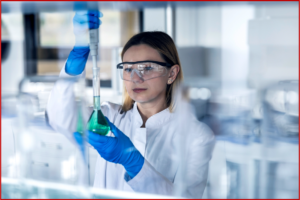
For the first time in Europe, the Mercedes-Benz battery recycling plant covers all steps from shredding battery modules to drying and processing active battery materials. The mechanical process sorts and separates plastics, copper, aluminum, and iron in a complex, multi-stage process. The downstream hydrometallurgical process is dedicated to the so-called black mass. These are the active materials that make up the electrodes of the battery cells. The valuable metals cobalt, nickel and lithium are extracted individually in a multi-stage chemical process. These recyclates are of battery quality and therefore suitable for use in the production of new battery cells.
Unlike the pyrometallurgy established in Europe today, the hydrometallurgical process is less intensive in terms of energy consumption and material waste. Its low process temperatures of up to 80 degrees Celsius mean it consumes less energy. In addition, like all Mercedes-Benz production plants, the recycling plant operates in a net carbon-neutral manner. It is supplied with 100 percent green electricity. The roof area of the 6800 square-meter building is equipped with a photovoltaic system with a peak output of more than 350 kilowatts, Mercedes said.
“We are systematically deepening our expertise in the battery value chain. Following the opening of the Mercedes-Benz eCampus for development of new battery cell chemistries in Stuttgart-Untertürkheim, we are now sustainably closing the raw materials loop in Kuppenheim. The innovative technology enables us to recover valuable raw materials from the battery with the highest possible degree of purity. This turns today’s batteries into tomorrow’s sustainable mine for raw materials. The new battery recycling plant strengthens the role of the Mercedes-Benz production network with vehicle and drivetrain plants in Europe,” said Jörg Burzer, Member of the Board of Management of Mercedes-Benz Group AG, responsible for Production, Quality & Supply Chain Management.
* Inevitable Mercedes-Benz Kuppenheim Footnotes
- Net carbon-neutral means that carbon emissions that are not avoided or reduced at Mercedes-Benz are compensated for by certified compensation offsetting projects.
- According to current knowledge.
- Net carbon-neutral means that carbon emissions that are not avoided or reduced at Mercedes-Benz are compensated for by certified compensation offsetting projects.

About Ken Zino
Ken Zino, editor and publisher of AutoInformed, is a versatile auto industry participant with global experience spanning decades in print and broadcast journalism, as well as social media. He has automobile testing, marketing, public relations and communications experience. He is past president of The International Motor Press Assn, the Detroit Press Club, founding member and first President of the Automotive Press Assn. He is a member of APA, IMPA and the Midwest Automotive Press Assn.
He also brings an historical perspective while citing their contemporary relevance of the work of legendary auto writers such as Ken Purdy, Jim Dunne or Jerry Flint, or writers such as Red Smith, Mark Twain, Thomas Jefferson – all to bring perspective to a chaotic automotive universe.
Above all, decades after he first drove a car, Zino still revels in the sound of the exhaust as the throttle is blipped during a downshift and the driver’s rush that occurs when the entry, apex and exit points of a turn are smoothly and swiftly crossed. It’s the beginning of a perfect lap.
AutoInformed has an editorial philosophy that loves transportation machines of all kinds while promoting critical thinking about the future use of cars and trucks.
Zino builds AutoInformed from his background in automotive journalism starting at Hearst Publishing in New York City on Motor and MotorTech Magazines and car testing where he reviewed hundreds of vehicles in his decade-long stint as the Detroit Bureau Chief of Road & Track magazine. Zino has also worked in Europe, and Asia – now the largest automotive market in the world with China at its center.







Mercedes-Benz Opens Battery Recycling Plant in Kuppenheim
Click for more on recycling.
Mercedes-Benz today opened Europe’s first battery recycling plant with an integrated mechanical-hydrometallurgical process making it the first auto manufacturer globally to close the battery recycling loop with its own in-house facility. In contrast with established processes, the expected recovery rate of the mechanical-hydrometallurgical recycling plant is more than 96%. Expensive and scarce raw materials such as lithium, nickel and cobalt can be recovered in a way which is suitable for use in new batteries for future all-electric Mercedes-Benz vehicles. The company has invested tens of millions of euros in the construction of the new battery recycling plant.*
“Mercedes-Benz has set itself the goal of building the most desirable cars in a sustainable way. As a pioneer in automotive engineering, Europe’s first integrated mechanical-hydrometallurgical battery recycling factory marks a key milestone towards enhancing raw-materials sustainability. Together with our partners from industry and science, we are sending a strong signal of innovative strength for sustainable electric mobility and value creation in Germany and Europe,” said Ola Källenius, Chairman of the Board of Management of Mercedes-Benz Group AG.
The Mercedes-Benz battery recycling plant in Kuppenheim has an annual capacity of 2500 tons. The recovered materials feed into the production of more than 50,000 battery modules for new all-electric Mercedes-Benz models. This at the startup. The production volumes could increase in the medium to long term.
Mercedes-Benz’s technology partner for the battery recycling factory is Primobius, a joint venture between German plant and mechanical engineering company SMS group and Australian process technology developer Neometals. The plant is receiving funding from the German Federal Ministry for Economic Affairs and Climate Action as part of a scientific research project with three German universities. “The project looks at the entire process chain for recycling, including logistics and reintegration concepts. The partners are thus making an important contribution to future scaling of the battery recycling industry in Germany,” Mercedes claimed.
Integrated Mechanical-Hydrometallurgical Recycling
Click for more.
For the first time in Europe, the Mercedes-Benz battery recycling plant covers all steps from shredding battery modules to drying and processing active battery materials. The mechanical process sorts and separates plastics, copper, aluminum, and iron in a complex, multi-stage process. The downstream hydrometallurgical process is dedicated to the so-called black mass. These are the active materials that make up the electrodes of the battery cells. The valuable metals cobalt, nickel and lithium are extracted individually in a multi-stage chemical process. These recyclates are of battery quality and therefore suitable for use in the production of new battery cells.
Unlike the pyrometallurgy established in Europe today, the hydrometallurgical process is less intensive in terms of energy consumption and material waste. Its low process temperatures of up to 80 degrees Celsius mean it consumes less energy. In addition, like all Mercedes-Benz production plants, the recycling plant operates in a net carbon-neutral manner. It is supplied with 100 percent green electricity. The roof area of the 6800 square-meter building is equipped with a photovoltaic system with a peak output of more than 350 kilowatts, Mercedes said.
“We are systematically deepening our expertise in the battery value chain. Following the opening of the Mercedes-Benz eCampus for development of new battery cell chemistries in Stuttgart-Untertürkheim, we are now sustainably closing the raw materials loop in Kuppenheim. The innovative technology enables us to recover valuable raw materials from the battery with the highest possible degree of purity. This turns today’s batteries into tomorrow’s sustainable mine for raw materials. The new battery recycling plant strengthens the role of the Mercedes-Benz production network with vehicle and drivetrain plants in Europe,” said Jörg Burzer, Member of the Board of Management of Mercedes-Benz Group AG, responsible for Production, Quality & Supply Chain Management.
* Inevitable Mercedes-Benz Kuppenheim Footnotes
About Ken Zino
Ken Zino, editor and publisher of AutoInformed, is a versatile auto industry participant with global experience spanning decades in print and broadcast journalism, as well as social media. He has automobile testing, marketing, public relations and communications experience. He is past president of The International Motor Press Assn, the Detroit Press Club, founding member and first President of the Automotive Press Assn. He is a member of APA, IMPA and the Midwest Automotive Press Assn. He also brings an historical perspective while citing their contemporary relevance of the work of legendary auto writers such as Ken Purdy, Jim Dunne or Jerry Flint, or writers such as Red Smith, Mark Twain, Thomas Jefferson – all to bring perspective to a chaotic automotive universe. Above all, decades after he first drove a car, Zino still revels in the sound of the exhaust as the throttle is blipped during a downshift and the driver’s rush that occurs when the entry, apex and exit points of a turn are smoothly and swiftly crossed. It’s the beginning of a perfect lap. AutoInformed has an editorial philosophy that loves transportation machines of all kinds while promoting critical thinking about the future use of cars and trucks. Zino builds AutoInformed from his background in automotive journalism starting at Hearst Publishing in New York City on Motor and MotorTech Magazines and car testing where he reviewed hundreds of vehicles in his decade-long stint as the Detroit Bureau Chief of Road & Track magazine. Zino has also worked in Europe, and Asia – now the largest automotive market in the world with China at its center.