Click for more.
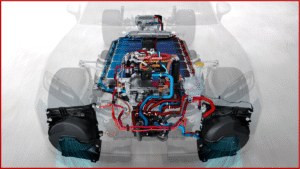
The 2026 model Porsche Cayenne Electric (P911.DE)* debuts in a few weeks with innovative high-voltage technology. It is based on an advancement of the so-called Premium Platform Electric (PPE) developed in-house. Its 800-volt architecture creates the basis for impressive charging power, intelligent energy distribution and high efficiency. With a function-integrated battery, powerful dual cooling, intelligent thermal management and robust charging performance, Porsche claims that it is laying the foundation for a new level of E-Performance.
“With the Cayenne Electric, we are taking e-performance to a new level,” said Dr Michael Steiner, Deputy Chairman of the Executive Board and Member of the Executive Board, Research and Development. “Our innovative high-voltage system combines maximum efficiency with the driving dynamics typical of Porsche.”
“In combination with the new drive system, the Cayenne Electric achieves range figures equally suitable for everyday use and long-distance journeys. According to the combined WLTP standard, the new SUV will have a range of more than 600 kilometers.This range is the result of the combination of innovative technology and sophisticated energy management,” Porsche claimed.
Click for more
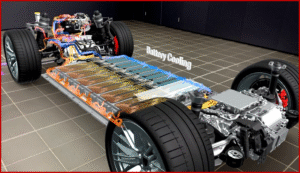
Central to the Cayenne Electric is a function-integrated high-voltage battery with a gross energy content of 113 kWh.
“It is directly integrated into the vehicle structure and, in addition to storing energy, also acts as an integral structural component. This results in significant advantages in weight and packaging; the ratio between cells and battery housing has improved by 12 per cent compared to the second-generation Taycan battery. Integration of the battery into the body structure also increases vehicle rigidity and further lowers the car’s center of gravity – both essential factors for driving dynamics and precision. The battery therefore contributes to the agile handling of the Cayenne Electric. Porsche is also setting new standards in the field of passive safety; the battery modules are made of a specially developed aluminum profile that absorbs energy in a targeted manner and protects the cells in the event of an impact,” Porsche said.
For maximum energy density and charging capability, Porsche uses a lithium-ion battery with six interchangeable modules and 192 large-format pouch cells. The cells consist of a graphite-silicon anode and a nickel-manganese-cobalt-aluminum cathode (NMCA). The high nickel content of 86% “ensures maximum energy density, while silicon in the anode significantly enhances the fast-charging capability. Aluminum increases the rigidity of the cell structure. The result: 7% higher energy density compared to the current Taycan battery, while also increasing charging efficiency,” Porsche said.
A vital element of the high-voltage system is the innovative cooling system, which regulates the temperature of the battery from both above and below.
“This dual cooling allows precise control of the temperature window and ensures that the battery always operates in the optimal range – regardless of the weather, charging power or driving style. The cooling capacity corresponds to that of about 100 large household refrigerators. For the first time, energy-efficient pressure fans will be used, which consume around 15% less energy than conventional suction fans. The result is a consistently high charging capacity and high performance with minimal energy loss – a key element of the overall efficiency of the new Cayenne,” Porsche said.
The new ‘Predictive Thermal Management’ is an integral part of the electrical architecture of the Cayenne Electric.
“It links all of the vehicle’s cooling and heating circuits, continuously analyses temperature, route and driving profile, and proactively controls the flow of energy. While driving, intelligent software calculates the heating or cooling requirements in real time – taking into account navigation data, topography, traffic conditions and driving behavior. The aim is to keep the battery in the optimum temperature window at all times – for maximum charging speed, service life and range consistency. The advantages for the driver include shorter charging times, lower energy consumption and even more accurate range predictions. The system works closely with the further-developed Charging Planner, which takes individual charging preferences into account and pre-conditions the battery for the next stop while driving,”
“The function-integrated battery, the double-sided cooling concept and the predictive thermal management demonstrate how we think comprehensively about technology,” says Dr Michael Steiner. “Our aim is to provide electric mobility in a way that befits Porsche – efficient, powerful and engaging at the same time.”
*AutoInformed on

About Ken Zino
Ken Zino, editor and publisher of AutoInformed, is a versatile auto industry participant with global experience spanning decades in print and broadcast journalism, as well as social media. He has automobile testing, marketing, public relations and communications experience. He is past president of The International Motor Press Assn, the Detroit Press Club, founding member and first President of the Automotive Press Assn. He is a member of APA, IMPA and the Midwest Automotive Press Assn.
He also brings an historical perspective while citing their contemporary relevance of the work of legendary auto writers such as Ken Purdy, Jim Dunne or Jerry Flint, or writers such as Red Smith, Mark Twain, Thomas Jefferson – all to bring perspective to a chaotic automotive universe.
Above all, decades after he first drove a car, Zino still revels in the sound of the exhaust as the throttle is blipped during a downshift and the driver’s rush that occurs when the entry, apex and exit points of a turn are smoothly and swiftly crossed. It’s the beginning of a perfect lap.
AutoInformed has an editorial philosophy that loves transportation machines of all kinds while promoting critical thinking about the future use of cars and trucks.
Zino builds AutoInformed from his background in automotive journalism starting at Hearst Publishing in New York City on Motor and MotorTech Magazines and car testing where he reviewed hundreds of vehicles in his decade-long stint as the Detroit Bureau Chief of Road & Track magazine. Zino has also worked in Europe, and Asia – now the largest automotive market in the world with China at its center.







Porsche Cayenne Electric – Resourceful Performance
Click for more.
The 2026 model Porsche Cayenne Electric (P911.DE)* debuts in a few weeks with innovative high-voltage technology. It is based on an advancement of the so-called Premium Platform Electric (PPE) developed in-house. Its 800-volt architecture creates the basis for impressive charging power, intelligent energy distribution and high efficiency. With a function-integrated battery, powerful dual cooling, intelligent thermal management and robust charging performance, Porsche claims that it is laying the foundation for a new level of E-Performance.
“With the Cayenne Electric, we are taking e-performance to a new level,” said Dr Michael Steiner, Deputy Chairman of the Executive Board and Member of the Executive Board, Research and Development. “Our innovative high-voltage system combines maximum efficiency with the driving dynamics typical of Porsche.”
“In combination with the new drive system, the Cayenne Electric achieves range figures equally suitable for everyday use and long-distance journeys. According to the combined WLTP standard, the new SUV will have a range of more than 600 kilometers.This range is the result of the combination of innovative technology and sophisticated energy management,” Porsche claimed.
Click for more
Central to the Cayenne Electric is a function-integrated high-voltage battery with a gross energy content of 113 kWh.
“It is directly integrated into the vehicle structure and, in addition to storing energy, also acts as an integral structural component. This results in significant advantages in weight and packaging; the ratio between cells and battery housing has improved by 12 per cent compared to the second-generation Taycan battery. Integration of the battery into the body structure also increases vehicle rigidity and further lowers the car’s center of gravity – both essential factors for driving dynamics and precision. The battery therefore contributes to the agile handling of the Cayenne Electric. Porsche is also setting new standards in the field of passive safety; the battery modules are made of a specially developed aluminum profile that absorbs energy in a targeted manner and protects the cells in the event of an impact,” Porsche said.
For maximum energy density and charging capability, Porsche uses a lithium-ion battery with six interchangeable modules and 192 large-format pouch cells. The cells consist of a graphite-silicon anode and a nickel-manganese-cobalt-aluminum cathode (NMCA). The high nickel content of 86% “ensures maximum energy density, while silicon in the anode significantly enhances the fast-charging capability. Aluminum increases the rigidity of the cell structure. The result: 7% higher energy density compared to the current Taycan battery, while also increasing charging efficiency,” Porsche said.
A vital element of the high-voltage system is the innovative cooling system, which regulates the temperature of the battery from both above and below.
“This dual cooling allows precise control of the temperature window and ensures that the battery always operates in the optimal range – regardless of the weather, charging power or driving style. The cooling capacity corresponds to that of about 100 large household refrigerators. For the first time, energy-efficient pressure fans will be used, which consume around 15% less energy than conventional suction fans. The result is a consistently high charging capacity and high performance with minimal energy loss – a key element of the overall efficiency of the new Cayenne,” Porsche said.
The new ‘Predictive Thermal Management’ is an integral part of the electrical architecture of the Cayenne Electric.
“It links all of the vehicle’s cooling and heating circuits, continuously analyses temperature, route and driving profile, and proactively controls the flow of energy. While driving, intelligent software calculates the heating or cooling requirements in real time – taking into account navigation data, topography, traffic conditions and driving behavior. The aim is to keep the battery in the optimum temperature window at all times – for maximum charging speed, service life and range consistency. The advantages for the driver include shorter charging times, lower energy consumption and even more accurate range predictions. The system works closely with the further-developed Charging Planner, which takes individual charging preferences into account and pre-conditions the battery for the next stop while driving,”
“The function-integrated battery, the double-sided cooling concept and the predictive thermal management demonstrate how we think comprehensively about technology,” says Dr Michael Steiner. “Our aim is to provide electric mobility in a way that befits Porsche – efficient, powerful and engaging at the same time.”
*AutoInformed on
About Ken Zino
Ken Zino, editor and publisher of AutoInformed, is a versatile auto industry participant with global experience spanning decades in print and broadcast journalism, as well as social media. He has automobile testing, marketing, public relations and communications experience. He is past president of The International Motor Press Assn, the Detroit Press Club, founding member and first President of the Automotive Press Assn. He is a member of APA, IMPA and the Midwest Automotive Press Assn. He also brings an historical perspective while citing their contemporary relevance of the work of legendary auto writers such as Ken Purdy, Jim Dunne or Jerry Flint, or writers such as Red Smith, Mark Twain, Thomas Jefferson – all to bring perspective to a chaotic automotive universe. Above all, decades after he first drove a car, Zino still revels in the sound of the exhaust as the throttle is blipped during a downshift and the driver’s rush that occurs when the entry, apex and exit points of a turn are smoothly and swiftly crossed. It’s the beginning of a perfect lap. AutoInformed has an editorial philosophy that loves transportation machines of all kinds while promoting critical thinking about the future use of cars and trucks. Zino builds AutoInformed from his background in automotive journalism starting at Hearst Publishing in New York City on Motor and MotorTech Magazines and car testing where he reviewed hundreds of vehicles in his decade-long stint as the Detroit Bureau Chief of Road & Track magazine. Zino has also worked in Europe, and Asia – now the largest automotive market in the world with China at its center.