Stellantis (NYSE: STLA) said today that there are six core pillars of its recovery strategy moving forward dubbed FaSTLAne 2030.* The financially challenged global automaker claimed that sharper management of its brand portfolio combined with investments in global platforms, powertrains and technology and partnerships complementing Stellantis’ core strengths will optimize its manufacturing. Empowerment of regions and local teams with excellence in execution of FaSTLAne 2030 are central to long term growth and probability. Much of the plan is a continuation and expansion of initiatives undertaken after Stellantis posted a 2025 full year loss of €22.3 Billion. The company’s brand challenges are ultimately at the whims of customers. A previous similar initiative at Jaguar Land Rover (JLR) provoked a backlash from existing and former customers.**
“FaSTLAne 2030 is the result of months of disciplined work across the Company and is designed to drive long-term profitable growth. With the customer at the center of everything we do, the plan will deliver our purpose – ‘to move people with brands and products they love and trust’ – powered by our unique combination of strengths,” said Stellantis CEO Anthony Filosa. ***
“We have great people, the muscle of global scale, unmatched brands that connect and inspire, the deep local roots of our regions and dealer partners to meet our customers’ distinctive needs, and a relentless focus on innovation and excellence in execution. With these strengths, we are uniquely positioned to offer delight, functionality, and affordability. Adding to these the accelerating and amplifying benefits of our ‘win-win’ partnerships, we have everything we need to deliver our FaSTLAne 2030 ambitions,” claimed Filosa. [This is the corporate equivalent of betting on the come line in the Casino at Monte Carlo – AutoCrat.]
Regional Reforms and Targets
In North America, the Company targets 25% revenue growth, and an AOI margin of 8-10% focusing on:
- Expanding market coverage by 50%, with 11 all-new vehicles and 35% more volume.
- Boosting offerings with seven new products under the $40,000 range and two under $30,000. [Who builds the products and where – Autocrat?]
- Improving cost competitiveness through the Value Creation Program.
Given the region’s market opportunities and profitable growth potential, 60% of the €36 billion to be invested in brands and products will be allocated to North America.
In Enlarged Europe, the Company targets 15% revenue growth and a 3-5% AOI margin through:
- Refocusing the brand portfolio, bringing even greater differentiation to brands and expanding coverage with a C-segment offensive and the introduction of the groundbreaking E-Car, a new generation of stylish and affordable city-friendly electric vehicles to be made in Europe, starting with the Company’s Pomigliano d’Arco, Italy plant.
- Driving cost competitiveness, through the all-new STLA One platform.
- Increasing capacity utilization through increased volume and plant repurposing and capacity sharing.
In South America, the Company targets 10% revenue growth and an AOI margin of 8-10% by building on its leadership in Brazil and Argentina, launching a pickup offensive, as well as growing in other countries in the region.
In the Middle East and Africa, the Company targets 40% revenue growth and an AOI margin of 10-12%, driven by product localization and increased imports from Asian partnerships. [Does this mean another country loses a plant and the workers – AutoCrat?]
In Asia Pacific, the Company targets an AOI margin of 4-6%, leveraging strategic partnerships to enable asset-light growth locally and to export products to support other regions.
The Six Pillars of Reform and Recovery
1) Sharper Management of Unparalleled Brand Portfolio.
The Company’s approach to managing its brand portfolio and product plan has been overhauled to maximize capital efficiency, avoid duplicate spending, and support profitability.
This will result, between now and 2030, in more than 60 new vehicle launches and 50 significant refreshes, across all brands and powertrain energies, including 29 battery-electric vehicles, 15 plug-in hybrid or range-extended electric vehicles, 24 hybrid electric vehicles and 39 ICE/mild hybrid electric vehicles.
With this refocused approach, Stellantis now has four global brands with the greatest scale and the highest potential for profitability: Jeep®, Ram, Peugeot and FIAT. These brands, with their multi-regional presence, are natural first launchers for all new global assets. Seventy percent of the plan’s brand and product investments will be directed to these brands, as well as to Pro One, Stellantis’ commercial vehicles business unit.
The Company’s five regional brands – Chrysler, Dodge, Citroën, Opel and Alfa Romeo – each are very strong in their respective markets and will benefit from these same global assets and increase brand distinctiveness to delight their customers.
DS and Lancia are historic brands, prominent in France and in Italy. They will be managed by Citroën and FIAT and developed as specialty brands.
The Company plans to strengthen the future of Maserati, a pure luxury brand with a unique customer legacy and a powerful lineup, adding two new E-segment vehicles. A detailed roadmap will be shared in Modena in December 2026.
“Every brand in Stellantis will play a clear role in delivering our FaSTLAne 2030 commitments,” said Filosa.
2) Investment in Global Platforms, Powertrains and Technologies.
The Company’s global scale is one of its core strengths. Over the next five years, Stellantis will invest over €24 billion (40% of total R&D and CapEx investment during the period) in global platforms, powertrains and new technologies.
Click for more.
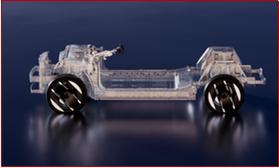
Platforms are modular by design to drive efficiency and competitiveness. By 2030, 50% of global annual volumes will be produced on three global platforms, including the all-new STLA One. A concrete example of modularity by design, STLA One is a new architecture designed from inception to maximize commonality and competitiveness.
Powertrains expand freedom of choice. Stellantis will broaden its multi-energy coverage with new hybrids, new battery electric vehicles and highly efficient internal combustion engines. By 2030, nearly 50% of global annual volumes will be equipped with multi-regional powertrain solutions, with energy flexibility built into the portfolio.
Technology ‘made for humans’ is at the heart of FaSTLAne 2030. Stellantis’ technology strategy starts from a simple principle: technology only matters if it improves everyday life for real customers. No technology for the sake of it. Opening a new chapter with artificial intelligence (AI) embedded across the stack, the plan entails developing global technologies in collaboration with first-tier partners, and rolling them out locally to the brands and products in each region:
- STLA Brain, the Stellantis scalable central computer and software architecture.
- STLA SmartCockpit, which will define a new way for customers to interact with their vehicles.
- tSTLA AutoDrive, the Company’s scalable autonomous driving system.
All these technologies will be launched in 2027. By 2030, 35% of global annual volumes will be equipped with at least one of these technologies and by 2035, that figure will increase to more than 70%.
3) Partnerships Complementing Stellantis’ Core Strengths.
With its unique combination of strengths – iconic brands, global scale and local roots – Stellantis is uniquely positioned to attract the best players in their fields, accelerating value creation through win-win partnerships.
The Company is entering into new partnerships or expanding existing ones, co-developing and co-funding products to gain access to additional markets, broadening technology optionality, increasing manufacturing capacity utilization, and improving sourcing competitiveness. Examples of these include:
- Through Leapmotor International, 51% owned by Stellantis, the Company has built with Leapmotor a groundbreaking commercial collaboration with a growing global reach. Moving forward, Stellantis and Leapmotor intend to join forces in purchasing, leveraging their supplier bases and improving cost competitiveness. They also plan to cooperate industrially, starting with plans to share capacity at the Madrid and Zaragoza (Spain) plants, in line with the upcoming Made-in-Europe requirements.
- With its historical partner Dongfeng, Stellantis is launching a new era of cooperation under its China-based DPCA joint venture, to produce two Peugeots and two Jeep® models for sale in China and other regions. In addition, the Company intends to create a European joint venture with Dongfeng, 51% Stellantis-owned, to collaborate on distribution, engineering, sourcing and capacity sharing, starting with plans at the Rennes (France) plant in line with the upcoming Made-in-Europe requirements.
- In partnership with Tata, the Company is enhancing its competitiveness in Asia Pacific, Middle East and Africa, and South America through synergies in manufacturing, supply chain, product, and technology.
- With Jaguar Land Rover (JLR), the Company plans to explore collaboration synergies across product and technology development in the United States.
- Across its computing architecture, software, ADAS, artificial intelligence and battery technology, Stellantis is advancing with strategic partnerships that are intended to complement internal capabilities and accelerate vehicle development, including with Applied Intuition, Qualcomm, Wayve, NVIDIA, Uber, Mistral AI, and CATL, among others.
4) Optimized Manufacturing Footprint.
With FaSTLAne 2030, the Company’s capacity utilization will be significantly increased across regions. This will be achieved through increased volumes enabled by the product offensive, as well as through targeted local actions.
- In Europe, capacity is expected to be reduced by more than 800,000 units, repurposing plants (such as in Poissy, France) and leveraging partnerships (such as in Madrid and Zaragoza, in Spain, and Rennes, in France), all while aiming to preserve manufacturing jobs. Capacity utilization will increase from 60% to 80% in 2030.
- In the United States, increased production is expected to improve capacity utilization to 80% in 2030.
- In the Middle East and Africa, the plan envisions product localization, driving full capacity utilization by 2030.
5) Excellence in Execution.
FaSTLAne 2030 will be characterized by a relentless focus on execution, most importantly in terms of increased speed, quality and efficiency across all regions.
- In product development, the Company will considerably accelerate vehicle development cycles, targeting 24 months compared to up to 40 months today.
- In quality, FaSTLAne 2030 will build on significant improvements in the past 12 months and targets top-quartile performance in all regions over the plan period.
- In cost competitiveness, the recently launched multi-year Value Creation Program (VCP) is set to deliver €6 billion of annual cost reduction by 2028 (versus a 2025 baseline), as well as business-wide revenue growth opportunities, including in commercial performance.
- AI will be a key enabler to transform execution capabilities, with more than 120 applications deployed today across our operations.
“The success of FaSTLAne 2030 is built upon the great talent and strong commitment of our Stellantis team,” added Filosa. “We will execute as one team, hands-on, to deliver incremental, profitable growth for the benefit of all our stakeholders.”
6) Regions and Local Teams Empowerment.
Automotive is, above all, a regional business; this is where the customers are. With its deep and historic local roots, Stellantis is uniquely placed to seize the opportunity this presents.
Over the past year, decision-making has been largely moved to the regions, reinforcing the Company’s bond with the customers it serves. Meanwhile, long-standing, constructive relationships with unions, dealers, suppliers, business partners, and communities have been significantly strengthened.
With FaSTLAne 2030, each region is now empowered to leverage Stellantis’ global scale to define and implement tailored plans that best suit local markets’ realities and customers’ distinctive preferences.
*AutoInformed on
**To be clear, JLR is not owned by Stellantis, but it is illustrative of legacy brand issues in the current automobile business. Jaguar Land Rover (JLR) this week the signing of a Memorandum of Understanding (MOU) with Stellantis to explore opportunities to collaborate on product development in the United States.
***Inevitable Stellantis FaSTLAne 2030 Footnotes and Caveats
- All investment, product, and capacity utilization-related objectives described above are based on current planning assumptions.
- Certain partnership initiatives described above are subject to ongoing discussions and non-binding arrangements. Execution, timing and scope remain subject to definitive agreements and required approvals.
- Adjusted operating income/(loss) excludes from Net profit/(loss) from continuing operations adjustments comprising restructuring and other termination costs, impairments, asset write-offs, disposals of investments and unusual operating income that are considered rare or discrete events and are infrequent in nature, as inclusion of such items is not considered to be indicative of the Company’s ongoing operating performance, and also excludes Net financial expenses/(income) and Tax expense/(benefit). Unusual operating income/(expense) are impacts from strategic decisions, as well as events considered rare or discrete and infrequent in nature, as inclusion of such items is not considered to be indicative of the Company’s ongoing operating performance. Unusual operating income/(expense) includes, but may not be limited to: impacts from strategic decisions to rationalize Stellantis’ core operations; facility-related costs stemming from Stellantis’ plans to match production capacity and cost structure to market demand, and convergence and integration costs directly related to significant acquisitions or mergers.
- Adjusted operating income/(loss) margin is calculated as Adjusted operating income/(loss) divided by Net revenues.








Stellantis FaSTLAne 2030 Financial Reform Revealed
Stellantis (NYSE: STLA) said today that there are six core pillars of its recovery strategy moving forward dubbed FaSTLAne 2030.* The financially challenged global automaker claimed that sharper management of its brand portfolio combined with investments in global platforms, powertrains and technology and partnerships complementing Stellantis’ core strengths will optimize its manufacturing. Empowerment of regions and local teams with excellence in execution of FaSTLAne 2030 are central to long term growth and probability. Much of the plan is a continuation and expansion of initiatives undertaken after Stellantis posted a 2025 full year loss of €22.3 Billion. The company’s brand challenges are ultimately at the whims of customers. A previous similar initiative at Jaguar Land Rover (JLR) provoked a backlash from existing and former customers.**
“FaSTLAne 2030 is the result of months of disciplined work across the Company and is designed to drive long-term profitable growth. With the customer at the center of everything we do, the plan will deliver our purpose – ‘to move people with brands and products they love and trust’ – powered by our unique combination of strengths,” said Stellantis CEO Anthony Filosa. ***
“We have great people, the muscle of global scale, unmatched brands that connect and inspire, the deep local roots of our regions and dealer partners to meet our customers’ distinctive needs, and a relentless focus on innovation and excellence in execution. With these strengths, we are uniquely positioned to offer delight, functionality, and affordability. Adding to these the accelerating and amplifying benefits of our ‘win-win’ partnerships, we have everything we need to deliver our FaSTLAne 2030 ambitions,” claimed Filosa. [This is the corporate equivalent of betting on the come line in the Casino at Monte Carlo – AutoCrat.]
Regional Reforms and Targets
In North America, the Company targets 25% revenue growth, and an AOI margin of 8-10% focusing on:
Given the region’s market opportunities and profitable growth potential, 60% of the €36 billion to be invested in brands and products will be allocated to North America.
In Enlarged Europe, the Company targets 15% revenue growth and a 3-5% AOI margin through:
In South America, the Company targets 10% revenue growth and an AOI margin of 8-10% by building on its leadership in Brazil and Argentina, launching a pickup offensive, as well as growing in other countries in the region.
In the Middle East and Africa, the Company targets 40% revenue growth and an AOI margin of 10-12%, driven by product localization and increased imports from Asian partnerships. [Does this mean another country loses a plant and the workers – AutoCrat?]
In Asia Pacific, the Company targets an AOI margin of 4-6%, leveraging strategic partnerships to enable asset-light growth locally and to export products to support other regions.
The Six Pillars of Reform and Recovery
1) Sharper Management of Unparalleled Brand Portfolio.
The Company’s approach to managing its brand portfolio and product plan has been overhauled to maximize capital efficiency, avoid duplicate spending, and support profitability.
This will result, between now and 2030, in more than 60 new vehicle launches and 50 significant refreshes, across all brands and powertrain energies, including 29 battery-electric vehicles, 15 plug-in hybrid or range-extended electric vehicles, 24 hybrid electric vehicles and 39 ICE/mild hybrid electric vehicles.
With this refocused approach, Stellantis now has four global brands with the greatest scale and the highest potential for profitability: Jeep®, Ram, Peugeot and FIAT. These brands, with their multi-regional presence, are natural first launchers for all new global assets. Seventy percent of the plan’s brand and product investments will be directed to these brands, as well as to Pro One, Stellantis’ commercial vehicles business unit.
The Company’s five regional brands – Chrysler, Dodge, Citroën, Opel and Alfa Romeo – each are very strong in their respective markets and will benefit from these same global assets and increase brand distinctiveness to delight their customers.
DS and Lancia are historic brands, prominent in France and in Italy. They will be managed by Citroën and FIAT and developed as specialty brands.
The Company plans to strengthen the future of Maserati, a pure luxury brand with a unique customer legacy and a powerful lineup, adding two new E-segment vehicles. A detailed roadmap will be shared in Modena in December 2026.
“Every brand in Stellantis will play a clear role in delivering our FaSTLAne 2030 commitments,” said Filosa.
2) Investment in Global Platforms, Powertrains and Technologies.
The Company’s global scale is one of its core strengths. Over the next five years, Stellantis will invest over €24 billion (40% of total R&D and CapEx investment during the period) in global platforms, powertrains and new technologies.
Click for more.
Platforms are modular by design to drive efficiency and competitiveness. By 2030, 50% of global annual volumes will be produced on three global platforms, including the all-new STLA One. A concrete example of modularity by design, STLA One is a new architecture designed from inception to maximize commonality and competitiveness.
Powertrains expand freedom of choice. Stellantis will broaden its multi-energy coverage with new hybrids, new battery electric vehicles and highly efficient internal combustion engines. By 2030, nearly 50% of global annual volumes will be equipped with multi-regional powertrain solutions, with energy flexibility built into the portfolio.
Technology ‘made for humans’ is at the heart of FaSTLAne 2030. Stellantis’ technology strategy starts from a simple principle: technology only matters if it improves everyday life for real customers. No technology for the sake of it. Opening a new chapter with artificial intelligence (AI) embedded across the stack, the plan entails developing global technologies in collaboration with first-tier partners, and rolling them out locally to the brands and products in each region:
All these technologies will be launched in 2027. By 2030, 35% of global annual volumes will be equipped with at least one of these technologies and by 2035, that figure will increase to more than 70%.
3) Partnerships Complementing Stellantis’ Core Strengths.
With its unique combination of strengths – iconic brands, global scale and local roots – Stellantis is uniquely positioned to attract the best players in their fields, accelerating value creation through win-win partnerships.
The Company is entering into new partnerships or expanding existing ones, co-developing and co-funding products to gain access to additional markets, broadening technology optionality, increasing manufacturing capacity utilization, and improving sourcing competitiveness. Examples of these include:
4) Optimized Manufacturing Footprint.
With FaSTLAne 2030, the Company’s capacity utilization will be significantly increased across regions. This will be achieved through increased volumes enabled by the product offensive, as well as through targeted local actions.
5) Excellence in Execution.
FaSTLAne 2030 will be characterized by a relentless focus on execution, most importantly in terms of increased speed, quality and efficiency across all regions.
“The success of FaSTLAne 2030 is built upon the great talent and strong commitment of our Stellantis team,” added Filosa. “We will execute as one team, hands-on, to deliver incremental, profitable growth for the benefit of all our stakeholders.”
6) Regions and Local Teams Empowerment.
Automotive is, above all, a regional business; this is where the customers are. With its deep and historic local roots, Stellantis is uniquely placed to seize the opportunity this presents.
Over the past year, decision-making has been largely moved to the regions, reinforcing the Company’s bond with the customers it serves. Meanwhile, long-standing, constructive relationships with unions, dealers, suppliers, business partners, and communities have been significantly strengthened.
With FaSTLAne 2030, each region is now empowered to leverage Stellantis’ global scale to define and implement tailored plans that best suit local markets’ realities and customers’ distinctive preferences.
*AutoInformed on
**To be clear, JLR is not owned by Stellantis, but it is illustrative of legacy brand issues in the current automobile business. Jaguar Land Rover (JLR) this week the signing of a Memorandum of Understanding (MOU) with Stellantis to explore opportunities to collaborate on product development in the United States.
***Inevitable Stellantis FaSTLAne 2030 Footnotes and Caveats
About Ken Zino
Ken Zino, editor and publisher of AutoInformed, is a versatile auto industry participant with global experience spanning decades in print and broadcast journalism, as well as social media. He has automobile testing, marketing, public relations and communications experience. He is past president of The International Motor Press Assn, the Detroit Press Club, founding member and first President of the Automotive Press Assn. He is a member of APA, IMPA and the Midwest Automotive Press Assn. He also brings an historical perspective while citing their contemporary relevance of the work of legendary auto writers such as Ken Purdy, Jim Dunne or Jerry Flint, or writers such as Red Smith, Mark Twain, Thomas Jefferson – all to bring perspective to a chaotic automotive universe. Above all, decades after he first drove a car, Zino still revels in the sound of the exhaust as the throttle is blipped during a downshift and the driver’s rush that occurs when the entry, apex and exit points of a turn are smoothly and swiftly crossed. It’s the beginning of a perfect lap. AutoInformed has an editorial philosophy that loves transportation machines of all kinds while promoting critical thinking about the future use of cars and trucks. Zino builds AutoInformed from his background in automotive journalism starting at Hearst Publishing in New York City on Motor and MotorTech Magazines and car testing where he reviewed hundreds of vehicles in his decade-long stint as the Detroit Bureau Chief of Road & Track magazine. Zino has also worked in Europe, and Asia – now the largest automotive market in the world with China at its center.