
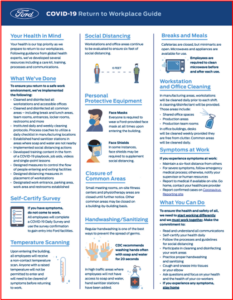
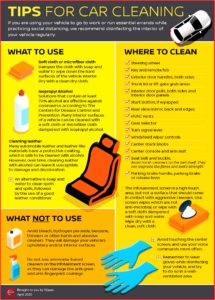
The COVID-19 plague has prompted a renewed look at the health risks in the shared mobility world. The interior of light-duty vehicles can easily allow for cross-contamination. The interior often includes multiple occupants in an enclosed space for extended periods, numerous frequent touch-points in that environment, and limited decontamination of the microbes. This could result in a renewed interest in car ownership where the driver can control the environment. Mass transit could become unattractive, restricted or like the New York City Subway cleaning program that just started, unavailable at night
Shashank Modi a Research Engineer at the Center for Automotive Research in Michigan notes that drivers of Uber, Lyft, and other ride-hailing services are concerned about their own health and that of their passengers. Company guidelines recommend ride-hailing drivers to wear masks and disinfect their cars regularly. “But are these safety measures sustainable in the long run? Is there a better way to instill confidence in shared mobility?” asks Modi.
Continue reading








Failed Pre-Collision – Ford Recalls Expedition, Navigator
Ford Motor Company is recalling more than 25,000 Expedition and Navigator models because the camera-only Pre-Collision Assist does not enable itself. Because of incorrect computer coding of interfacing modules, the Pre-Collision Assist feature is not enabled, and the driver cannot access the menu functions necessary to enable the Pre-Collision Assist feature. Obviously, this is a safety defect because if the driver is unaware that the Pre-Collision Assist system is not enabled, they may rely on a system that is not functional, increasing the risk of a crash or injury.
Continue reading →