
Click for more information.
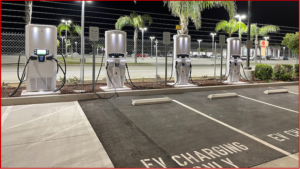
The Joint Office of Energy and Transportation today announced the launch of the National Charging Experience Consortium (ChargeX Consortium), a new initiative led by U.S. Department of Energy national laboratories that “will work to rapidly develop solutions that ensure a reliable and frictionless charging experience for all Americans.” At least 29 transportation organizations, including BMW, Ford Motor, GM, Rivian, Stellantis, and J.D. Power are part of the progressive, awakened effort to save Planet Earth from extinction.
“Argonne National Laboratory, Idaho National Laboratory, and the National Renewable Energy Laboratory will collaborate with organizations representing a cross-section of the electric vehicle (EV) charging industry on complex issues that require multi-stakeholder collaboration to solve and simplify. This effort aligns with the Joint Office mission to accelerate an electrified transportation system that is affordable, convenient, equitable, reliable, and safe and fulfills a specific mandate to plan, coordinate, and implement data sharing to inform the buildout of a national charging network,” DOE said in a release. Continue reading


Toyota Eco or EV Button Study Shows Greenhouse Gas Cuts
Data were released today from a week-long study of Toyota employees and family members who drove more than 480,000 miles in Eco or EV mode. The results show a CO2 reduction of 45,235,623 g of greenhouse gases compared to the baseline; that 5091 gallons of gasoline were saved for a reduction of $18,304 based on the national average.
“We have the ability to use data to help empower customers so that they can make a difference,” said Brian Kursar, chief technology officer, Toyota Connected North America (TCNA). “While this study focused on Toyota-owned vehicles, we know there are millions of connected Toyota and Lexus vehicles in the US. If everyone drove in Eco mode, it could help greatly reduce our collective CO2 output. Given how successful this internal campaign was, we’d love to see where we can take this initiative, and we hope we inspire other automakers to do the same.” Continue reading →