
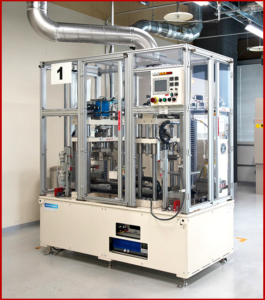
Toyota is also providing its patents and expertise to vacuum press manufacturer Mikado Technos, which has incorporated its own technologies to develop and manufacture a stamping-type plating machine for sale through Kanematsu.
As the world swelters and arctic fires burn uncontrolled, Toyota Motor Corporation is reducing CO2. Toyota is using the world’s first stamping-type plating technology that has a polymer membrane (solid electrolyte membrane), through which metal ions can pass, to apply plating only to areas requiring it. The technology is used in the plating process for forming copper, nickel, and other metal coatings on substrates during the manufacturing of electronic parts.
This new stamping-type plating machine eliminates the need of a dipping process where parts to be plated are completely immersed in multiple baths of plating solution, which is required in the most common plating processes at present. As a result, waste solution can be dramatically reduced to about one-thirtieth and CO2 emissions to about one-third, which contributes to a significant reduction in environmental impact. The technology also reduces plating time and the process footprint.
Continue reading






Chinese CATL and Honda Alliance to Make EV Batteries, Technology and Maybe Autonomous Vehicles
Contemporary Amperex Technology Co. (SZ: 300750) and Honda (TYO: 7267)have signed an agreement for a “comprehensive strategic alliance on new energy vehicle batteries to strengthen their strategic partnership and promote the popularization of electrified vehicles.” Honda has acquired ~1% of CATL shares through CATL’s non-public issuance of stocks. This makes Honda a leading strategic partner of CATL.
The companies said the agreement will enable them to begin discussions on a broad range of areas including joint development, stable supply, and the recycling and reuse of batteries. Honda is spreading the risk and costs and hedging its bets on battery electric vehicles, the development of which is threatened by the ongoing Covid crisis that has already cost automotive companies billions of dollars. A key byproduct of EVS is autonomous vehicles – which may not justify the investment required for a decade or more. Continue reading →