
Key here is quantity.
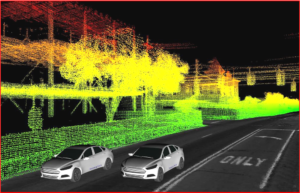
When a self-driving vehicle is operating, it is gathering information about the world around it. Cameras and LiDAR help it identify vehicles, pedestrians, signs and, hopefully, anything else that might be out in or near the streets. Radar helps the vehicle keep track of how fast things are moving around it.
“Without all this data, self-driving cars wouldn’t even be able to leave a parking lot,” says Tony Lockwood, Autonomous Vehicle Manager, Virtual Driver Systems, Ford Motor Company. He observes that these vehicles need to process a constant stream of information to “safely navigate” their surroundings.
Leaving aside for the moment giant unresolved privacy issues and how companies can sell your personal information their benefit not yours, data is needed to help engineers and researchers create software that can teach self-driving vehicles how to analyze their environments. This software used to be called the driver.
Continue reading










Consumer Feelings on Future Mobility Technologies Declines
Baidu-Ford L4 Autonomous Vehicle Test Project kicks off with on-road testing. 百度与福特的L4级别自动驾驶联合测试项目,未来将在公开道路进行测试
Consumer confidence in future mobility technologies lags far behind automakers’ plans to bring self-driving and battery-electric vehicles to the marketplace, according to the J.D. Power 2020 Q1 Mobility Confidence Index. The Index for self-driving vehicles decreases for the first time—to 35 from 36 on a 100-point scale—for American consumers and to 36 from 39 for Canadian consumers. For battery-electric vehicles, the index remains at 55 in the U.S. for the fourth consecutive quarter, while decreasing to 57 from 59 in Canada.
“Frankly, we’re concerned for automakers,” said Kristin Kolodge, executive director of driver interaction & human machine interface research at J.D. Power. “They’re pushing forward with technology that consumers seem to have little interest in. Nor are they making the strides needed to change people’s minds. Especially now, automakers need to reevaluate where they are spending money. They are investing billions in these technologies, but they need to also invest in educating consumers. Lack of knowledge is a huge roadblock for future adoption.”
Continue reading →